.webp "First female space tourist, Anousheh Ansari")
Vidushi Gaur/ New Delhi
Who was the first person to speak Pashto, a language spoken in Afghanistan and Pakistan’s Pakhtunkhwa, in space? It was Abdul Ahad Momand, the only Afghan to travel into space, who passed away recently in Germany.
Momand died at the age of 67, after a prolonged battle with cancer in Stuttgart, Germany. His body was laid to rest in his native Ghazni in Afghanistan.
At the age of 26, this young Afghan Air Force Pilot from Ghazni was selected to participate in the Soviet Intercosmos program. On August 29, 1988, he launched aboard the Soyuz TM-6 mission to the Mir Space Station.
Momand is the second of 15 Muslims to have gone on scientific missions into space. They represented Syria, Kazakhstan, Malaysia, the UAE, Egypt, Iran, Kyrgyzstan and Azerbaijan
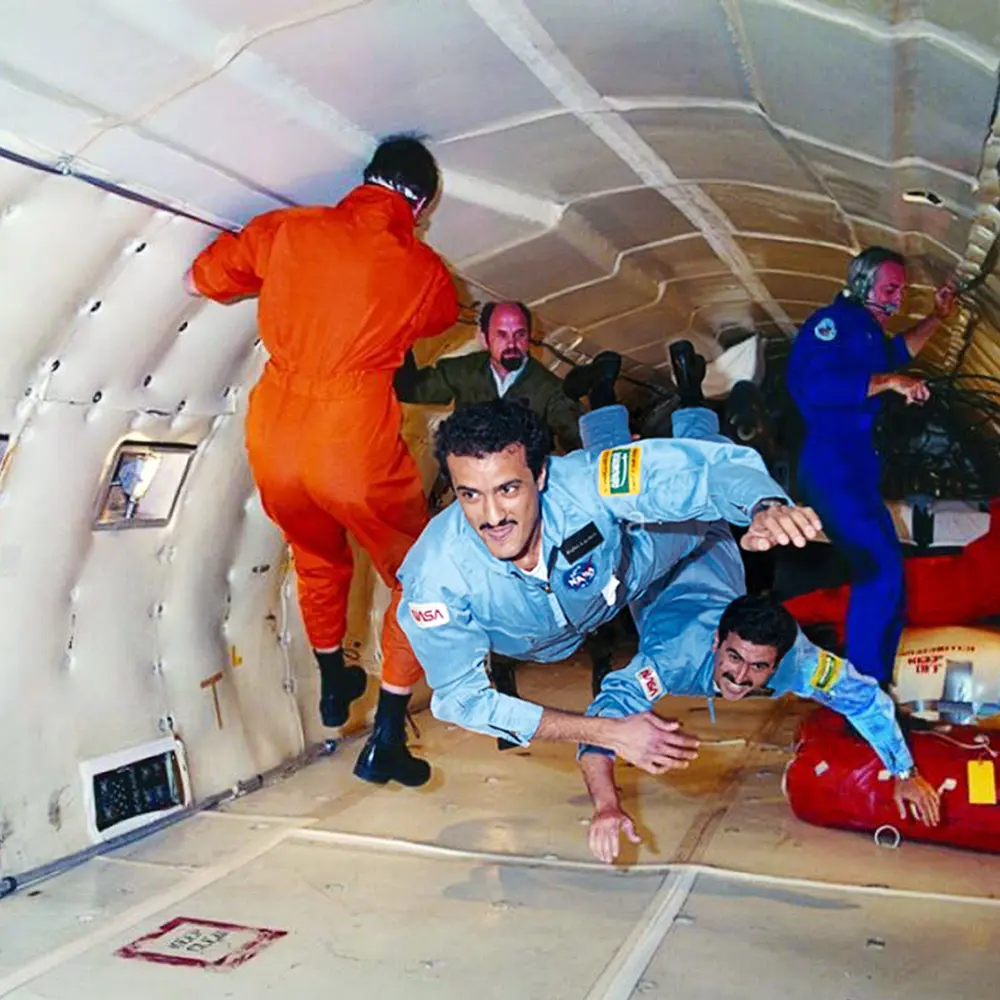 Saudi Arabia's Prince Sultan bin Salman Al Saud
In 1985, Prince Sultan bin Salman Al Saud stepped aboard NASA's Space Shuttle Discovery as a payload specialist on the STS-51G mission. At 28 years, he became the first Muslim, the first Arab and the first Saudi Arabian to travel into space.
His mission was historic for another reason. Among the few personal items he packed was a small copy of the Holy Quran. As Discovery orbited the Earth nearly 112 times, the sacred book travelled with him, becoming one of the first copies of the Quran to circle the planet.
The symbolism resonated across the Muslim world. At a time when space exploration was largely dominated by the United States and the Soviet Union, Prince Sultan showed that Muslims too could contribute to humanity's greatest scientific endeavours without leaving behind their religious identity.
Looking down at Earth from orbit, he later spoke of the overwhelming beauty of creation and the insignificance of political boundaries visible from space. He also observed the direction of Makkah from orbit, reflecting on how science and spirituality can complement one another rather than compete.
His flight inspired countless young students across the Arab world to dream of careers in science, engineering and aviation. Nearly four decades later, Saudi Arabia would send two more astronauts—including its first woman—to space, continuing the path he helped open.
Three years after Prince Sultan's landmark mission, Abdul Ahad Mohmand made history by becoming Afghanistan's first and only astronaut.
Video:
— نصرت الله نصرت (@AppleApple9390) July 6, 2026
Funeral Prayer and Burial Ceremony of Afghan Pilot and Astronaut Abdul Ahad Momand in Kabul pic.twitter.com/lxB11RIHl5
In August 1988, Mohmand launched aboard Soyuz TM-6 to the Soviet space station Mir. His eight-day mission came at one of the most difficult periods in Afghanistan's modern history, as the country was engulfed in conflict.
 Abdul Ahad Mohmand
While aboard Mir, Mohmand conducted scientific experiments, photographed Afghanistan from space, and made a radio call to his homeland in Pashto, speaking directly to his countrymen from orbit. For many Afghans, hearing one of their own speak from space was a source of immense pride amid years of uncertainty.
Mohmand also reportedly carried cultural mementoes representing Afghanistan, reminding the world that his country's identity extended far beyond war and conflict.
Although Afghanistan has not sent another astronaut since, Mohmand remains one of the country's greatest scientific icons and a symbol of what determination can achieve even under difficult circumstances.
In August 1988, Mohmand launched aboard Soyuz TM-6 to the Soviet space station Mir. His eight-day mission came at one of the most difficult periods in Afghanistan's modern history, as the country was engulfed in conflict.
For decades, spaceflight remained one of the world's most exclusive professions. Muslim women entered this frontier only in the twenty-first century, but when they did, they changed history.
Anousheh Ansari, an Iranian-American entrepreneur, became the first Muslim woman in space in 2006 aboard Soyuz TMA-9. Funding her own mission, she also became the world's first female private space explorer. Her journey inspired women across the world by proving that passion and perseverance could overcome traditional barriers.
 Anousheh Ansari
Nearly two decades later, Sara Sabry of Egypt became the first Egyptian, the first Arab woman and the first African woman to reach space during Blue Origin's NS-22 mission in 2022. Since her flight, she has dedicated herself to promoting STEM education, particularly for young students from developing nations.
Today makes my heart skip a beat! I have been in love with space and dreamt of a day when millions of people could experience what it the profound effect of seeing our home from the vantage point of space and because of @xprize @richardbranson & @virgingalacticit is now possible pic.twitter.com/DQXtag3xnT
— Anousheh Ansari (@AnoushehAnsari) July 11, 2021
In 2023, Rayyanah Barnawi created another milestone by becoming the first Saudi woman to travel into space aboard Axiom Mission 2. A biomedical scientist by profession, she carried out medical research that may contribute to future long-duration space missions while inspiring countless young Saudi women to pursue careers in science.
_–_Flew_on_Axiom_Mission_2_(2023)..jpg) Rayyanah Barnawi
Rayyanah Barnawi
These women transformed the image of Muslim participation in space exploration. Their achievements demonstrated that talent, education and ambition—not gender—determine who can reach the stars.
The remaining Muslim astronauts have each strengthened this remarkable legacy.
Muhammed Faris became Syria's first astronaut in 1987, while Musa Manarov logged more than 540 days in orbit across two missions. Kazakhstan produced three accomplished astronauts—Toktar Aubakirov, Talgat Musabayev, and Aidyn Aimbetov—reflecting the country's long association with the Baikonur Cosmodrome.
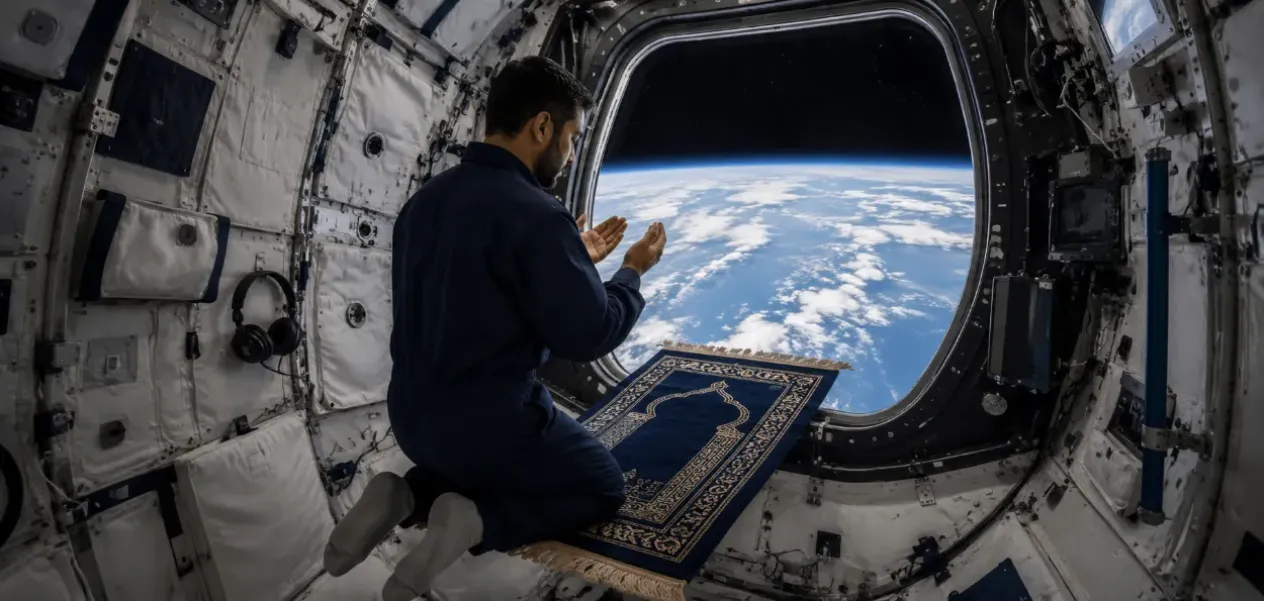
Salizhan Sharipov represented Kyrgyzstan and Russia on both NASA and Russian missions, while Sheikh Muszaphar Shukor became Malaysia's first astronaut and drew global attention after Islamic scholars issued practical guidance for performing prayers in space.
The United Arab Emirates ushered in a new era with Hazza Al Mansoori, its first astronaut, followed by Sultan Al Neyadi, who completed a six-month mission aboard the International Space Station and became the first Arab astronaut to perform a spacewalk.
READ MORE: Maharashtra: Ashadhi Wari pilgrimage begins with worship at dargah, sufi shrine
Saudi Arabia expanded its space programme further when Ali AlQarni, a fighter pilot, joined Rayyanah Barnawi aboard Axiom Mission 2, representing a new generation of Arab space explorers.












.webp)