New Delhi
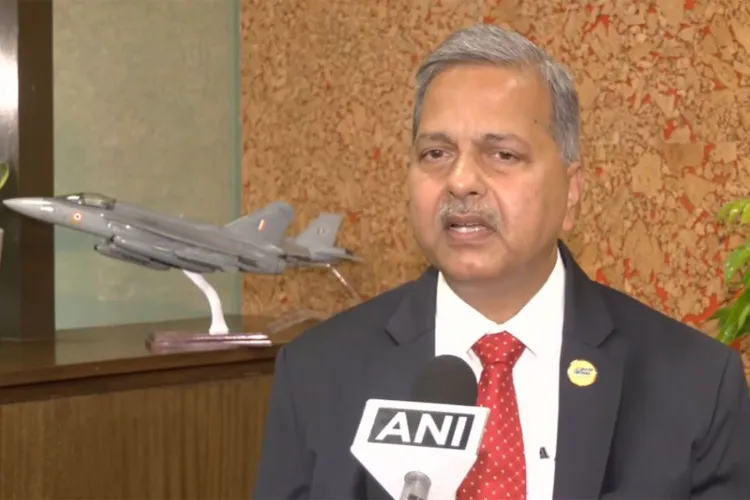
Former Maldives Vice President Faisal Naeem on Wednesday hailed India’s role as a responsible global leader, saying the country has set a powerful example for the Global South through principled diplomacy, democratic values and regional cooperation.
Delivering the 8th Atal Bihari Vajpayee Memorial Lecture at the India Habitat Centre, organised by the India Foundation ahead of Vajpayee’s birth centenary on December 25, Naeem described the former prime minister as a statesman who proved that “decisiveness and civility are not opposites”. In an age of growing polarisation, Vajpayee’s politics demonstrated that firm leadership need not be divisive, he said.
The lecture was attended by BJP leader Ram Madhav and former Union minister Vijay Goel. Opening the session, Madhav portrayed Vajpayee as an exceptional leader whose public conduct mirrored his private character. “There was no gap between who Vajpayee ji was and how he governed. His life and politics were transparent to the nation,” he said.
Speaking on the theme ‘Peace, Democracy and Islam: The Maldivian Experience’, Naeem underlined the deep-rooted ties between India and the Maldives, describing them as neighbours connected by shared history, culture and a common aspiration for peace and prosperity in South Asia. India, he said, has consistently stood by the Maldives as a trusted partner in its democratic and developmental journey.
“The bond between our countries rests not just on geography, but on confidence built through actions,” Naeem observed, noting that bilateral ties acquired renewed momentum during Vajpayee’s tenure.
Recalling India’s swift intervention during the 1988 coup attempt in the Maldives, Naeem said New Delhi’s response left a lasting impression. “When our sovereignty was under threat, India acted decisively. Such moments become the bedrock of trust between a large democracy and a small island nation,” he said.
Naeem also highlighted Vajpayee’s foresight in recognising the strategic importance of the Indian Ocean. According to him, Vajpayee understood maritime security as a collaborative effort involving safe sea lanes, shared surveillance and mutual trust, rather than mere naval power. This vision, he said, continues to shape India-Maldives cooperation in areas such as coast guard training, maritime awareness, hydrography, search and rescue operations, and coordinated emergency responses.
“These initiatives strengthen security without militarising the region and promote cooperation without eroding sovereignty,” Naeem remarked, calling it “partnership-based security, not power projection”.
He added that India’s role has expanded over time from being a dependable first responder to a comprehensive development partner, citing India’s vaccine assistance during the Covid-19 pandemic as timely and life-saving.
Reflecting on Vajpayee’s approach to peace and democracy, Naeem said the former prime minister viewed peace as an ongoing political commitment rooted in dialogue, restraint and respect for institutions. Democracy, he added, was for Vajpayee not just a procedural system but a moral framework for managing diversity. Even during long years in opposition, Vajpayee never weakened democratic institutions, firmly believing in Parliament as the voice of the people.
Naeem noted that these principles resonated strongly with the Maldives’ own democratic transition in 2008. “Like India, our democracy has faced challenges, yet it has survived because of faith in accountability, checks and balances, and peaceful political competition,” he said.
READ MORE: Five places in India where Christmas comes alive in spirit and celebration
Highlighting Vajpayee’s belief in broad-based consensus, Naeem said the idea of a grand coalition carried lessons beyond India. “It teaches us that compromise is not weakness and inclusion is not inefficiency, an approach especially important for small, closely connected societies.”
Concluding his address, Naeem said India’s rise, anchored in democratic values and moral responsibility, carries global significance. “As the voice of the Global South, India has shown the world what responsible leadership truly looks like,” he said.