




Patna
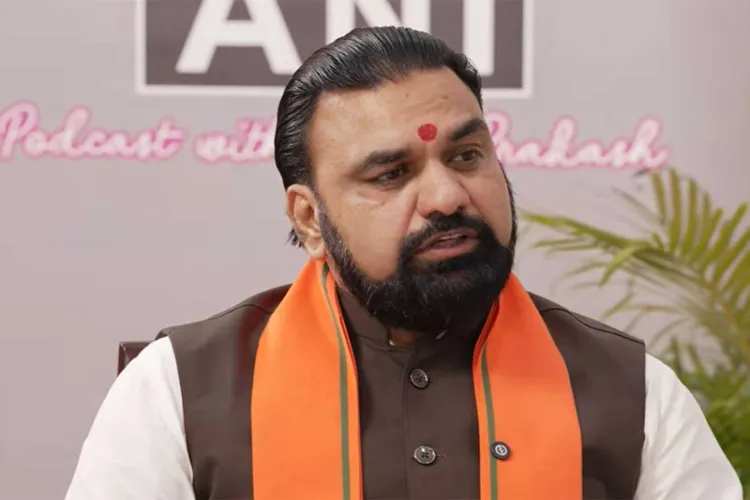
Bihar Chief Minister Samrat Choudhary on Tuesday detailed the government's response to intense flooding caused by sudden water surges upstream in Nepal and Tibet.
Emphasising Bihar's geographical vulnerability as a lower riparian state, Chief Minister Choudhary highlighted both the immediate emergency measures deployed to protect lower riparian districts and long-term infrastructural DPRs (Detailed Project Reports) focused on river interlinking and dam construction.
Speaking to ANI, Choudhary outlined immediate rescue operations and long-term river infrastructure projects designed to mitigate recurring inundations.
"Look, there are continuous flood risks, and two major rivers are the primary source of flooding. There are also other rivers such as the Budhi Gandak, Bagmati, Kamala, and Mahananda. The situation we recently observed in Nepal involved a sudden flood surge that directly impacted Bihar," he said.
The Bihar CM further highlighted that the State authorities deployed National Disaster Response Force (NDRF) and State Disaster Response Force (SDRF) teams to evacuate approximately 20,000 residents stranded in high-risk riverbed areas, relocating them to safer grounds and operating community kitchens for two to three days to supply essential meals to displaced populations until water levels stabilised.
"The first step we took was deploying NDRF and SDRF teams to evacuate people from the riverbed areas. We evacuated approximately 20,000 people who were located along the riverbeds, brought them to safer locations near the forest areas, and operated community kitchens for two to three days. The situation has gradually settled down since," he added.
Chaudhary also said that the government is pushing forward with river-linking initiatives, having completed interlinking efforts between the Bagmati and Budhi Gandak rivers, while advancing work on the Kosi-Mechi Link Project supported by the Central government, adding that Detailed Project Reports (DPRs) are being formulated to revitalise and secure the entire ecosystem around the Kosi and Gandak rivers.
"Bihar faces this struggle every year, which is why we continuously work to fortify the state. The Prime Minister has extended full support. I have also met with the Union Finance Minister and External Affairs Minister regarding the necessity of constructing high-level dams and finalising detailed project reports (DPRs). Ever since independence, Bihar has faced annual water inflow from Nepal, and every year we try to escape its impact," he said.
The Bagmati–Budhi Gandak interlinking project and the Koshi-Mechi intra-state link project are major state-central initiatives intended to divert excess floodwaters to irrigation-deprived belts in Eastern Bihar.
The Bihar CM further stated that it is collaborating with the Central Water Commission (CWC) and NABARD to draft Detailed Project Reports (DPRs) for high-level dams upstream and comprehensive embankment fortification along the Kosi and Gandak basins.
"We have gradually repaired our embankments. The Prime Minister provided significant backing to connect the Kosi-Mechi Link project. Alongside this, we have completed the interlinking work between the Bagmati and Budhi Gandak rivers. However, we are also working to overhaul the broader ecosystem of the Kosi and Gandak rivers by preparing comprehensive DPRs. We are receiving support from various central agencies, including the Central Water Commission (CWC) and NABARD," he said.
Bihar’s northern plains routinely bear the brunt of monsoon discharge from Nepal’s upper catchment basins. High-velocity torrents travelling down the initial 100-kilometre stretch pose severe erosion risks to downstream bunds and embankments.
Chief Minister Choudhary referenced the catastrophic Kosi River embankment breach of 2008–2009, which inundated large swathes of Purnia and the Kosi region, underlining the necessity of continuous structural repair to prevent similar disaster events.
READ MORE:Dr Syed Abdullah and his team save nine newborns from NICU fire
"The first 100 kilometres represent a critical stretch because the water flows at very high speeds and can breach our embankments. As you may recall, during 2008–2009, an embankment breach submerged the entire Kosi and Purnia region. We are actively working on long-term measures to safeguard the state from similar disasters in the future," he said. (ANI)









.webp)

.webp)
