New Delhi
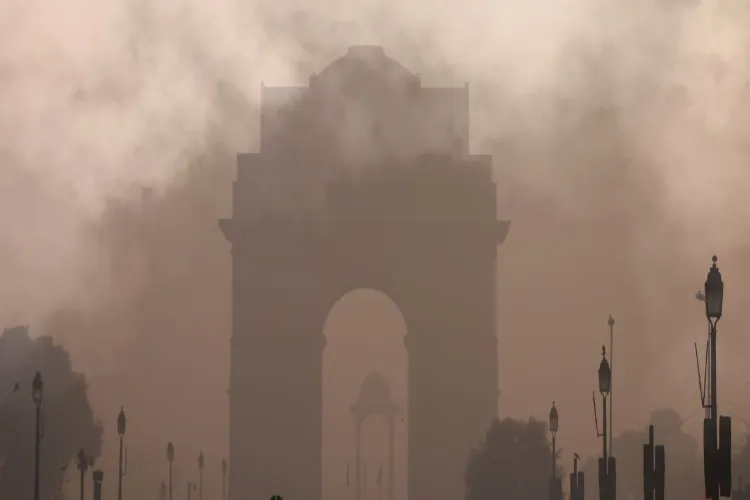
The Commission for Air Quality Management (CAQM) on Wednesday withdrew measures under Stage-IV of the Graded Response Action Plan (GRAP) across the National Capital Region (NCR) and adjoining areas, citing a sustained improvement in Delhi’s air quality.
The decision followed a review meeting of the Sub-Committee on GRAP, which assessed the current pollution levels along with weather forecasts from the India Meteorological Department (IMD) and the Indian Institute of Tropical Meteorology (IITM).
According to the CAQM order, the revocation comes in line with directions of the Supreme Court and the modified GRAP schedule issued on November 21, 2025. While Stages I, II, III and IV of GRAP had been in force since mid-October, the panel noted continuous improvement in air quality over the past two days.
The Commission observed that Delhi’s Air Quality Index (AQI) showed a sharp decline due to strong winds and favourable meteorological conditions. On December 24, the city recorded an AQI of 271, placing it in the ‘Poor’ category, a marked improvement from earlier ‘Severe+’ levels.
However, forecasts from IMD and IITM suggest that pollution levels could rise again in the coming days as wind speeds are expected to slow down. Taking this into account, the Sub-Committee decided to immediately revoke its December 13 order enforcing Stage-IV measures, which apply when AQI crosses the ‘Severe+’ threshold of 450.
While lifting Stage-IV restrictions, CAQM directed all implementing agencies to strictly enforce measures under GRAP Stages I, II and III. Authorities have been asked to maintain heightened vigilance to ensure that air quality does not deteriorate further and slip back into the ‘Severe’ category.
The Commission also appealed to residents to comply with the citizen charter prescribed under the applicable GRAP stages, particularly during the winter season when weather conditions often hinder the dispersion of pollutants.
READ MORE: India has made Christmas carols its own over time
CAQM said it will continue to closely monitor the air quality situation and review restrictions periodically based on pollution levels and weather forecasts.


.png)





.webp "President Droupadi Murmu")
_Jyotiraditya_Scindia.webp "Union Minister for Development of the North Eastern Region (DoNER) Jyotiraditya Scindia")