 Vidushi Gaur/New Delhi
As Christmas approaches, the sound of carols once again fills churches, schools, streets, and homes across India, reminding people that the festival is as much about music and community as it is about faith. While Christmas carols originated in Europe, India has, over the centuries, developed a unique and rich tradition of singing them, often blending Western melodies with Indian languages, rhythms, and cultural expressions.
One of the most widely sung Christmas carols in India is “Silent Night”, known across regions in English, Hindi, Malayalam, Tamil, and several other Indian languages. Introduced during the colonial era by missionaries, the carol found a deep emotional connection among Indian Christians for its gentle melody and message of peace. Even today, it is a staple at midnight Masses from Kerala to Kolkata, from Goa to the Northeast.
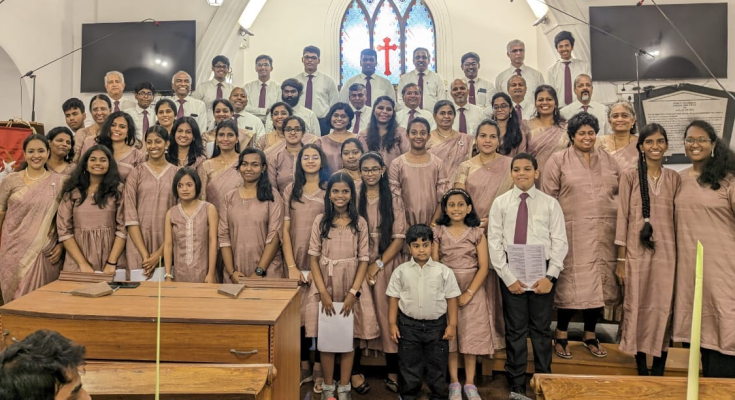 The Choir group of English Church in Mylapore, Chennai
India’s colonial history also introduced carols such as “O Come All Ye Faithful” and “Hark! The Herald Angels Sing”, which continue to be sung in English, especially in urban churches and convent schools. These carols have become an integral part of Christmas celebrations in cities like Mumbai, Chennai, Bengaluru, and Delhi, where midnight Mass is followed by group carol singing on church premises.
However, what truly sets India apart is the way Christmas carols have been adapted into Indian languages. In Kerala, where Christianity has a 2,000-year-old history, Malayalam Christmas carols—popularly known as Christmas geethangal, hold a special place. Songs like “Raajave Yesu Raajave” and “Swargathil Ninnum” are sung with the same enthusiasm as English carols, especially during house-to-house carol visits known as carol rounds. These rounds, often organised by parish youth groups, spread Christmas cheer across neighbourhoods irrespective of religion.
Goa, with its strong Portuguese influence, has a distinctive Christmas carol tradition. Konkani and Portuguese carols like “Gloria in Excelsis Deo” and “O Come Divine Messiah” echo through village churches and streets during Christmas week.
In many Goan villages, carol singing is accompanied by traditional instruments such as the ghumot, violin, and guitar, creating a festive atmosphere that draws tourists and locals alike.

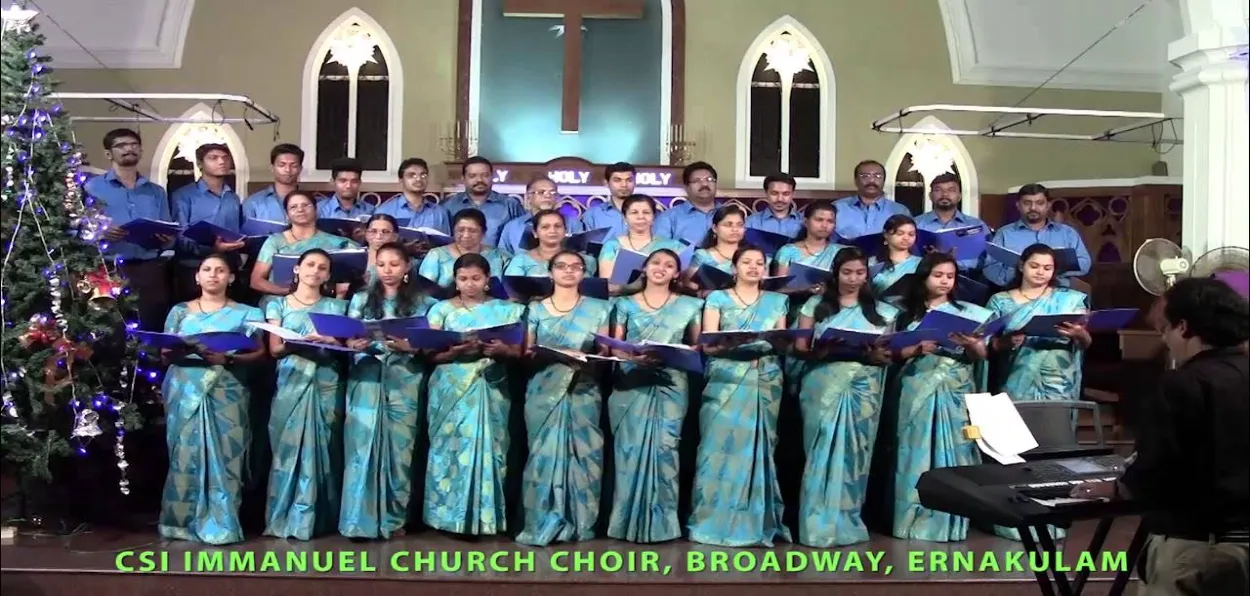
A Choir Group from North east
In eastern India, particularly in West Bengal and the Northeast, Christmas carols are an essential part of the festive season. In Kolkata, Anglo-Indian communities keep alive English carol traditions, while Bengali carols such as “Aaj Boro Din” have become immensely popular.
In states like Nagaland, Mizoram, Meghalaya, and Manipur, where Christianity is widely practised, carol singing is a large-scale community affair. Choir competitions, open-air carol concerts, and inter-church events are common, with Western hymns performed alongside indigenous compositions.
One cannot talk about Christmas carols in India without mentioning “Jingle Bells”, which, though not a religious carol, has become inseparable from Indian Christmas celebrations. Sung enthusiastically by schoolchildren during Christmas functions, it reflects how global Christmas culture has seamlessly blended into Indian festivities.
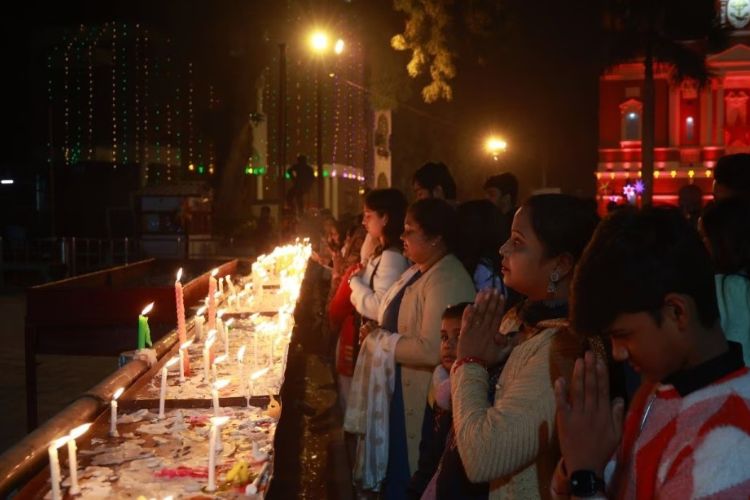 People praying at Grotto to Mother Mary at Gol Dakhana church in New Delhi
Over the years, Bollywood and Indian Christian music albums have also contributed to the popularity of carols. Choir recordings, devotional albums, and Christmas specials on television and radio help carry these songs to a wider audience, including non-Christians who often participate in Christmas celebrations as part of India’s composite culture.
What makes Christmas carols in India particularly special is their inclusive nature. Carol groups often visit homes regardless of religion, spreading messages of peace, joy, and goodwill. In many towns and villages, Hindu, Muslim, Sikh, and Christian neighbours join together to listen, clap, and sometimes even sing along, reflecting India’s long-standing tradition of shared festivities.
READ MORE: Nirmal, my Abba's most trusted son
As India celebrates Christmas once again, these carols—whether sung in English, Malayalam, Tamil, Bengali, Konkani, or Hindi continue to act as musical bridges between cultures, generations, and faiths. They remind listeners that beyond the lights, gifts, and celebrations, Christmas in India is ultimately about harmony, compassion, and togetherness, values echoed beautifully through the timeless melodies of its carols.