New Delhi
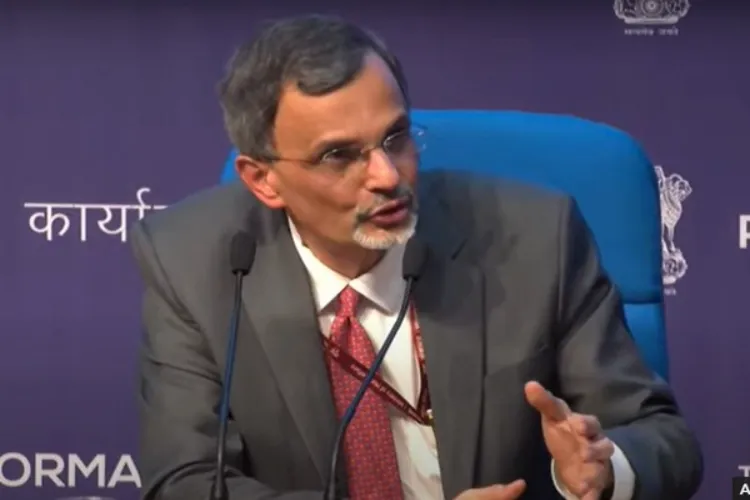
Strengthening India’s manufacturing base is key to long-term currency stability, Chief Economic Adviser V Anantha Nageswaran said on Thursday, highlighting the link between export-driven industrial growth and robust external balances.
Nageswaran emphasized that the strength of a nation’s currency ultimately hinges on its industrial and manufacturing capabilities. He noted that across successful industrial economies, periods of strong manufacturing-led exports have historically preceded improvements in current account balances, foreign reserve accumulation, and exchange-rate credibility.
“While services exports are important, they cannot fully replace the role of a strong manufacturing sector,” he said during his Economic Survey presentation. According to the CEA, sustained growth in manufacturing exports improves current account positions, supports foreign exchange reserve build-up, and gradually strengthens the credibility of the currency.
Addressing concerns over recent rupee depreciation, he clarified that currency movements are largely a trend across emerging markets rather than India-specific. Since 2000, the rupee’s performance has been broadly in line with peers such as the Brazilian real, South African rand, and Indonesian rupiah.
Highlighting India’s resilience, Nageswaran pointed out that foreign exchange reserves have nearly doubled over the past decade, rising from USD 341.6 billion in FY15 to USD 701.4 billion as of January 16, FY26. Import cover also improved from 8.9 months in FY15 to over 11 months in FY26, strengthening the country’s ability to manage global financial volatility.
ALSO READ: I received my wages for hard work of decades: Ghafruddin on Padma Shri
The rupee hit a record low of 91.99 against the US dollar on Thursday, slightly surpassing last week’s previous low of 91.96, reflecting broader emerging-market pressures amid global monetary tightening and geopolitical shocks.











.webp "Union Home Minister Amit Shah")
.webp "Union Minister of Parliamentary Affairs Kiren Rijiju")


_(1).webp)