New Delhi
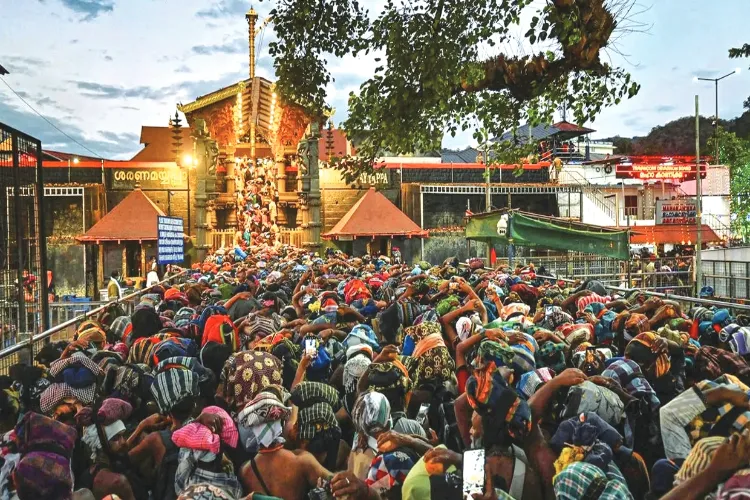
The Centre on Thursday defended restrictions on the entry of women of menstruating age into the Sabarimala Temple, arguing before the Supreme Court of India that the 2018 judgment lifting the ban was based on an assumption of male superiority.
A nine-judge Constitution bench, headed by Chief Justice Surya Kant, is currently hearing a batch of petitions concerning alleged discrimination against women in places of worship and the broader scope of religious freedom across faiths.
Appearing for the Centre, Solicitor General Tushar Mehta told the bench that the issue should not be viewed as male- versus female-centric, but rather in the context of specific religious beliefs and practices. He cited examples of temples where restrictions apply to men as well, arguing that such traditions are rooted in faith.
Referring to practices in Kerala, Mehta pointed to the Kottankulangara Sree Devi Temple, where men dress as women during the Chamayavilakku festival, illustrating that certain customs are uniquely tied to specific religious traditions.
Additional Solicitor General K M Nataraj submitted that public morality, rather than constitutional morality as previously interpreted, should guide decisions in such matters.
In September 2018, a five-judge Constitution bench had, by a 4:1 majority, allowed the entry of women aged 10 to 50 into the Sabarimala temple, declaring the longstanding restriction unconstitutional. However, in November 2019, another bench led by then Chief Justice Ranjan Gogoi referred broader questions related to gender-based restrictions in religious institutions to a larger bench.
READ MORE: From LoC to Bollywood: Naseem Mughal played Lulli Dakait in Dhurandhar
The current proceedings are examining wider constitutional questions, including the balance between religious freedom and equality, and how such principles apply across different faiths and practices.