Kolkata
The publication of final electoral rolls after the Special Intensive Revision (SIR) has triggered unease for the Bharatiya Janata Party in West Bengal, particularly among the influential Matua community that has been central to its electoral rise in the state.
Large-scale deletions of names from voter lists in districts such as Nadia and North 24 Parganas have sparked discontent among Matua voters, raising questions over citizenship assurances linked to the Citizenship Amendment Act.
For years, the BJP’s outreach to Matua refugees hinged on a promise—support the party and long-standing uncertainties over citizenship would be resolved. However, the revised electoral rolls have unsettled that equation, particularly in key constituencies such as Bongaon, Bagdah, Gaighata, Swarupnagar, Ranaghat and Krishnanagar.
In these regions, which played a pivotal role in the BJP’s performance in the 2021 Assembly elections, the political discourse has shifted. Voters who once backed the party in anticipation of citizenship clarity are now questioning why they are being asked to re-establish their identity.
Early signs of political drift have begun to emerge. Reports from villages in Matua-dominated areas suggest that some families have shifted allegiance to the All India Trinamool Congress after finding their names missing from the rolls.
The Matua community, spread across nearly 55 constituencies in southern Bengal and parts of north Bengal, has historically played a decisive role in electoral outcomes. Party insiders acknowledge that refugee-dominated seats accounted for a significant share of the BJP’s 77-seat tally in 2021.
The scale of deletions has compounded concerns. In North 24 Parganas alone, over 12 lakh names were reportedly removed during the revision process. Areas like Bongaon subdivision saw particularly high numbers, with tens of thousands of deletions across multiple constituencies.
Experts analysing SIR data point out that the highest rates of “unmapped” voters were found in Scheduled Caste-reserved constituencies such as Gaighata and Bagdah, disproportionately affecting Matua and Namasudra populations.
This has placed the BJP in a difficult position in regions where it had earlier assured refugee Hindus that documentation hurdles would not impede citizenship under the CAA.
Senior BJP leader and Union minister Shantanu Thakur has sought to reassure voters, stating that no Hindu refugee would be forced to leave the country and that efforts are underway to restore names through appeals and fresh applications.
Despite these assurances, uncertainty persists on the ground. Community leaders, including those from the All India Matua Mahasangha, have highlighted widespread anxiety, noting that only a small fraction of applicants have so far received citizenship documentation.
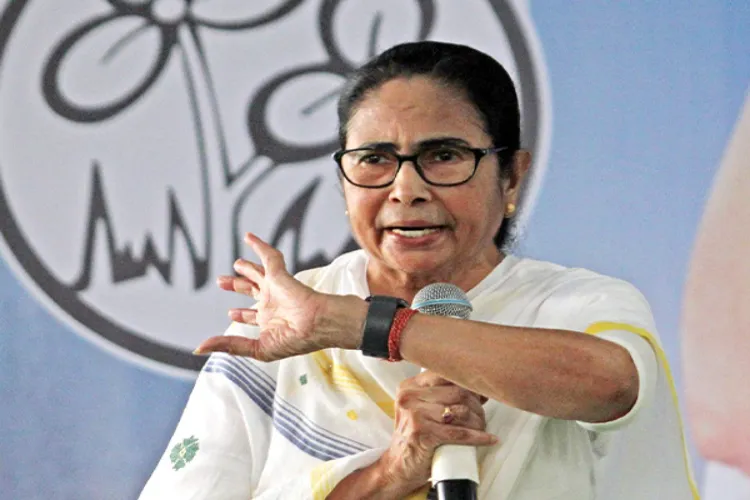
Meanwhile, Chief Minister Mamata Banerjee has mounted a political counterattack, accusing the BJP of failing to safeguard even the voting rights of its core supporters.
Mamata Bala Thakur, representing a faction of the Matua leadership aligned with the ruling party, said the developments have created fear among voters about their status and future.
READ MORE: Rajasthan: Gaurakshaks silence hatemonger with assertion of Hindu-Muslim unity
With elections approaching, the controversy over electoral roll revisions has introduced a new layer of uncertainty in Bengal’s political landscape. For the BJP, the challenge now lies in retaining the trust of a community that once formed the backbone of its expansion in the state.








.webp "Supreme court of India")
.webp "Congress leader Pawan Khera")

.webp)