New Delhi
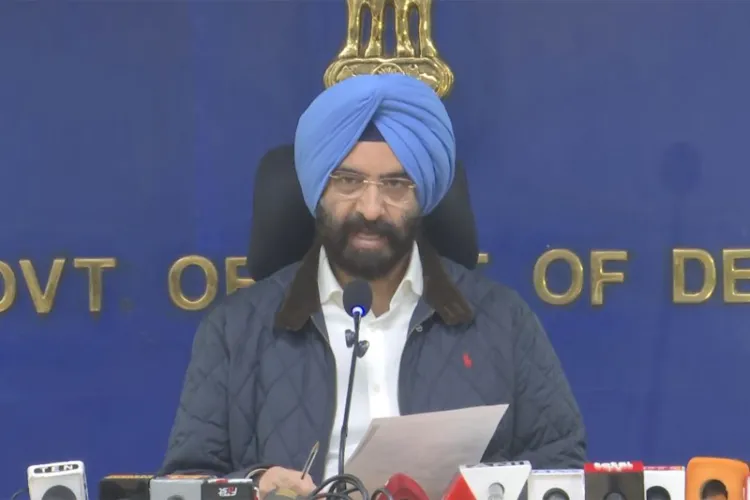
The Delhi Cabinet, led by Chief Minister Rekha Gupta, on Tuesday approved a series of major decisions aimed at strengthening the national capital’s fight against pollution and improving environmental governance, according to an official press release.
Announcing the decisions, Environment Minister Manjinder Singh Sirsa said the measures would bring “a decisive reduction in sources of air and water pollution, while creating a cleaner and more sustainable urban environment.”
The Cabinet approved an allocation of Rs 100 crore for the rejuvenation of water bodies under the Delhi government. Of the nearly 1,000 water bodies in Delhi, around 160 fall under the state government’s jurisdiction.
“The rejuvenation of Delhi’s water bodies will play a crucial role in pollution control. The Chief Minister has directed that every possible financial support be extended to complete this work within the year,” Sirsa said.
Earlier, the Delhi Pollution Control Committee (DPCC) had provided Rs 19 crore for the initiative. With the additional allocation, the government aims to achieve 100 per cent rejuvenation of all identified water bodies. The minister also said follow-ups would be made with the Delhi Development Authority (DDA) to ensure similar action for water bodies under its control.
The Cabinet also approved the establishment of Delhi’s first E-Waste Park at Holambi Kalan, spread over 11.5 acres. The facility will adhere to stringent pollution norms and operate on a 100 per cent circular, zero-waste model.
“This will be India’s first state-of-the-art e-waste facility built on zero pollution and zero wastage principles. The plant will fully recycle and reuse water through an advanced recirculation mechanism,” Sirsa said, adding that it would set a benchmark for sustainable e-waste management with no water or air pollution.
In another key decision, the Cabinet approved the transfer of operational control of Delhi Transport Corporation (DTC) buses from the Delhi Integrated Multi-Modal Transit System (DIMTS) to DTC, effective from the next financial year.
“Bringing all bus operations under DTC will enhance service efficiency, allow rationalisation of routes and ensure better employment stability for drivers and conductors currently engaged under outsourced arrangements,” Sirsa said. The move is expected to improve route planning, accountability and unified command within the city’s public transport system.
The Cabinet also decided to continue the ‘No PUCC, No Fuel’ campaign even after the lifting of GRAP restrictions, ensuring year-round enforcement of vehicle emission norms.
“Vehicle pollution is one of the biggest contributors to air pollution. A vehicle driving without a valid Pollution Under Control Certificate is no less than committing a crime against Delhi’s air,” Sirsa said.
Recent inspections found 12 PUCC centres engaging in irregularities, prompting continuous verification to ensure transparency and strict compliance. Additionally, 411 polluting industries have been issued closure notices by the DPCC, while 400 units have been sealed by the Municipal Corporation of Delhi (MCD), taking the total enforcement actions to over 800.
Four new Automated Vehicle Testing Stations (ATS) will also be made operational soon to strengthen emissions and fitness testing of commercial vehicles.
The Cabinet further approved amendments to the ASG mandate for high-rise buildings, allowing the installation of mist-based dust suppression systems, a method already deployed at ITO and other key locations.
READ MORE: India has made Christmas carols its own over time
“We are enforcing the toughest standards so that no polluter escapes accountability. From factories to fuel stations, every source contributing to pollution will face stringent monitoring,” Sirsa added.










.webp "Shiv Sena (UBT) chief Uddhav Thackeray")


_(1).webp)