.webp "Representational image")
New Delhi
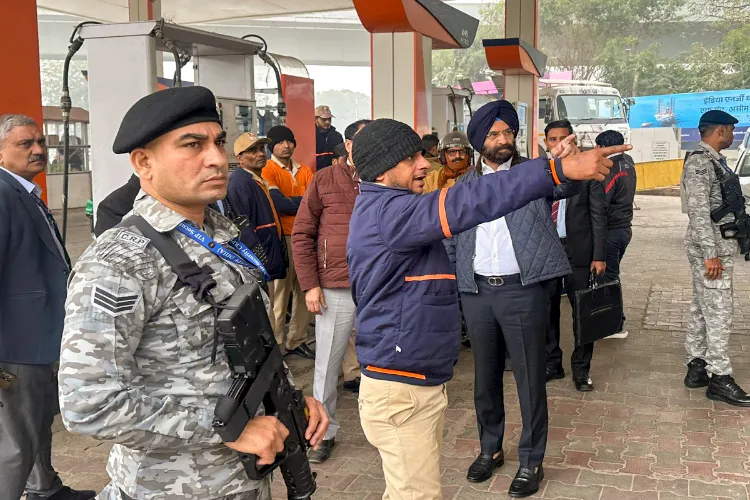
A thick blanket of hazardous smog continued to envelop large parts of the national capital on Thursday, pushing air quality into the ‘very poor’ category and sharply reducing visibility across several areas.
According to data released by the Central Pollution Control Board (CPCB), RK Puram recorded an Air Quality Index (AQI) of 374, firmly placing it in the ‘very poor’ range. Similar conditions prevailed near Jawaharlal Nehru Stadium, where the AQI stood at 349. The Najafgarh area reported relatively lower pollution levels with an AQI of 284, though it too remained shrouded in smog.
The deteriorating air quality prompted the Commission for Air Quality Management (CAQM) to enforce all Stage-IV measures under the Graded Response Action Plan (GRAP) across Delhi-NCR to curb further pollution.
In addition to Delhi, dense fog conditions were also reported from Ayodhya in Uttar Pradesh, further indicating unfavourable weather patterns across the region.
As per CPCB classification, AQI levels between 0–50 are considered ‘good’, 51–100 ‘satisfactory’, 101–200 ‘moderate’, 201–300 ‘poor’, 301–400 ‘very poor’, and 401–500 ‘severe’.
Earlier this month, CAQM intensified enforcement efforts by deploying 19 inspection teams to conduct road audits on December 12. The inspections covered 136 road stretches under the jurisdiction of the Delhi Development Authority (DDA).
The assessment revealed significant shortcomings in road maintenance. Of the inspected stretches, 15 showed high levels of visible dust, 38 had moderate dust accumulation, and 61 exhibited low dust levels, while only 22 stretches were found to be dust-free. Accumulation of municipal solid waste (MSW) and construction and demolition (C&D) debris was observed on 55 and 53 stretches respectively. Additionally, six locations showed signs of MSW or biomass burning.
The Commission noted that these findings highlight recurring lapses and inadequate upkeep of road infrastructure, stressing the urgent need for the DDA to improve operational efficiency and ensure swift corrective action.
READ MORE: Cricket taught me to value human talent over caste and religion
CAQM emphasised that such violations significantly contribute to rising particulate matter levels in Delhi and called for strengthened on-ground measures. These include regular mechanical sweeping, timely removal of collected dust, proper maintenance of road shoulders and central verges, increased use of water sprinkling and dust-suppression systems, and strict enforcement against open burning across all DDA-maintained stretches.


.png)