Owais Saqlain Ahmed
When Cindy Ngamba stepped onto the Olympic podium in Paris last summer, she carried a weight no medal could measure. The 25-year-old Cameroonian boxer had no anthem to play, no flag to raise—competing for the Refugee Olympic Team because returning home meant persecution for her sexuality.
International Migrants' Day
After winning bronze and becoming the first refugee athlete ever to medal at the Games, she said something that should shake us: "I represent more than 120 million displaced people who have dreams but didn't have opportunities." In that moment, she spoke for every migrant building cities they can't afford to live in, raising children who aren't their own, cleaning floors while their own dreams gather dust.
This story of displacement isn't new. Fourteen centuries ago, Prophet Muhammad fled Mecca with assassins pursuing him, arriving in Medina as a refugee. The city's residents—the Ansar—did something extraordinary: they paired each refugee with a local family, sharing homes and businesses equally. Not charity, but genuine partnership. The Quran praised those who "loved those who sought refuge with them" and gave them preference despite facing their own hardships.
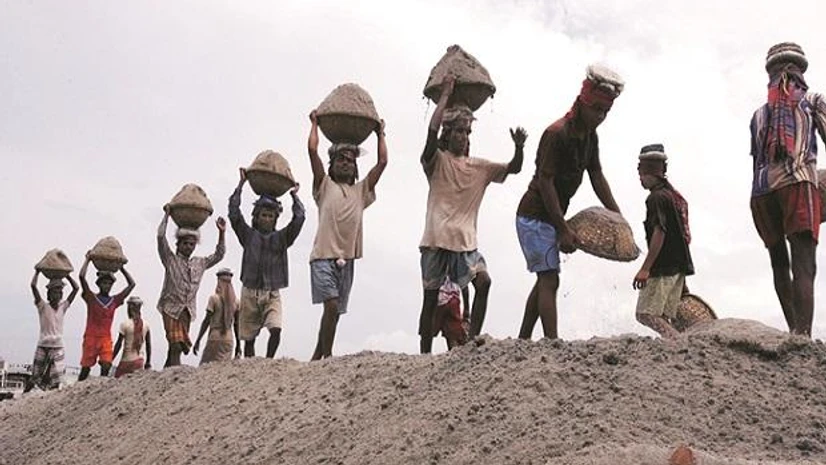 Migrant labourers who build Indian infrastructure
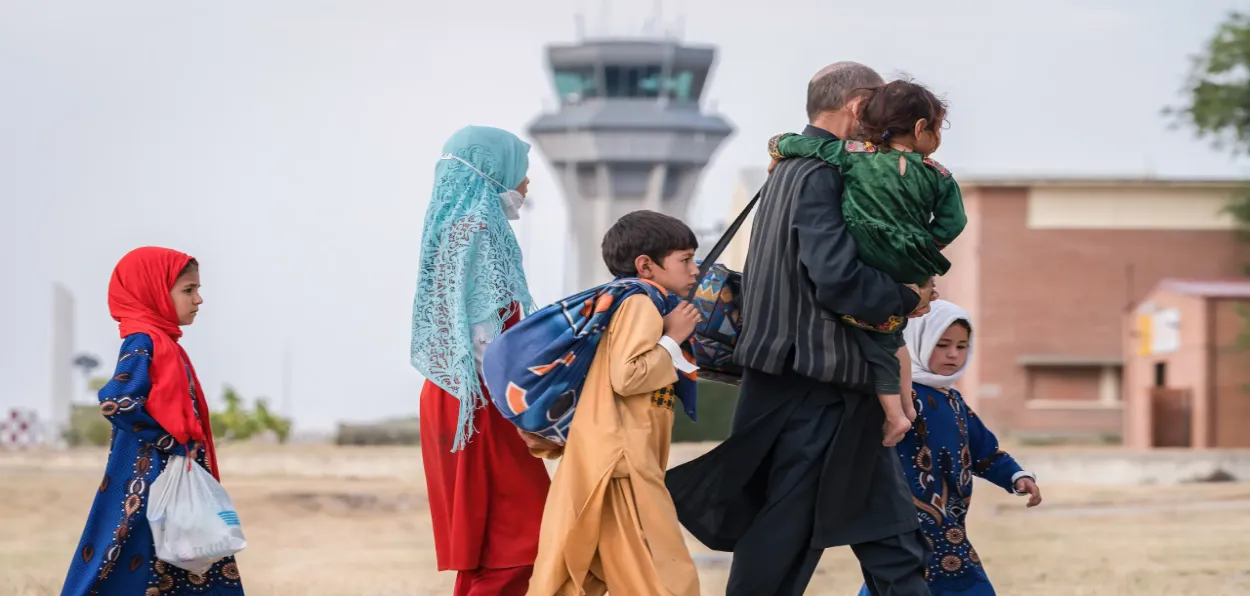
Walk through Mumbai at dawn or Delhi at dusk today, and you'll witness this same movement. India's 2011 Census recorded over 450 million internal migrants moving from villages to cities, chasing opportunities that their homes couldn't provide. Add the Bangladeshi labourers, Nepali guards, and African entrepreneurs. The UN counts 281 million people now living outside their birth countries, with India both sending millions abroad and hosting millions more.
The Prophet's first address in Medina was remarkably practical: "Spread peace, give food, and pray when people are sleeping." A blueprint for building an inclusive community when a city's population suddenly doubles with displaced people.
Today's reality stands in painful contrast. The International Labour Organisation's 2023 data shows migrant workers—particularly the 11.5 million domestic workers worldwide, mostly women—routinely face passport confiscation, wage theft, and abuse. The International Organisation for Migration recorded over 8,500 migrant deaths in transit last year, the highest toll ever documented. Behind each number is someone's daughter working sixteen-hour days, someone's son, unpaid for months but unable to leave.
The Constitution of Medina stated plainly: "The rights of migrants are the same as those of their hosts." The Quran reinforces this in verse 9:6: "If anyone seeks your protection, then grant him protection"—no conditions, no caveats.
That protection wasn't abstract theology—it was lived practice. Yet somewhere between then and now, we've forgotten what our grandparents knew: every family has a migration story. Your grandfather, who moved to the city for college. Your aunt who married into a different state. We're all descendants of people who once arrived somewhere new, nervous and hopeful.
 The Refugee Olympic Team grew from 10 athletes at Rio 2016 to 37 at Paris 2024. Syrian judoka Muna Dahouk, Afghan cyclist Masomah Ali Zada, and Ngamba proved that displacement doesn't diminish dreams—it sometimes sharpens them.
The Prophet urged hisfollowers to "be in this world as if you were a stranger or a traveller," meaning not to make anyone else feel like they are strangers in their own midst, either, but rather to acknowledge the fact that we all share a common status as temporary residents on this planet.
The construction worker who built your apartment probably can't afford to live in it. The woman who cleans office towers at 5 AM won't see her own home clean for weeks. The delivery person racing against time might miss his own child's first steps. They don't want pity—just fairness, the right to send their kids to decent schools, to visit home without fearing they won't be let back.
On this International Migrants Day, the question is simple: When did we stop seeing the security guard as someone's father? When did "where are you from" become an interrogation instead of curiosity?
The Ansar didn't just tolerate the Muhajirun—they split their wealth and homes with them. Not because they had extra, but because they recognised themselves in the strangers' eyes. Strangers are just family we haven't met yet.
So maybe today, learn your building guard's name. Ask your domestic helper about her dreams. Tip the delivery person generously. Small acts, sure—but revolution always starts with seeing someone you'd stopped noticing.
Here's the uncomfortable truth: we're all migrants in time, if not in space. Today's resident was yesterday's newcomer. The web that protects us today could exclude us tomorrow.
ALSO READ: Cricket taught me to value human talent over caste and religion
The question isn't whether we can afford kindness to the world's 281 million migrants. It's whether we can afford not to.
The writer is a Bengaluru-based aviation professional