 Pallab Bhattacharyya
The geography of South Asia has long dictated a delicate dance of interdependence between India and Bangladesh. However, recent rhetorical fires lit in Dhaka are testing the resilience of this bond.
When Hasnat Abdullah, a prominent leader of the newly formed National Citizen Party, stood at Dhaka’s Central Shaheed Minar and threatened to isolate India’s "Seven Sisters" by severing the vulnerable Siliguri Corridor—the narrow "Chicken’s Neck"—it was more than just a fiery speech. He accused India of supporting “chaos-creators” and those allegedly sabotaging Bangladesh’s electoral process, backing those involved in the attack on right-wing activist Osman Hadi, who was grievously wounded, involvement in cross‑border killings of Bangladeshi nationals and “sheltering forces” that allegedly do not respect Bangladesh’s sovereignty, voting rights and human rights.
It was a calculated attempt to reframe India from a "trusted partner" to a "hostile hegemon" in the eyes of a new generation of Bangladeshi nationalists. This provocation, which included accusations of India sabotaging electoral processes and downplaying the shared sacrifice of the 1971 Liberation War, signals a deeper political and geopolitical shift that New Delhi cannot afford to ignore.
India has summoned Bangladesh's High Commissioner in New Delhi, Muhammad Riaz Hamidullah, to issue a formal diplomatic protest.
The emergence of such sharp anti-India sentiment is a symptom of internal realignments within Bangladesh. As new student-led platforms rise, they often find that anti-India rhetoric serves as a cheap and emotive tool for political mobilisation, allowing them to project a fierce sense of sovereignty without the immediate need for a complex governance agenda.
By branding India as a back-room supporter of discredited political forces, these actors seek to delegitimise both their domestic rivals and India’s regional role simultaneously.
#WATCH | Bangladesh: A large number of people, under the banner of "July Oyikko" (July Unity) held a protest march to the Indian High Commission in Dhaka. They were stopped by the Police from going any further. The protesters demanded the immediate repatriation of Sheikh Hasina… pic.twitter.com/xD8HgVpWFT
— ANI (@ANI) December 17, 2025
This is coupled with a long-standing undercurrent of resentment regarding water rights, trade imbalances, and perceived interference in internal affairs. Furthermore, external powers may be fuelling these narratives to pry Bangladesh away from India’s strategic orbit, creating space for alternative alignments and investments.
India’s response to these developments must be defined by strategic composure rather than knee-jerk retaliation. While the threat to the Siliguri Corridor is largely psychological signalling aimed at hardliners, it highlights a genuine geographic vulnerability that requires quiet reinforcement.
However, treating such outbursts as state policy would only give the provocateurs the legitimacy they seek. Instead, India should maintain a dignified public silence while conveying firm private messages through diplomatic channels, making it clear that threats to territorial integrity are unacceptable. The goal is to avoid the "rhetorical mud-wrestling" that would only strengthen the hand of those seeking to portray India as an overbearing neighbour.
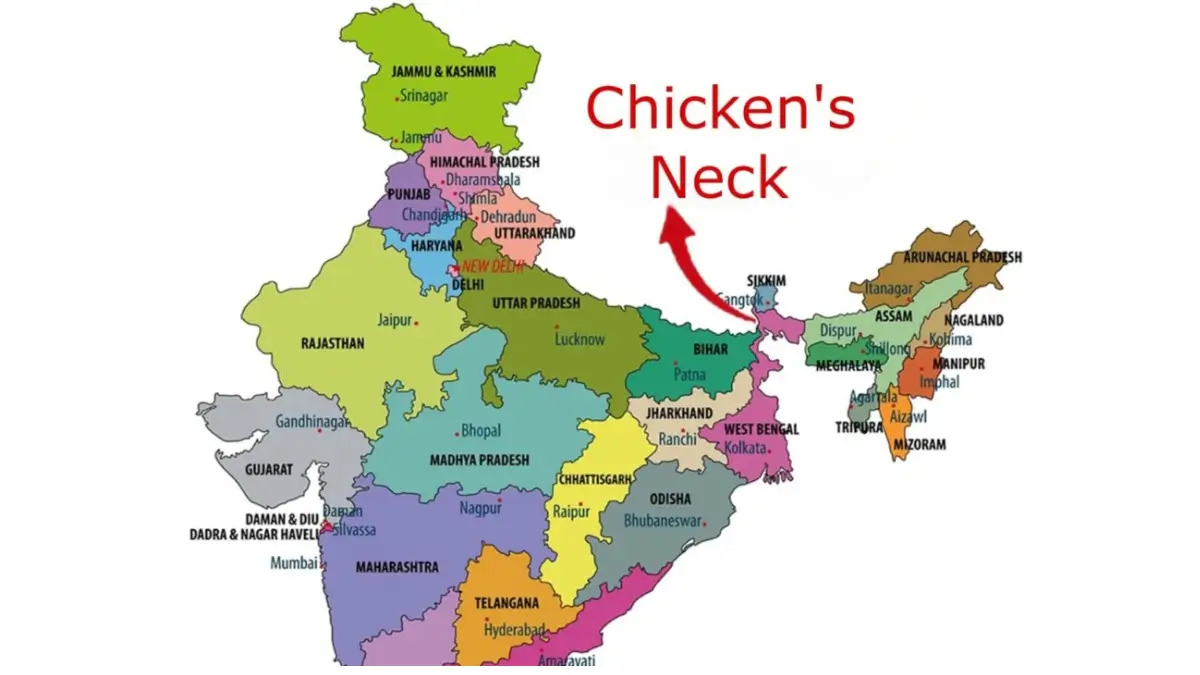
True security for the Northeast lies not just in military preparedness, but in deepening the structural interdependence between the two nations. By accelerating transit, rail, and riverine projects through Bangladesh, India can create a reality where the mutual cost of any disruption is too high for either side to bear.
The more Bangladeshi jobs and export capacities are linked to Indian trade and energy, the weaker the market becomes for radical anti-India platforms.
This should be supported by a shift from an elite-centric policy to a people-centric one—expanding scholarships, cultural exchanges, and digital engagement that allows Bangladeshi youth to view India as a partner in progress rather than a predator.
Ultimately, India must move toward a non-partisan engagement with all democratic stakeholders in Bangladesh, moving away from the perception of backing a single political side. By concluding pending water-sharing agreements and investing in visible, win-win projects in health and disaster management, India can dismantle the narrative of exploitation.
ALSO READ: Cricket taught me to value human talent over caste and religion
The current friction should be viewed as a warning signal—a chance to de-politicise the relationship and anchor it in a larger regional web of prosperity. By remaining firm in principle regarding its core security, calm in tone against provocation, and strategic in the execution of its long-term partnerships, India can ensure that temporary slogans do not derail a relationship vital to the stability of the entire region
The author is former DGP of Assam Police

.webp "Representational Image")








.webp "Kassim Ahmad")