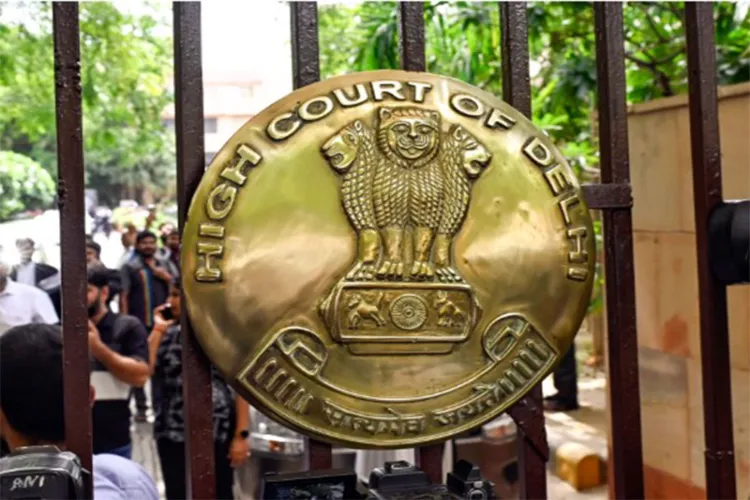
New Delhi
The Delhi High Court has permitted the retrieval and cryopreservation of sperm of a soldier in a persistent vegetative state, directing authorities not to deny the procedure solely due to the absence of fresh written consent.
The Court held that the soldier's prior consent to undergo In Vitro Fertilization (IVF) treatment would be treated as valid under the law.
Justice Purushaindra Kumar Kaurav, in an order dated April 13, 2026, further directed that the petitioner-wife's consent may be treated as sufficient for carrying forward IVF-related procedures, subject to statutory requirements and the medical condition of the soldier.
The case was filed by the wife of an Indian Army soldier who suffered a severe traumatic brain injury while on duty in Jammu and Kashmir and has since remained in a vegetative state.
The couple had earlier opted for IVF treatment to conceive a child.
A medical board at Army Hospital (R&R), Delhi Cantt, informed the Court that while sperm retrieval was technically feasible, the chances of obtaining viable sperm were minimal. It also noted that the soldier lacked the capacity to provide informed consent as required under the Assisted Reproductive Technology (Regulation) Act, 2021.
Addressing this, the Court emphasised that procedural requirements cannot override fundamental rights. It held that reproductive autonomy and the right to motherhood under Article 21 must be interpreted in a manner that advances justice.
READ MORE: Dr Fareeda Rahmathulla is changing lives through education
The Court further noted that the soldier had already consented to IVF treatment before the accident, and such consent could not be rendered meaningless due to his subsequent incapacity.
Relying on judicial precedents, the Delhi High Court reiterated that Indian law does not prohibit such procedures where consent can be reasonably established. It accordingly directed authorities to proceed without insisting on fresh written consent from the soldier.












.webp)