New Delhi
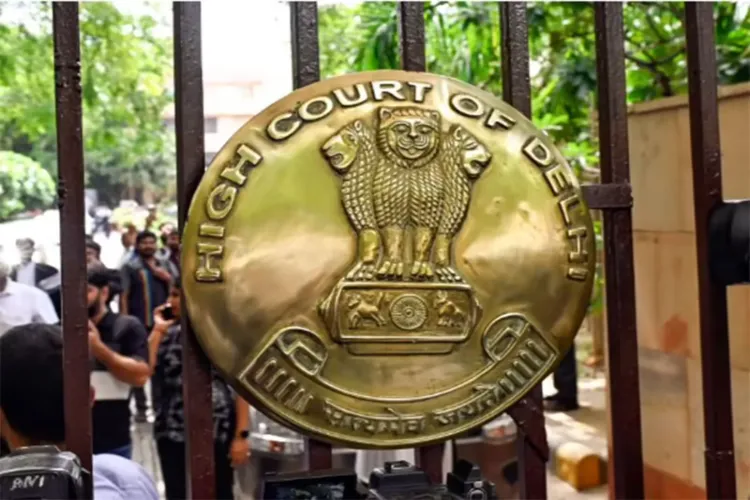
The Delhi High Court has refused to grant relief to candidates from the Economically Weaker Sections (EWS) seeking relaxation in the upper age limit and number of attempts for Central government jobs, holding that such matters fall within the realm of government policy.
The Court observed on Thursday that the existing framework, which provides 10 per cent reservation to EWS candidates without extending additional relaxations, does not violate any constitutional provisions. It emphasised that courts cannot interfere with policy decisions merely because a more equitable alternative may exist, unless the policy is shown to be arbitrary or unconstitutional.
The bench noted that EWS constitutes a distinct category based solely on economic disadvantage, unlike the Scheduled Caste (SC), Scheduled Tribe (ST) and Other Backwards Classes (OBC) categories which are rooted in historical and social backwardness. In view of this distinction, the Court held that EWS candidates cannot claim parity with these categories in matters of age relaxation or number of attempts as a matter of right.
Dealing with the argument of discrimination, the Court observed that economic hardship is not static and may change over time, whereas caste-based disadvantages are deep-rooted and enduring. Therefore, differential treatment in granting relaxations does not amount to a violation of equality under the Constitution.
READ MORE: Sarvath Adil Khan's mission of reigniting the dreams of school dropouts
The Court further noted that decisions relating to the grant of relaxations involve multiple considerations, including administrative feasibility, available data, and resource constraints, which fall within the exclusive domain of the Executive. It also clarified that policies adopted by certain States granting such relaxations to EWS candidates do not bind the Central Government.
Finding no merit in the plea, the Court dismissed the petition and declined to issue any directions to alter the existing policy.









.webp "BJP chief Nainar Nagenthran")
.webp "Lok Sabha Leader of Opposition Rahul Gandhi")
.webp)