Vidushi Gaur/ Kolkata
As the FIFA World Cup 2026 unfolds thousands of miles away across the United States, Canada, and Mexico, the passion it has ignited in West Bengal makes the tournament feel almost local. From the bustling streets of Kolkata to small towns and villages across the state, Bengal has once again transformed into a vibrant carnival of football, proving that its love affair with the beautiful game remains as strong as ever.
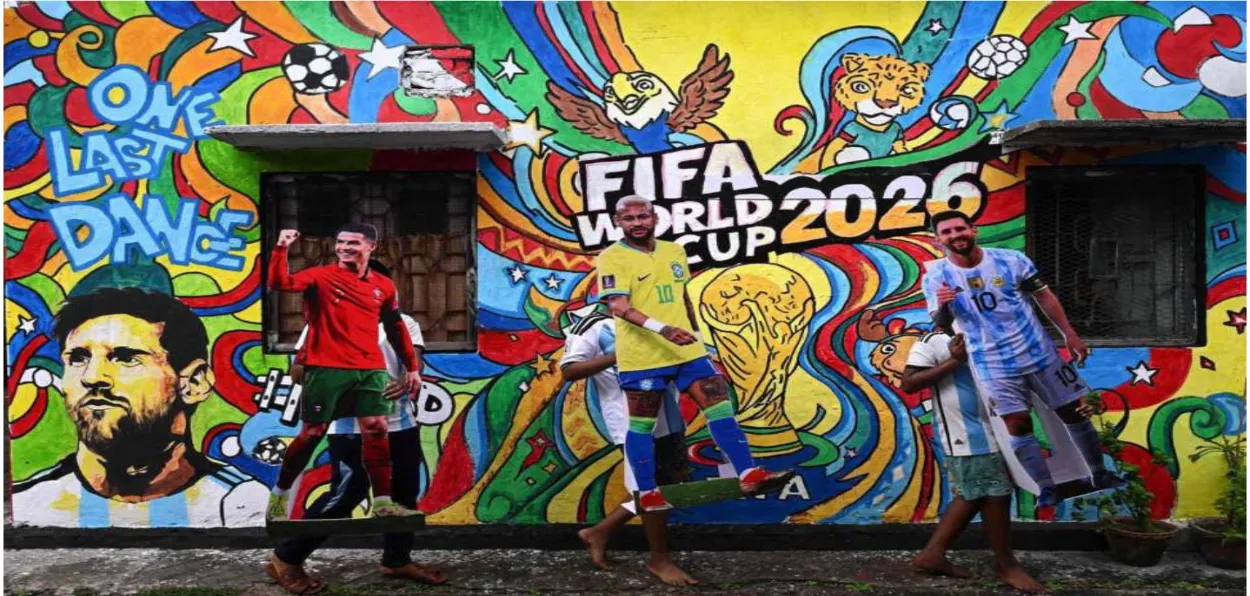
Weeks before the tournament kicked off, neighbourhoods across Kolkata began dressing themselves in the colours of their favourite teams. Blue-and-white Argentine flags flutter alongside Brazil's iconic yellow-and-green banners, while murals of Lionel Messi, Neymar, Cristiano Ronaldo, Kylian Mbappé, and Erling Haaland adorn walls, rooftops, and clubhouses. Entire localities have become football-themed fan zones, rekindling a tradition that has defined Bengal's sporting culture for generations.
FIFA fever takes over walls on streets of Kolkata.
— News Arena India (@NewsArenaIndia) June 17, 2026
Across neighbourhoods, giant murals of Lionel Messi, Cristiano Ronaldo, and Neymar dominate street corners, while flags of Argentina, Brazil, Portugal and other footballing nations flutter from roadsides and rooftops
Walls that… pic.twitter.com/Wrq4e9qxEG
In areas such as Patuli, Girish Park, and Gopal Nagar, residents have spent weeks decorating streets with flags, paintings, and giant cut-outs. One lane popularly known as "FIFA Para" has once again become a focal point for football enthusiasts, with local clubs competing to create the most eye-catching displays. Community halls and neighbourhood clubs have installed giant screens where fans gather late into the night to watch matches together.
News 18 shared a video of the grafitti curated by fans on the roads of Kolkata on X.
শহর Kolkata এক টুকরো বিশ্বকাপের মঞ্চ, নজর কাড়ছে স্ট্রিট আর্ট#News18Bangla #FIFAWorldCup2026 #KolkataStreetArt#FIFAworldcup pic.twitter.com/VtFn7JjHxI
— Bengal's untold tales (@Gramergolpo) June 17, 2026
What makes Bengal's World Cup celebrations unique is that they transcend the tournament itself. Football here is not merely a sport; it is part of the state's cultural identity. The fierce yet friendly rivalry between Argentina and Brazil supporters mirrors the historic football rivalries that have shaped Bengal's sporting consciousness for decades.
This year, Argentina continues to enjoy enormous support, thanks largely to Lionel Messi's enduring popularity. Ahead of the World Cup, supporters in Kolkata were seen carrying giant Argentine flags through neighbourhoods while decorating streets with banners featuring the reigning world champions. Photographs from across the city show residents transforming ordinary lanes into miniature versions of Buenos Aires.
The excitement reached another level when Messi delivered a stunning hat-trick early in the tournament. The performance reignited celebrations across Kolkata, with football lovers gathering at tea stalls, clubs, and community centres to relive every moment of the Argentine captain's brilliance. Local newspapers reported that for many fans, the World Cup truly began with Messi's masterclass.
Bengal is all dressed up in the FIFA Fever. Messi has already visited the City, now time awaits for 'BODDA' to come.
— Sudhanidhi Bandyopadhyay (@SudhanidhiB) June 15, 2026
Credits: kromartic (instagram) pic.twitter.com/UG6ir9G9dd
Brazilian supporters, meanwhile, have been equally vocal. In Girish Park's famous Brazil-supporting neighbourhoods, fans stayed awake through the early hours to cheer for the Seleção during their opening match. Though Brazil's draw against Morocco left supporters disappointed, their faith in the team remains unwavering. Streets decorated in yellow and green continue to buzz with chants, debates, and predictions about Brazil's chances of lifting a sixth World Cup trophy.
Social media has amplified the celebrations further. Videos of Kolkata's decorated neighbourhoods have gone viral, drawing admiration from football fans across India and beyond. On online forums and community groups, residents proudly share photographs of murals, flags, and match screenings. One popular Reddit discussion described how "Kolkata doesn't just watch football. It lives it," a sentiment echoed by thousands of football lovers throughout the state.
The football fever is not confined to Kolkata alone. Towns across North and South Bengal have joined the celebrations, with local clubs organizing prediction contests, football quizzes, and late-night screening events. Tea stalls that usually host discussions on politics and cricket have temporarily become centres for tactical analysis, where debates over Messi, Mbappé, Ronaldo, and Neymar dominate conversations.
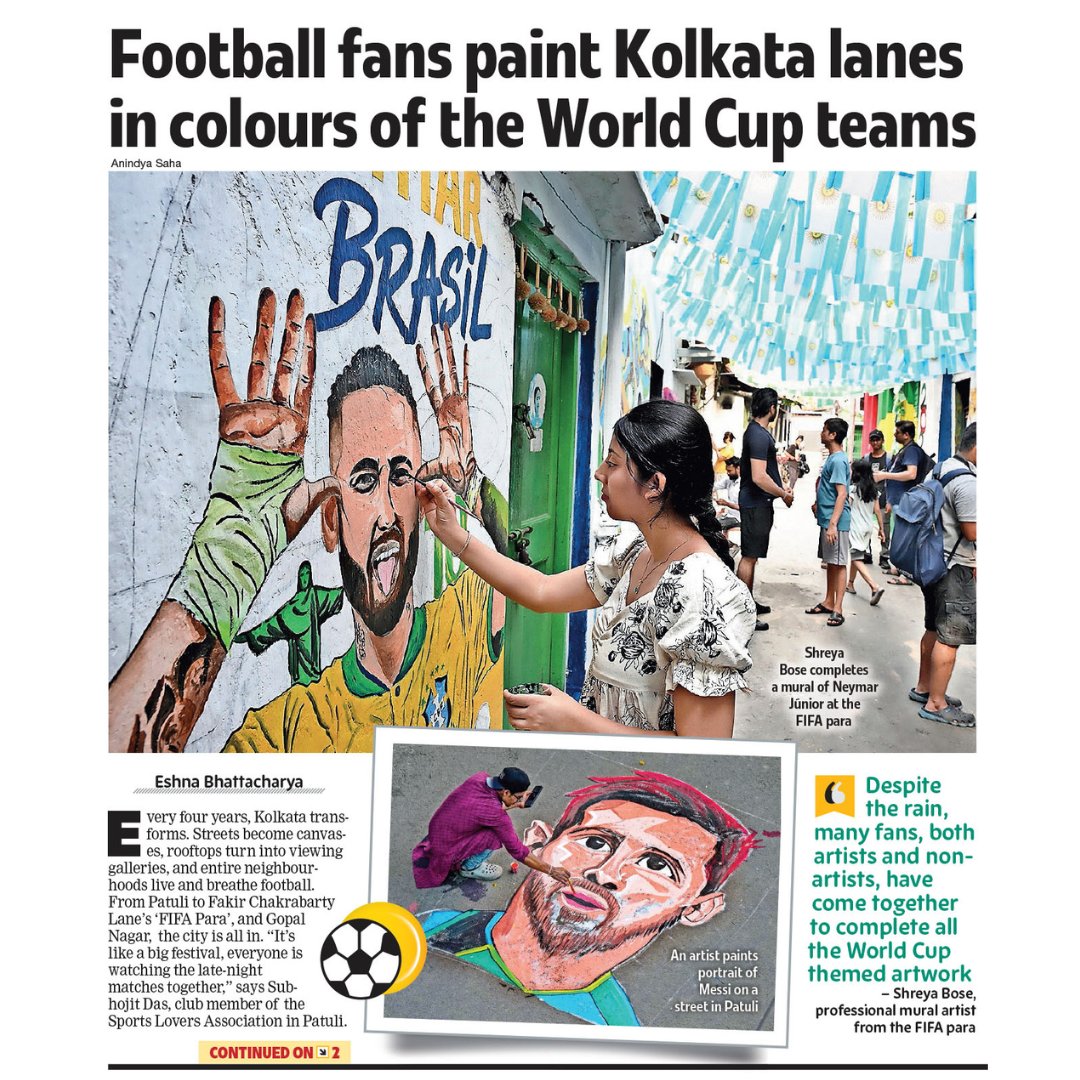 A newspaper cut out of FIFA Fever in Kolkata, where a girl is seen painting on a wall on the streets of Kolkata (Picture Credit: X account of Calcutta Times)
For older generations, the World Cup evokes memories of legendary players such as Pelé, Diego Maradona, and Ronaldo Nazário. Younger fans, meanwhile, see the tournament as a celebration of modern icons and social media stars. Yet both generations come together during match nights, united by a shared love for football.
While some observers note that the scale of celebrations may not be quite as overwhelming as in previous decades, the spirit remains unmistakably alive. Online discussions reveal that although lifestyles have changed and people are busier than before, World Cup nights still bring communities together in a way few events can.
As the tournament progresses, Bengal's streets continue to glow with football colours. Every goal sparks celebrations, every upset fuels debate, and every match becomes a communal experience. For a few weeks every four years, geography seems irrelevant. Kolkata becomes Buenos Aires. A neighbourhood in North Kolkata becomes Rio de Janeiro. And Bengal, once again, reminds the world why it remains one of football's most passionate homes outside the sport's traditional powerhouses.
READ MORE: Trailblazing Naheed Muqueetulla reinvents Indian denim through Urbano
In West Bengal, the FIFA World Cup is not merely watched—it is lived, celebrated, and woven into the fabric of everyday life.


.webp "Rocks bearing inscription in ancient Arabic excavated in Saudi Arabia's Madina region")






.webp "Defence Minister Rajnath Singh")


_(1).webp)