New Delhi
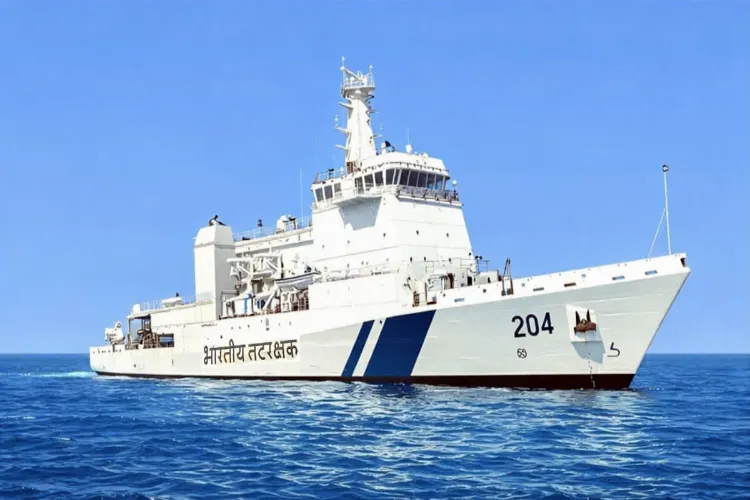
The Indian Coast Guard (ICG) on Tuesday inducted its first indigenously designed and built Pollution Control Vessel (PCV), ‘Samudra Pratap’, marking a major milestone in strengthening India’s maritime pollution response capability and advancing self-reliance in defence manufacturing.
The vessel, designated PCV Yard 1267, was inducted under the 02 PCV Project at Goa Shipyard Limited (GSL). According to the ICG, ‘Samudra Pratap’ is the first pollution control vessel of the Coast Guard to be entirely designed and built in India.
The ship will serve as a critical platform for enforcing marine pollution control regulations, maritime law enforcement, search and rescue operations, and safeguarding India’s Exclusive Economic Zone (EEZ). The vessel was formally delivered to the Coast Guard during an induction ceremony attended by senior ICG officials and representatives from GSL.
In a statement, the ICG said the vessel is equipped with state-of-the-art technology, including a 30mm CRN-91 gun, two 12.7mm stabilised remote-controlled guns with integrated fire control systems, an indigenously developed Integrated Bridge System, Integrated Platform Management System, Automated Power Management System, shaft generator, sea boat davit, PR boat with davit, and a high-capacity external firefighting system.
In a significant technological advancement, ‘Samudra Pratap’ is the first PCV in the ICG fleet to feature a retractable stern thruster, dynamic positioning system (DP-I) and flush-type side sweeping arms, enhancing its operational precision during pollution response missions.
The vessel is also fitted with advanced pollution detection and response equipment, including an oil fingerprinting machine and a gyro-stabilised standoff active chemical detector.
READ MORE: India has made Christmas carols its own over time
With over 60 per cent indigenous content, ‘Samudra Pratap’ aligns with the government’s ‘Atmanirbhar Bharat’ and ‘Make in India’ initiatives. The ICG said these advanced capabilities will significantly strengthen its ability to respond to and contain marine pollution incidents across the Indian Ocean Region.


.png)







.webp "Jammu and Kashmir Chief Minister Omar Abdullah")