New Delhi
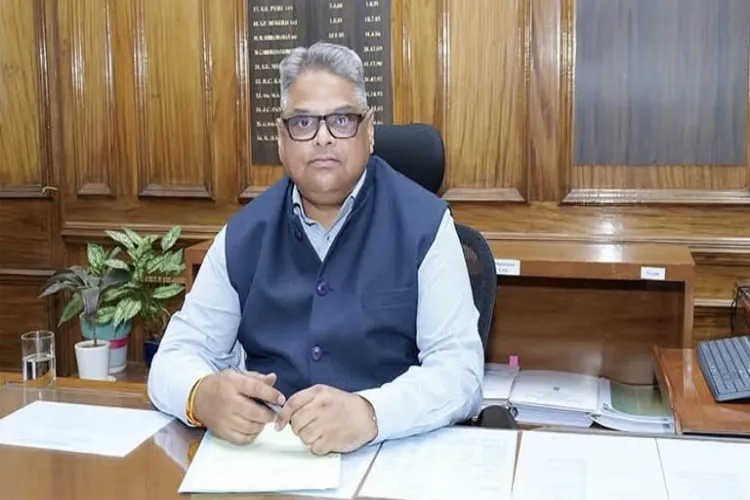
The Agriculture Ministry is closely monitoring weather developments and is awaiting the India Meteorological Department's (IMD) forecast expected later this month to gain greater clarity on the likely onset of El Niño and its possible impact on the ongoing kharif season, Agriculture Secretary Atish Chandra said.
In an interview, Chandra noted that while preliminary forecasts suggest El Niño conditions may emerge around November, the timing and intensity of the phenomenon remain uncertain.
"The IMD's forecast at the end of June will provide a clearer assessment. By then, kharif sowing will be well underway, allowing us to better understand the situation and formulate suitable responses," he said.
IOD Remains Key Variable
A major factor influencing the final assessment is the Indian Ocean Dipole (IOD), a climate pattern linked to fluctuations in sea surface temperatures across the Indian Ocean.
According to Chandra, the IOD remained positive during May but has shifted to a neutral phase in June. Its future trajectory will be closely watched because a positive IOD often offsets the adverse effects of El Niño, whereas neutral or negative conditions may allow El Niño to exert a stronger influence on rainfall patterns.
"We are observing whether the IOD remains neutral or changes. IMD continues to hope that favourable developments may reduce the impact of El Niño," he said.
The IMD has projected southwest monsoon rainfall at around 90 per cent of the long-period average, indicating a below-normal monsoon season.
Monsoon Progress Slightly Behind Schedule
The secretary said current monsoon developments are broadly in line with IMD's earlier projections.
The southwest monsoon is presently lagging by four to five days compared to its normal schedule. A western disturbance has slowed its advance in several regions, although low-pressure activity over West Bengal is helping its progress in eastern India.
Meanwhile, the southern branch of the monsoon, which was expected to move further into Maharashtra, has not advanced as rapidly as anticipated.
Despite the delay, Chandra pointed out that most states that have already received the monsoon have recorded satisfactory rainfall levels, with the exception of Tamil Nadu, which depends largely on the northeast monsoon later in the year.
Preparedness Measures Strengthened
Chandra emphasised that India is now better equipped to deal with weather-related challenges than in previous decades.
He recalled that El Niño episodes have generally not caused severe disruptions to Indian agriculture, with 2014-15 being one of the more difficult years. Even then, agricultural output remained relatively stable.
Advancements in climate-resilient crop varieties, he said, have significantly improved the sector's ability to withstand adverse conditions.
The government has also expanded efforts to improve water security through infrastructure projects. Under the Amrit Sarovar initiative, around 75,000 ponds have been rejuvenated to improve groundwater recharge, while more than 100,000 groundwater recharge structures have been restored.
"The primary concern remains rainfed agricultural regions rather than irrigated areas. Reservoir storage levels are currently better than they were at the same time last year," Chandra said.
High-Risk Districts Identified
The ministry has identified 326 districts across twelve states that are considered particularly vulnerable to El Niño-related weather disruptions.
These states include Uttar Pradesh, Karnataka, Tamil Nadu, Andhra Pradesh, Telangana, Odisha, Gujarat, Rajasthan, Bihar, Madhya Pradesh, Jharkhand and Maharashtra, where a large proportion of agriculture depends on rainfall.
To minimise risks, the government is updating district-specific contingency plans in coordination with institutions such as the Indian Council of Agricultural Research (ICAR), the Central Research Institute for Dryland Agriculture (CRIDA) and state agricultural universities.
Special attention is being given to rainfed crops such as pulses, oilseeds, cotton and oil palm under various agricultural missions.
Fertiliser Availability Comfortable
On the availability of agricultural inputs, Chandra said there was no immediate concern regarding fertiliser supplies.
While larger farmers had already purchased stocks earlier in the year, he noted that smaller farmers typically buy fertilisers closer to the time of application.
"Availability at the field level is better than last year, and there is adequate supply to meet demand," he said.
READ MORE: Fatima Husna proudly guides tourists through Hyderabad's history
The ministry plans to continue monitoring weather developments closely and adjust its preparedness strategy based on the IMD's forthcoming forecasts.


.webp "Rocks bearing inscription in ancient Arabic excavated in Saudi Arabia's Madina region")










_(1).webp)