Geneva
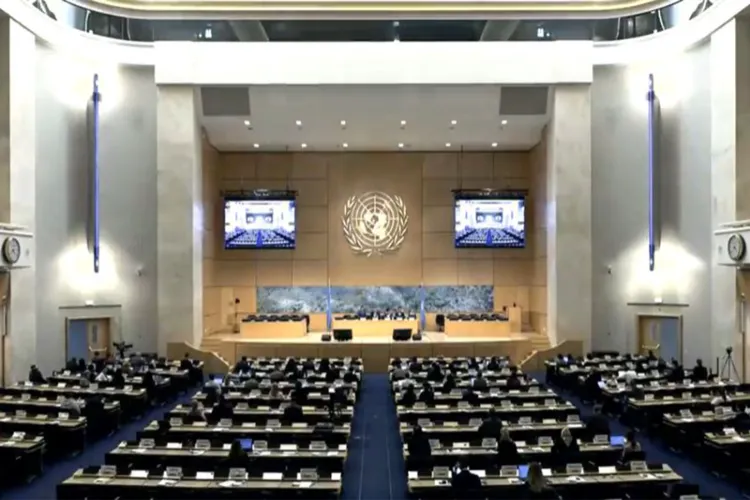
India’s efforts to build climate-resilient food systems and strengthen sustainable development took centre stage at the 62nd Session of the United Nations Human Rights Council (UNHRC), where experts highlighted the growing link between climate change, food security and human rights.
Participating in the Interactive Dialogue with the UN Special Rapporteur on the Promotion and Protection of Human Rights in the Context of Climate Change, Dr. Arvind Kumar, President of the India Water Foundation (IWF), stressed that transforming global food systems has become essential for protecting human rights in the face of escalating climate challenges.
Dr. Kumar noted that climate change and food insecurity are closely intertwined issues that cannot be addressed in isolation. According to him, reforming food systems is no longer solely an agricultural objective but a critical human rights concern, as climate-related disruptions increasingly threaten access to adequate and nutritious food.
He pointed out that rising temperatures, prolonged droughts, floods and other extreme weather events are affecting agricultural productivity worldwide. These factors are reducing crop yields, impacting livestock production, damaging supply chains and contributing to higher food prices, thereby putting global food security under pressure.
Highlighting India’s response to these challenges, Dr. Kumar referred to the development of climate-resilient crop varieties that require less water while maintaining productivity. Such innovations, he said, are helping strengthen food and nutritional security while improving the resilience of farming communities, particularly in vulnerable regions.
He also drew attention to the Government of India’s National Mission on Natural Farming, launched in 2024, which promotes ecosystem-based agricultural practices aimed at improving soil health, reducing dependence on chemical inputs and enhancing long-term sustainability.
Reaffirming the India Water Foundation’s commitment to climate action, Dr. Kumar said the organisation supports efforts that place human rights at the heart of environmental and agricultural policies, in alignment with the Sustainable Development Goals (SDGs) and international climate commitments.
Alongside the UNHRC proceedings, the India Water Foundation organised a photo exhibition at Geneva’s renowned Broken Chair Square to showcase India’s achievements in public health, nutrition, water management, sanitation and community welfare.
The exhibition highlighted the interconnected nature of health, nutrition and water, sanitation and hygiene (WASH) services. Organisers emphasised that inadequate access to clean water and sanitation often leads to diseases such as diarrhoea and parasitic infections, which hinder nutrient absorption and contribute to malnutrition.
The display illustrated how integrated investments in healthcare, nutrition, safe drinking water and sanitation are helping improve quality of life and build stronger, healthier and more resilient communities across India.
READ MORE: How Amal Ayub's Bridalbug.Co is redefining luxury weddings
Through its participation in the UNHRC session and related outreach activities, India sought to demonstrate how climate-resilient agriculture, sustainable resource management and inclusive development can work together to address some of the most pressing global challenges of the 21st century.











_(1).webp)

.webp)