




New Delhi
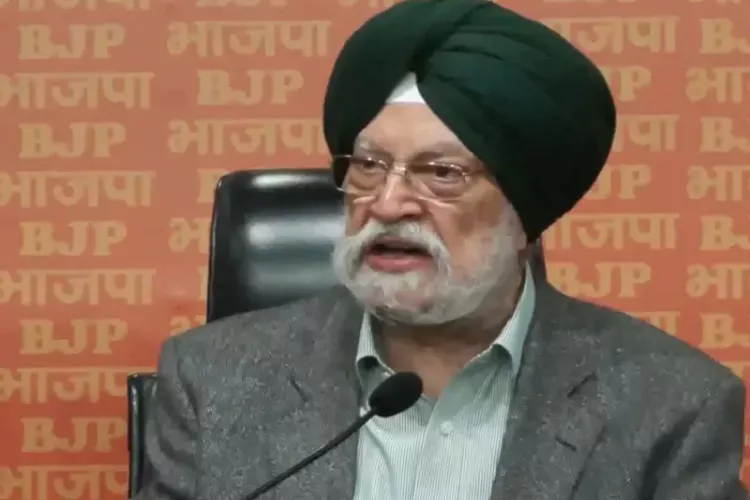
Hardeep Singh Puri on Tuesday said India currently has sufficient fuel reserves to meet domestic demand for nearly two months and faces no immediate supply disruption despite the continuing turmoil in West Asia. At the same time, he warned that state-run fuel retailers could suffer losses of up to Rs 1 lakh crore in a single quarter if crude oil prices remain elevated while retail fuel prices continue to stay unchanged.
Speaking at the annual summit of the Confederation of Indian Industry in New Delhi, Puri said India entered the crisis with more than adequate crude oil and LPG inventories and has since further strengthened domestic energy preparedness. He noted that domestic LPG production has been increased to around 54,000 tonnes per day from approximately 36,000 tonnes earlier.
Emphasising that there is no supply-side concern, the minister said India has maintained uninterrupted availability of petrol, diesel, and cooking gas even as global supply chains remain under pressure due to geopolitical tensions in West Asia.
However, he acknowledged mounting financial stress on state-owned oil marketing companies, saying the three major retailers—Indian Oil Corporation, Bharat Petroleum Corporation Limited, and Hindustan Petroleum Corporation Limited—are collectively losing nearly Rs 1,000 crore every day by selling fuel below cost.
According to the minister, cumulative under-recoveries during the current quarter have touched nearly Rs 1.98 lakh crore, while actual losses are estimated at around Rs 1 lakh crore—an amount large enough to wipe out the companies’ annual profits. He admitted that the sustainability of such losses is becoming a matter of serious concern, though he stopped short of indicating whether retail fuel prices would be revised soon.
Puri highlighted that despite crude oil prices rising by nearly 50 per cent during the crisis, petrol and diesel prices in India have remained unchanged for the past four years. Petrol continues to be sold at Rs 94.77 per litre, while diesel is priced at Rs 87.67 per litre. Although domestic LPG prices were increased by Rs 60 per cylinder in March, he said they still remain significantly below actual cost.
He disclosed that oil companies are currently incurring losses of around Rs 14 per litre on petrol, Rs 42 per litre on diesel, and Rs 674 per cylinder on cooking gas LPG.
Referring to Prime Minister Narendra Modi’s recent appeal for moderation in fuel consumption, Puri described it as a forward-looking and strategic message rather than a signal of any immediate restrictions. He clarified that there was no possibility of lockdowns, rationing, or supply curbs in the near future, and said there was “absolutely no cause for anxiety.”
At the same time, he said if the conflict continues for a prolonged period, both industries and households may need to adopt measures that reduce pressure on foreign exchange and public finances. He encouraged faster migration from LPG to piped natural gas wherever possible, noting that India is rapidly expanding its gas pipeline network and LNG infrastructure.
The minister also said the current crisis has prompted the government to reassess strategic energy storage policies, with plans to build larger reserves in the future to better shield the economy from global supply shocks.
Puri said India has successfully diversified its sourcing strategy during the crisis, replacing dependence on Gulf supplies with alternate imports without any disruption. He added that nearly 20 per cent of global energy shipments pass through the Strait of Hormuz, but India has managed the risks through continuous “war-room” monitoring of supply and refining operations.
He said India currently holds around 60 days of crude oil reserves, 60 days of LNG inventories, and approximately 45 days of LPG stock, ensuring strong energy security.
READ MORE: Syed Tanveer Nasrin: Ambassador of culture, women rights and harmony
Looking ahead, Puri said India plans to expand its refining capacity to 320 million metric tonnes annually by 2030 from about 260 million tonnes at present, further strengthening its position as one of the world’s leading refining hubs. He also indicated a stronger push toward domestic oil and gas exploration through policy reforms, expanded acreage offerings, and greater engagement with global energy majors.













.webp)
