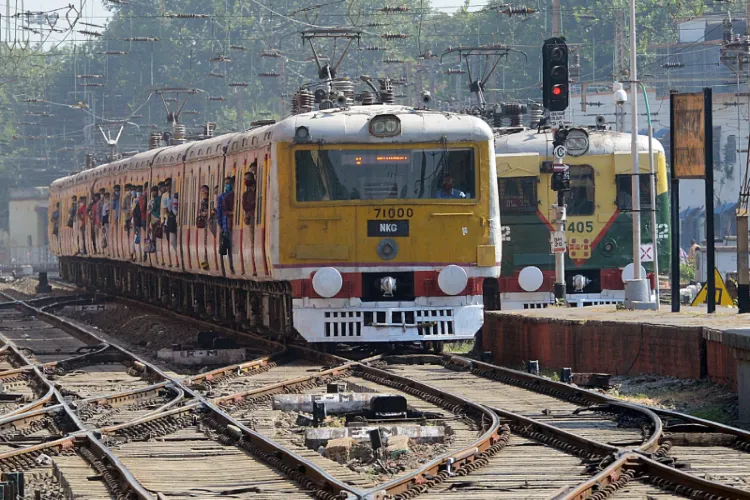
New Delhi
Indian Railways has taken a significant step toward enhancing rail safety by approving the deployment of the indigenous Kavach system across the remaining Broad Gauge routes of the Ambala Division under the Northern Railway zone.
The project, which will cover approximately 811 route kilometres, has been sanctioned at an estimated cost of ₹201 crore. It forms part of the larger railway safety initiative aimed at expanding Kavach technology along remaining sections of the national rail network, supported by an LTE-based communication infrastructure.
The approved rollout will include several key rail corridors within the Ambala Division, such as the Ambala Cantonment–Ludhiana route, the Kalka–Chandigarh–New Morinda–Sahnewal section, the Sirhind–Daulatpur Chowk line, the Rajpura–Bathinda–Shri Ganganagar route, and the Ludhiana–Dhuri–Jakhal corridor.
These railway links are vital for connectivity across Haryana, Punjab and Himachal Pradesh, carrying substantial volumes of both passenger and freight traffic. The routes play a crucial role in facilitating regional mobility and supporting economic activity through the movement of goods.
Kavach, an indigenously developed Automatic Train Protection (ATP) technology, is designed to improve operational safety by preventing incidents such as Signal Passing at Danger (SPAD). The system can automatically activate braking in potentially hazardous situations, regulate train speeds when necessary, and reduce the likelihood of collisions.
The expansion of Kavach is part of Indian Railways' broader strategy to modernise its infrastructure, improve operational efficiency and enhance safety standards across busy and strategically important rail routes.
In a separate safety-related initiative, Indian Railways has also decided to undertake comprehensive fire safety audits at railway stations nationwide. The exercise aims to evaluate the effectiveness of existing fire protection measures and identify areas requiring upgrades or corrective action.
READ MORE: Zeenat Pannah's enduring work to preserve India's textile heritage
The audits will examine critical safety components, including station infrastructure, electrical systems, air-conditioning and ventilation facilities, emergency evacuation arrangements, firefighting equipment, water supply systems, pumping mechanisms and sprinkler installations. The objective is to ensure that railway stations are better equipped to handle emergencies and safeguard passengers as well as railway property.

_(1).jpg "Visitors gather at the Santosh Mitra Square Durga Puja pandal, themed on the 150th anniversary of Vande Mataram and its historic role in India's freedom movement, ahead of the festival, in Kolkata")

.jpg "Gujarat’s women entrepreneurs bring their craftsmanship to life during Navratri")






.webp "Bollywood actor Tiger Shroff")
.webp)