Eman Sakina
There are moments in history that change the direction of humanity forever. Some arrive with the sound of armies, some with the rise and fall of kingdoms, and some begin quietly, in a simple home, far away from the centres of power. The birth of Prophet Muhammad was one such moment. On 12 Rabi-ul-Awwal, Muslims around the world remember the arrival of the one whom Allah sent as a mercy to all worlds—a man whose message transformed hearts, societies, families, and civilisations.
Friday Musings
Before his birth, Arabia was deeply divided by tribal loyalties. The weak could easily be oppressed, women were often denied their dignity, the poor had little protection, and ignorance and superstition shaped much of social life. Yet the darkness of that age was not confined to Arabia. Humanity everywhere struggled with injustice, inequality, conflict, and spiritual confusion.
Then came Muhammad. His arrival was not simply the birth of another child. It marked the beginning of a new chapter in human history.
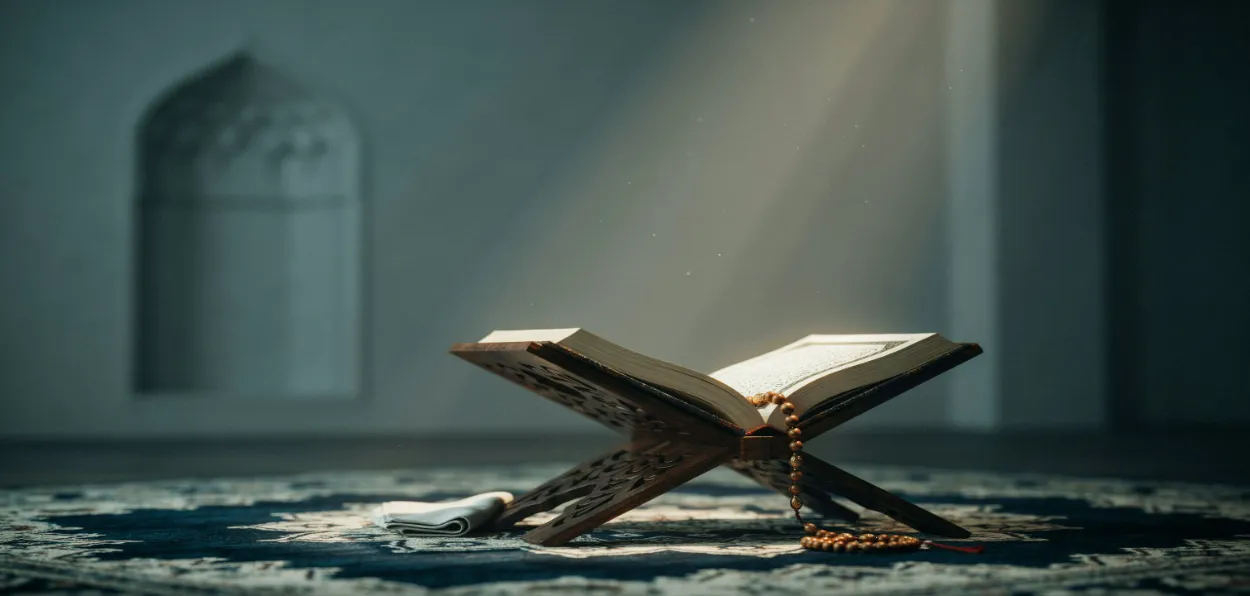
Allah describes the Prophet in the Quran as “a mercy to the worlds” (Quran 21:107). This description captures something profound: his mission was never limited to a single tribe, a single nation, or a single generation. His message addressed humanity itself.
The greatest thing the world gained through the Prophet was not political power or material progress. It was guidance.
The Quran says: “There has certainly come to you from Allah a light and a clear Book.” (Quran 5:15)
The coming of the Prophet brought clarity to questions that had troubled human beings for generations. Who created us? Why are we here? What makes a person truly honourable? What do we owe one another? What happens after death?
He taught that human beings are servants of one Creator and that no person is superior to another because of wealth, tribe, race, or social status. True honour lies in righteousness.
The Prophet brought together people divided by bloodlines and taught them to recognise one another as members of a single human family.
The Prophet also brought a profound transformation in the way women were viewed and treated.
He taught that daughters were not burdens, wives were not possessions, mothers deserved extraordinary respect, and women had rights to inheritance, property, education, consent for marriage, and dignity.
The Quran reminded humanity that men and women came from a single origin: “O mankind, fear your Lord, who created you from one soul.” (Quran 4:1)
His own life demonstrated tenderness and respect. He helped his family, listened to women, consulted his companions, showed affection to children, and rejected arrogance within the home.
He showed mercy not only to his companions but also to children, elders, the poor, orphans, servants, animals, and even those who opposed him. He did not teach mercy merely as an idea. He lived it. He taught honesty when lying was easier, patience when anger was justified, generosity when resources were limited, humility when one possessed status, and forgiveness when the heart wanted revenge.
The Quran says: “And indeed, you are of a great moral character.” (Quran 68:4)
People with dark pasts became people of extraordinary faith. Former enemies became brothers. Slaves became leaders. The poor became honoured. Those who had been forgotten by society found a place in the community.
Islam did not ask people to pretend they had never sinned. It taught them that the door of repentance remained open. That message remains desperately relevant today. In a world where people are often defined by their mistakes, the Prophetic example teaches us to see the possibility of transformation.
The Quran tells believers: “Indeed, Allah and His angels send blessings upon the Prophet. O you who believe, invoke blessings upon him and salutations of peace.” (Quran 33:56)
Sending ‘salawat’ is a beautiful expression of love, but love becomes meaningful when it shapes our lives.
The Prophet left humanity a legacy that cannot be confined to a celebration, a gathering, or a single day. His legacy lives wherever truth is spoken, where an orphan is cared for, where a hungry person is fed, where an angry heart chooses forgiveness, where a parent treats a child with tenderness, and where a believer chooses justice over personal gain.
Centuries have passed since the Prophet walked through the streets of Makkah and Madinah. Empires have risen and disappeared. Languages and technologies have changed. Generations have come and gone.
Yet his message continues to reach hearts. That is perhaps the greatest answer to the question: What did the world gain on 12 Rabi-ul-Awwal?
The world gained Muhammad—not merely as a historical figure, but as a teacher of mercy, a model of character, a defender of the weak, a leader who served, and a Messenger who called humanity back to its Creator.
READ MORE: Palestinian envoy asks Delhi to set up artificial limb center in Gaza
His birth reminds us that darkness does not have the final word. Light can begin in the most unexpected place. And the greatest way to honour that light is not simply to remember when it appeared, but to carry something of it into our own time.

_(1)_(1).webp "Khanqah Emadia Qalandaria, Patna, Bihar")
.webp "Shrine of Hazrat Maulana Ziauddin Shah-e-Wilayat")
_(1).webp "tHE shrine of Hazrat Syed Shah Ehteram Al Qaderi")