New Delhi
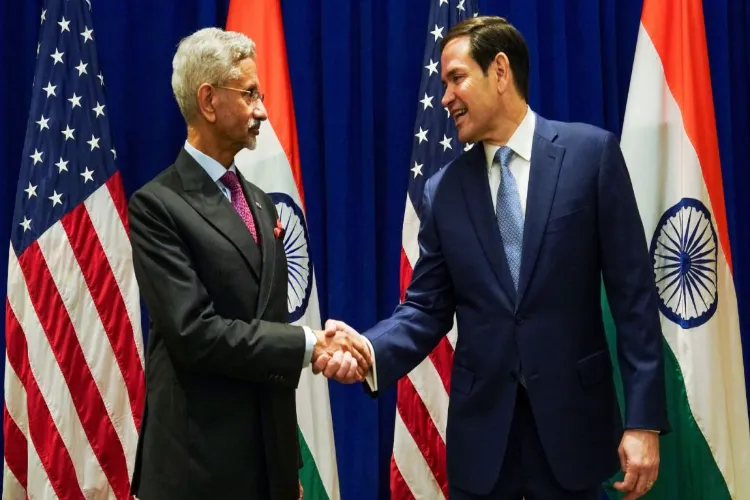
External Affairs Minister S Jaishankar on Saturday raised with US Secretary of State Marco Rubio the killing of three Indian mariners in a US military strike in the Gulf of Oman even as Washington firmly asserted that violations of its regional naval blockade will not be tolerated.
Following his phone conversation with Rubio, the external affairs minister described the "lethal" actions by the US military against commercial shipping as unjustified.
Hours later, the US State department said Rubio stressed that all commercial vessels must comply with orders from US forces to uphold peace and security in the Strait of Hormuz.
Rubio underscored that violations of the US blockade and the illicit transport of Iranian oil will not be tolerated, principal deputy spokesperson of the State Department Tommy Pigott said on the phone call.
The US military has been enforcing a blockade of Iran's ports in response to Tehran effectively closing the Strait of Hormuz, a critical transit route accounting for nearly 20 per cent of global oil and gas traffic.
In a social media post, Jaishankar earlier said: "Spoke to US Secretary of State Marco Rubio this evening. I reiterated India's strong protest at the attacks by the US Navy in the Gulf that killed three Indian mariners."
"Such lethal actions against commercial shipping are not justified," he said.
India on Friday summoned US Charge d'Affaires Jason Meeks and told him that the American military's lethal strikes on three commercial vessels with Indian crew members off the coast of Oman are unacceptable.
The senior diplomat was summoned on Wednesday night as well.
A Palau-flagged oil tanker, Marivex, carrying 24 Indian seafarers, was disabled by US forces on June 8. All crew members were safely rescued.
On June 10, the US struck another Palau-flagged tanker, Settebello, killing three out of the 24 Indian sailors on board.
Another vessel, Jalveer, a Guinea-Bissau-flagged tanker with 20 Indians, was attacked on Thursday.
The US Central Command said it initiated action to disable the three vessels '“Marivex on June 8, Settebello on June 9 and Jalveer on June 11 saying they were trying to violate the US blockade of Iranian ports.
In a statement, Pigott said Rubio and Jaishankar "discussed recent events in the Strait of Hormuz".
"The Secretary stressed that all commercial vessels should immediately comply with orders from US forces as they seek to uphold peace and security in the Strait," he said.
"He underscored that violations of the U.S. blockade and the illicit transport of Iranian oil will not be tolerated," Pigott added.
Following the attack on Jalveer, India said three merchant ships with Indian crew members came under attack from American military off the coast of Oman this week resulting in the death of three nationals.
It was New Delhi's first public acknowledgement that US Navy targeted the three ships with Indian crew members.
After Meeks was summoned on Friday, the Ministry of External Affairs (MEA) said a "strong protest" was lodged with him regarding the continuing attacks by US naval forces on commercial vessels carrying Indian mariners in the Gulf of Oman.
The ministry said it once again "conveyed its deep concern over the use of lethal and deadly force against civilian shipping."
MEA spokesperson Randhir Jaiswal said on Thursday that the three separate strikes on the Settebello, Marivex and Jalveer "came from the US Navy".
Jaiswal said two of the three vessels were subject to sanctions administered by the US Treasury's Office of Foreign Assets Control (OFAC), while another had been classified as non-compliant.
READ MORE: BBC ranks Hafiz Ahmed's Bagurumba photo as second-best image of 2026
The OFAC is the financial intelligence and enforcement agency of the US Treasury Department and it acts against vessels involved in violating US sanctions on the sale of Iranian and Russian oil.













.webp)

.webp)