New Delhi
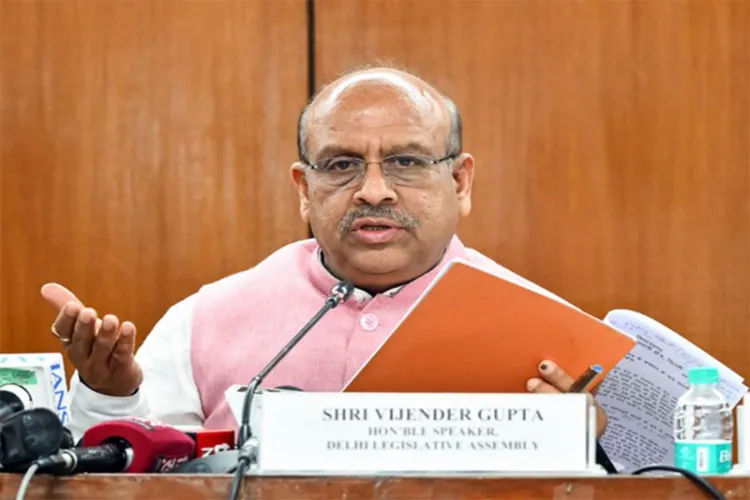
Delhi Assembly Speaker Vijender Gupta on Tuesday announced that a museum is being developed within the Assembly complex to highlight its institutional history, along with plans for a light-and-sound show to present its historical evolution to the public.
Gupta shared this information while welcoming 43 delegates from 18 countries—including Bangladesh, Bhutan, Oman, Kenya, Sri Lanka, the Philippines and Tanzania—who are participating in the 37th International Training Programme in Legislative Drafting organised by the Parliamentary Research and Training Institute for Democracies (PRIDE).
Addressing the visiting delegation, the Speaker emphasised that legislative drafting is fundamental to democratic governance, noting that the effectiveness of laws depends on their clarity and precision.
“The quality of a law determines how well it protects rights, ensures accountability and influences citizens’ daily lives,” he said.
Highlighting ongoing initiatives, Gupta said a “sangrahalaya” (museum) is being set up within the Assembly premises to document and showcase its historical journey.
He also underlined the heritage value of the Assembly building, constructed in 1912, which earlier housed the Imperial Legislative Council and later the Central Legislative Assembly under the Government of India Act of 1919.
Recalling a key milestone, Gupta referred to the election of Vitthalbhai Patel as the first Indian president of the Assembly on August 24, 1925, describing it as a significant moment in the assertion of legislative independence during the colonial period.
He further noted that the Assembly has historically served not only as a legislative body but also as a venue where democratic ideas and aspirations were shaped, with leaders such as Mahatma Gandhi participating in important deliberations.
During their visit, the delegates toured the Assembly premises. They were shown a documentary on Vitthalbhai Patel and attended a presentation on the coffee table book Ek Shatabdi Yatra. A copy of the publication was also presented to PRIDE Director Rajkumar for inclusion in the Lok Sabha Library, according to an official statement.
Gupta added that efforts are underway to digitise the Assembly library to enhance access to research materials and preserve archival records.
He said such initiatives are aimed at integrating institutional legacy with modern governance practices, while making the Assembly more accessible and efficient.
READ MORE: ACP Najma Farooqi's authority stems from empathy, integrity
The Speaker also stressed that legislative drafting goes beyond technical expertise, reflecting the core values of democracy, and encouraged participants to exchange ideas and adopt a responsible approach to law-making.













.webp)

.webp)
.webp)