




New Delhi
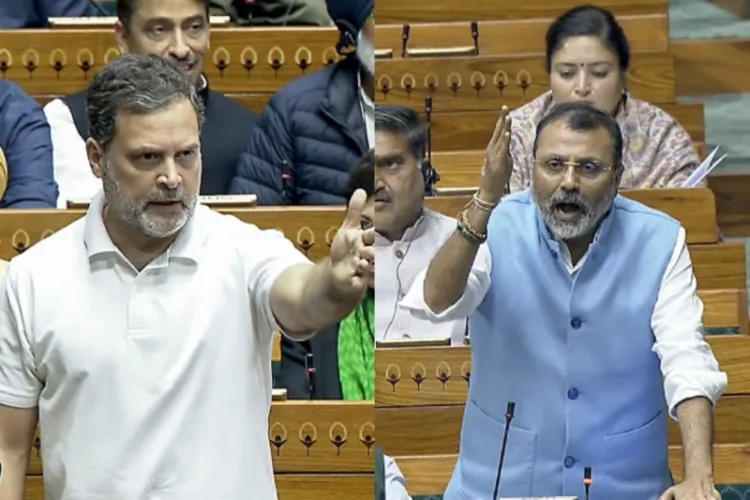
BJP MP Nishikant Dubey on Saturday challenged Congress MP and Leader of Opposition in the Lok Sabha Rahul Gandhi over his allegations regarding the India-US interim trade agreement, which Gandhi said would hurt India's cotton farmers and textile exporters.
He said that Gandhi's claims about cotton production and textile mills are false and challenged him to a debate on any forum.
In a post on X, Dubey wrote, "Compass farming, how much is needed for textiles, how much production. The condition of the textile mill and Rahul Gandhi ji's Naxalite movement with Soros. How big a lie, I challenge you for a debate on any forum."
कंपास की खेती,टेक्सटाइल्स के लिए कितनी जरुरत,कितना उत्पादन । कपड़ा मिल की स्थिति तथा राहुल गांधी जी का नक्सलवादी आंदोलन सोरोस के साथ । कितना बड़ा झूठ, आपको किसी भी फोरम पर डिबेट के लिए चैलेंज है https://t.co/KOQXTDGm4N pic.twitter.com/HwdNFIMTty
— Dr Nishikant Dubey (@nishikant_dubey) February 14, 2026
This comes after Rahul Gandhi accused Prime Minister Narendra Modi and his government of misleading the country over tariff provisions in the India-US interim trade agreement, alleging that the deal would adversely impact India's cotton farmers and textile exporters.
Gandhi said that while Indian garments face an 18 per cent tariff in the United States, Bangladesh is being given a zero per cent tariff benefit on garment exports on the condition that it imports American cotton.
Questioning the policy framework, he alleged that importing American cotton would harm domestic farmers, while not importing it would harm the textile industry.
He further claimed that Bangladesh was signalling a possible reduction or halt in cotton imports from India, which, he said, could worsen the situation for Indian producers.
The India-US Interim Agreement, announced last week, is intended as a framework for a reciprocal and mutually beneficial trade pact between the two countries.
READ MORE: Pakistan's newest talent Usman Tariq is inspired by M S Dhoni
The agreement will involve the elimination or reduction of tariffs on US industrial goods and a wide range of food and agricultural products, including dried distillers' grains, red sorghum for animal feed, tree nuts, fresh and processed fruit, soybean oil, wine and spirits, and additional products.
In return, the United States will apply a reciprocal tariff of 18 per cent on selected Indian goods, including textiles, apparel, leather, footwear, plastics, rubber, organic chemicals, home decor, artisanal products, and certain machinery. Upon full implementation, US tariffs on items such as generic pharmaceuticals, gems and diamonds, and aircraft parts will be removed.









.webp "Union Home Minister Amit Shah")
.webp "Union Minister of Parliamentary Affairs Kiren Rijiju")


_(1).webp)