




Patna
The battle for power in Bihar shaped the state’s political narrative for much of 2025, a year that culminated in the NDA securing a decisive mandate in the November assembly elections, defying expectations of anti-incumbency after nearly two decades in office.
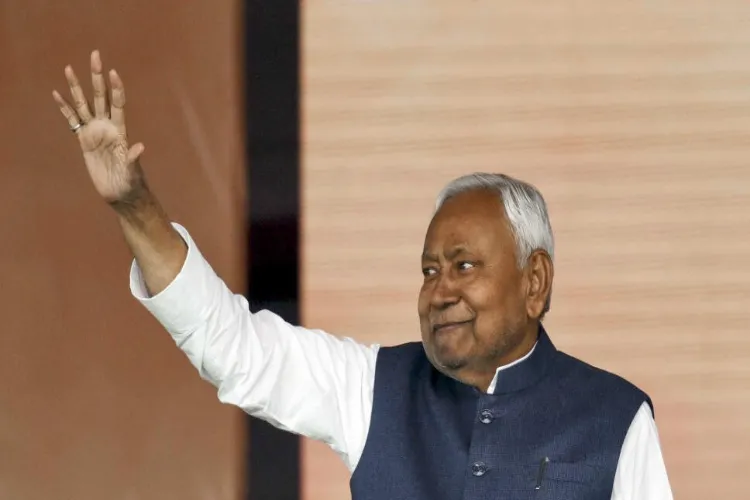
The verdict reaffirmed the centrality of Chief Minister Nitish Kumar, the longest-serving occupant of the post in the state, whose JD(U) nearly doubled its tally compared with five years ago, even as ally BJP once again emerged as the larger partner.
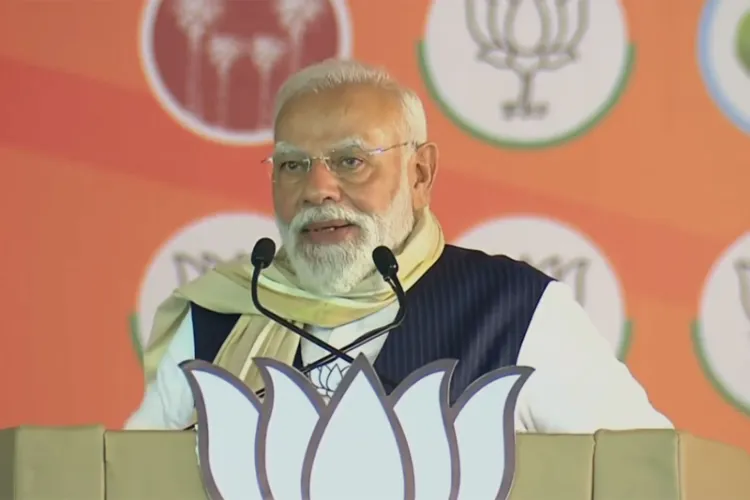
Kumar, 75, was sworn in for a record 10th term at a ceremony attended by Prime Minister Narendra Modi, whose feet the CM tried to touch, in an apparent gesture of reassurance that he was done with innumerable political turnarounds and wished to be in the NDA for good.
In the inaugural session of the new assembly, Kumar’s reply to the motion of thanks on the Governor’s address set the tone for the government’s approach, stressing cooperation with the Centre and repeatedly acknowledging what the ruling dispensation described as generous assistance under the “double engine” framework.
Opinion polls ahead of the elections had consistently projected opposition RJD’s Tejashwi Yadav as the most favoured chief ministerial face, and the former deputy CM attempted to build momentum through a series of populist proposals focused on jobs, allowances and social security.
Governance decisions in the run-up to the polls became a key electoral battleground. Well before the poll schedule was announced, the state government rolled out or expanded a range of welfare measures, many mirroring promises articulated by the opposition.
Yadav accused the dispensation of being a “copycat”, while the government argued it was accelerating delivery.
Around the same time, the Election Commission ordered the Special Intensive Revision (SIR) of electoral rolls in the state, a veritable pilot project that was to be carried out across the country in due course.
The mammoth exercise resulted in deletion of 65 lakh names from the voters’ list, though the EC insisted that these belonged to those who died, had shifted outside their state, or registered at more than one place.
The INDIA bloc, led by Congress leader Rahul Gandhi, attempted to frame the revision drive as “vote theft” while campaigning against the NDA, alongside criticism of the state’s welfare push, which included higher pensions for vulnerable groups, free electricity up to 125 units and reservation in government jobs for women domiciled in Bihar.
Gandhi’s ‘Voter Adhikar Yatra’, undertaken with Yadav and allies such as CPI(ML) Liberation leader Dipankar Bhattacharya, drew large crowds during its August run. However, the mobilisation did not translate into votes, with the ‘Mahagathbandhan’ securing fewer than 40 seats in the 243-member assembly.
Welfare initiatives remained central to the NDA’s pitch. Weeks ahead of the election schedule announcement, the Bihar government launched the ‘Mukhya Mantri Mahila Rojgar Yojana’, with the PM participating virtually.
Under the scheme, Rs 10,000 was disbursed to over 1.5 crore women, though the timing of some payments, well after the poll schedule announcement, drew criticism.
Election Commission data showed no significant dip in the Mahagathbandhan’s vote share compared with the closely fought 2020 elections. The NDA’s landslide, however, was aided by a nearly 10-per cent increase in its own vote share, attributed largely to the scale and reach of welfare measures.
The sharp polarisation of voters left little room for new political entrants, like Jan Suraaj Party of Prashant Kishor, which came a cropper, with most of its candidates forfeiting their deposits.
Beyond electoral politics, 2025 brought governance challenges into sharp relief. Infrastructure remained a mixed narrative, with the government highlighting new bridges and connectivity projects, even as a series of bridge collapse incidents in different districts raised questions about construction quality, maintenance and oversight.
At least one collapse involving a bridge pillar during the year prompted administrative action, reviews by engineering departments and renewed assurances of structural audits.
Subsequently, Bihar announced a more comprehensive framework for bridge management and maintenance, including third-party inspections and technology-based monitoring.
READ MORE: Nirmal, my Abba's most trusted son
The year also saw incremental progress in urban infrastructure, with parts of the Patna Metro project becoming operational, and continued expansion of healthcare education through the inauguration of government medical colleges and hospitals.
Besides, the state hosted national-level sporting events under the Khelo India programme, which the government projected as part of efforts to improve sports infrastructure and youth engagement, while cultural milestones such as Bihar Diwas were used to showcase heritage alongside development initiatives.









.webp)

.webp)
_(1).webp)