




New Delhi
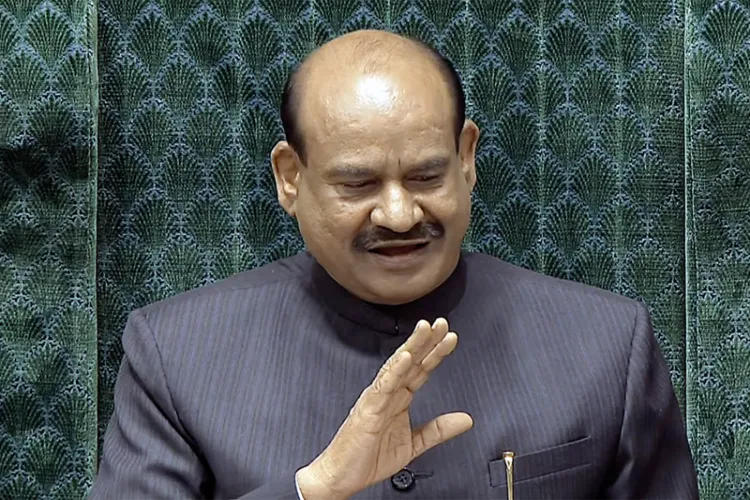
As several opposition parties move to bring a resolution seeking the removal of Lok Sabha Speaker Om Birla, parliamentary records show that no such attempt has ever succeeded in India’s legislative history.
Opposition members submitted a notice for moving the resolution on Tuesday afternoon. Sources in the Lok Sabha Secretariat said the notice would be scrutinised and processed strictly in accordance with established rules and constitutional provisions.
While previous Speakers have faced similar motions, none has resulted in removal.
Under parliamentary procedure, a minimum of two Lok Sabha members must sign a notice seeking removal of the Speaker. While there is no upper limit on the number of signatories, at least two members are mandatory for the motion to be valid.
Article 94(c) of the Constitution provides for the removal of the Speaker through a resolution passed by a simple majority of the House.
Explaining the process, former Lok Sabha Secretary General P D T Achary said that the majority is calculated on the basis of the effective strength of the House, excluding vacancies.
“All members of the House are counted to compute the majority, not merely those present and voting, which is the usual practice. The effective membership is taken into account,” Achary told PTI.
He added that the notice must be submitted to the Lok Sabha Secretary General and not to the Deputy Speaker or any other authority.
At the preliminary stage, the Secretariat examines whether the notice meets admissibility criteria, including whether it contains specific and clearly defined charges.
“There is a threshold scrutiny. It must contain specific charges, because only then can the Speaker respond. Vague allegations are not admissible,” Achary said.
The proposed resolution must also avoid defamatory language.
Article 96 of the Constitution grants the Speaker the right to be heard in the House while the resolution is under consideration.
Ordinarily, the admissibility and language of such a resolution are examined by the Deputy Speaker. However, as the current Lok Sabha does not have a Deputy Speaker, the scrutiny may be undertaken by the senior-most member of the panel of chairpersons, which assists in presiding over House proceedings in the Speaker’s absence.
“The Speaker examining a motion seeking his own removal would be absurd, but the rules are silent on this scenario,” Achary observed.
Once the initial scrutiny is completed, the resolution can be taken up by the House after a mandatory 14-day notice period.
At that stage, the Speaker places the motion before the House for consideration. As per procedure, the Speaker asks members supporting the motion to stand up.
“If at least 50 members rise in support, the Speaker announces that the House has granted permission. Once permission is granted, the motion must be discussed and disposed of within 10 days,” Achary explained.
Although such resolutions have been introduced in the past, none has been adopted.
READ MORE: Why did popular vlogger Arbaaz Khan cry over Sanjay Patel's death?
“The simple reason is that the government of the day has always enjoyed a majority,” Achary said.

.webp "S. Irfan Habib with Saquib Salim in Deen Aur Duniya")








.webp)

.webp)