New Delhi
Prime Minister Narendra Modi on Tuesday drew a parallel between the ongoing fuel supply concerns arising from global tensions and the challenges faced during the COVID-19 pandemic, urging citizens and political parties to remain united and prepared for prolonged uncertainty.
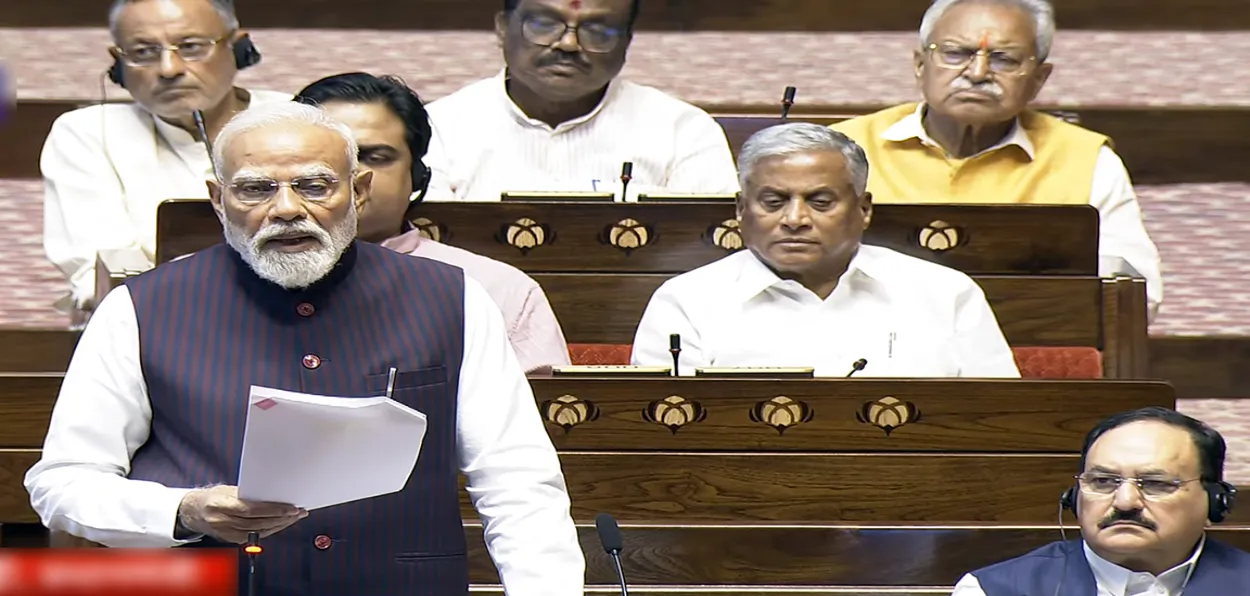
Addressing Parliament amid concerns over disruptions linked to the West Asia conflict, the Prime Minister said that the current global situation has created pressure on energy supply chains, affecting fuel availability and prices worldwide. He noted that India, like many other nations, is not insulated from these developments and must respond with resilience and collective responsibility.
“Difficult global conditions are likely to persist for a long time,” Modi said, emphasizing that the country must be ready to face challenges just as it did during the COVID-19 crisis. He highlighted how India overcame unprecedented hurdles during the pandemic through coordinated efforts between the government, states, and citizens.
The Prime Minister’s remarks come at a time when reports of fuel shortages and rising prices have triggered anxiety in several parts of the country. While government officials have sought to reassure the public that supplies remain stable, the evolving geopolitical situation has continued to cast uncertainty over global oil markets.
Modi stressed that panic and misinformation could worsen the situation. He urged people not to indulge in hoarding or speculation, and instead trust official communication channels. “When the nation stands united, no crisis is insurmountable,” he added.
However, the comparison with the COVID-19 pandemic drew sharp criticism from the Opposition. Congress leader Rahul Gandhi accused the Prime Minister of overlooking the hardships faced by millions during the pandemic, including loss of lives, economic distress, and challenges faced by migrant workers.
Speaking to reporters outside Parliament, Gandhi said the government must acknowledge the lessons of the pandemic rather than invoke it as a point of comparison. “The country remembers what happened during COVID-19. People suffered immensely, and many are still recovering from its impact,” he said, adding that the government should focus on concrete measures to address the current fuel situation.
Speaking in the Rajya Sabha. https://t.co/NAcbZLZq7P
— Narendra Modi (@narendramodi) March 24, 2026
Other Opposition leaders echoed similar concerns, questioning whether the government was adequately prepared to handle a prolonged fuel crisis. They demanded greater transparency regarding fuel reserves, pricing mechanisms, and contingency planning.
In response, government sources maintained that India has taken several proactive steps to safeguard its energy security. These include diversifying crude oil import sources, enhancing strategic reserves, and promoting alternative energy initiatives such as ethanol blending and renewable energy expansion.
Energy experts note that the global oil market remains highly volatile due to geopolitical tensions, particularly in key oil-producing regions. Any disruption in supply chains can have a cascading effect on prices and availability, especially for import-dependent countries like India.
Despite the political sparring, there appears to be consensus on the need for caution and preparedness. Economists have advised the government to balance short-term relief measures with long-term strategies to reduce dependence on imported fuels.
As Parliament continues to debate the issue, the Prime Minister reiterated his call for unity, saying that crises demand collective action rather than division. “India has faced challenges before and emerged stronger. With determination and cooperation, we will navigate this situation as well,” he said.
READ MORE: Col Sofiya Qureshi redefined the role of women in Military
The coming weeks are likely to test both the government’s crisis management capabilities and the resilience of the public, as the country watches closely how the global situation unfolds.

.webp "Union Home Minister Amit Shah")





_to_exit_NDA,_return_to_Mahagathbandhan.webp "Representational Image")


_(1).webp)