




Ayodhya (Uttar Pradesh)
President Droupadi Murmu is set to visit Ayodhya on March 19, coinciding with the first day of Navratri.
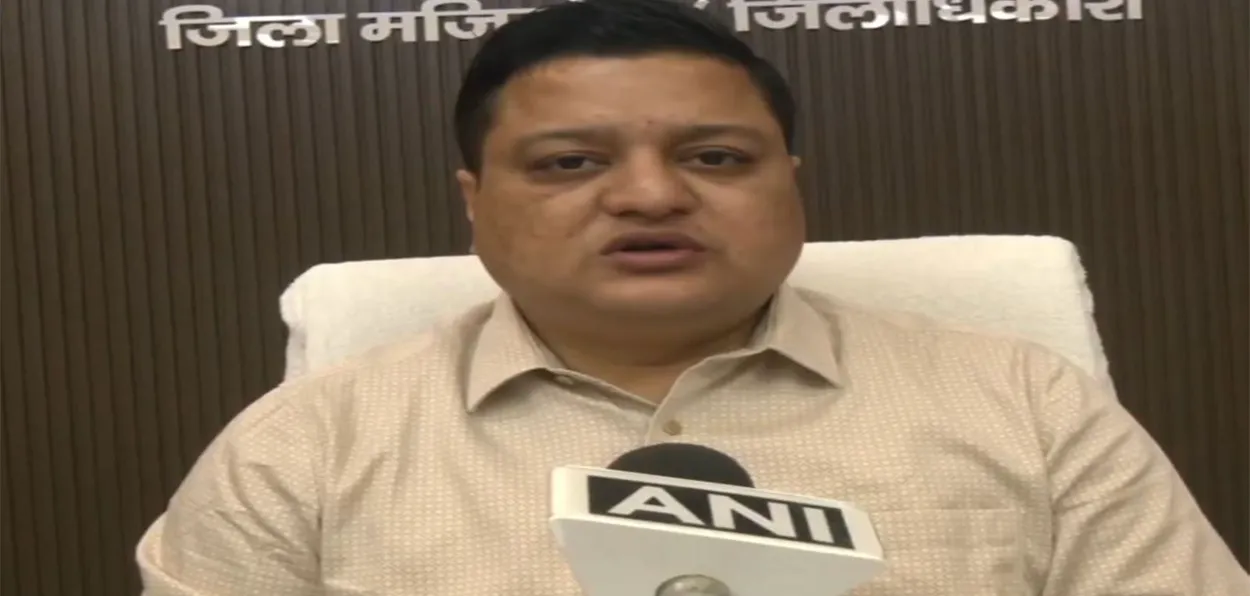
Speaking to ANI, District Magistrate Nikhil Tikaram Funde confirmed plans are underway to ensure a smooth event, with crowd management and police personnel in place.
The visit falls ahead of Ram Navami on March 27, which also has separate celebrations planned.
"President Murmu is scheduled to visit Ayodhya on the first day of Navratri, i.e. 19 March. We had a meeting with the management committee regarding the planning and organisation of the event. We will ensure that the event is well-organised. As you mentioned, we also have the grand celebration of Ram Navami on 27 March... we have planned for the day as per our crowd management. There will be police personnel allocated to ensure everything is under surveillance and the event concludes successfully", he said.
The administration has said that adequate security arrangements and crowd control measures will be put in place to ensure the smooth conduct of both events.
Earlier, on February 24, President Droupadi Murmu unveiled the bust of Chakravarti Rajagopalachari, the first and only Indian Governor General of Independent India, at Rashtrapati Bhavan.
The bust of Rajagopalachari, at the Grand Open Staircase near Ashok Mandap opposite to the statue of Mahatma Gandhi, replaces the bust of Edwin Lutyens.
This initiative is part of a series of steps being taken towards shedding "the vestiges of the colonial mindset".The President later attended Rajaji Utsav at Rashtrapati Bhavan Cultural Centre, where she took a round of the photo and book exhibition on his life and work.
Speaking on the occasion, the President said that when Rajaji arrived at the Government House (now known as Rashtrapati Bhavan), he placed portraits of Ramakrishna Paramahamsa and Mahatma Gandhi in his room.
Rajaji sent a clear message that while India was formally still a Dominion, Swaraj had been fully established in the hearts of Indians.
READ MORE: When Kalam, Ansari, Dilip Kumar prayed in the mosque as common Muslims
Rajaji set an inspiring example of mental decolonisation, she said. His ideals are reflected in the national campaign adopted by the people of India to take pride in India's heritage and eliminate the vestiges of the colonial mindset. Indian consciousness and connection with all Indians, especially the weaker sections, are reflected in Rajaji's thoughts and actions, the President noted.
She said that portraits of British imperial officials who exploited India were earlier hung in the corridors of Rashtrapati Bhavan. Now, the gallery called 'Param Vir Dirgha' is adorned with portraits of Param Vir Chakra awardees. The Granth Kutir has been established at Rashtrapati Bhavan to preserve the great tradition of knowledge accumulated in manuscripts and texts of India's classical languages.






.webp)
.webp)