New Delhi
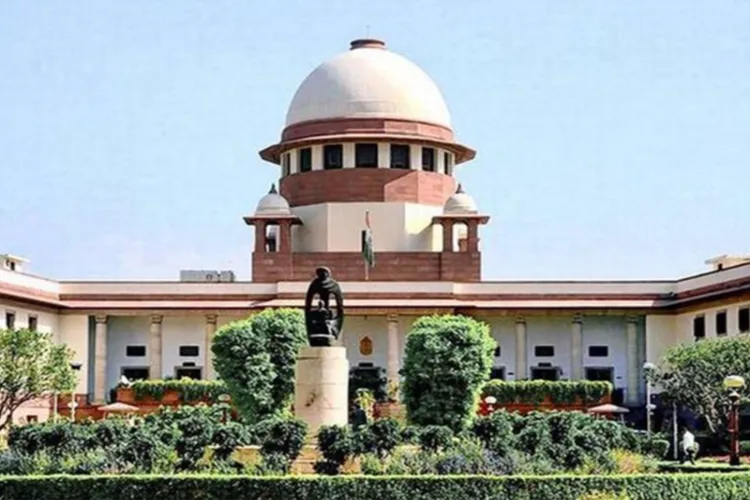
The Supreme Court of India on Monday remarked that "RTI activism has become a new business" while refusing anticipatory bail to an RTI activist and his aide accused of obstructing public servants engaged in road construction work in Punjab.
A bench comprising Justices Sandeep Mehta and Vijay Bishnoi declined relief to RTI activist Rakesh Kumar Behl and his associate, questioning their authority to monitor government projects.
"RTI activism has become a new business. The Central government has issued funds, it will take care of the construction of the road. You are nobody. So-called RTI activist! Yellow journalism. Dismissed," Justice Mehta observed while rejecting the plea.
Justice Bishnoi concurred with the remarks, asking, "Who are you to monitor the construction of all these roads? Are you some superior authority or what?"
Behl had approached the apex court challenging a May 14 order of the Punjab and Haryana High Court, which had denied him anticipatory bail.
Appearing for the petitioners, counsel argued that the accused had been falsely implicated because they had allegedly exposed corruption in the road construction project.
According to the First Information Report (FIR), Behl and another accused, Rajiv Kumar alias Mintu, allegedly obstructed ongoing road construction work in Batala in Punjab's Gurdaspur district. They are accused of intimidating the complainant supervising the work, threatening labourers at the site, using derogatory language and assaulting the complainant.
An FIR was subsequently registered under multiple provisions of the Bharatiya Nyaya Sanhita (BNS), 2023, including Sections 304(2), 132, 221, 121(1), 351(2) and 351(3), along with Sections 3(5) and 121(2) of the BNS and provisions of the Scheduled Castes and Scheduled Tribes (Prevention of Atrocities) Act.
In its earlier order, the Punjab and Haryana High Court had observed that the allegations disclosed "specific and direct involvement" of the accused in obstructing government work and had consequently refused to grant them anticipatory bail.
READ MORE: Zeenat Pannah's enduring work to preserve India's textile heritage
The Supreme Court upheld that view and dismissed the plea, leaving the accused to pursue other legal remedies available under law.

.webp "Rocks bearing inscription in ancient Arabic excavated in Saudi Arabia's Madina region")










.webp)