New Delhi
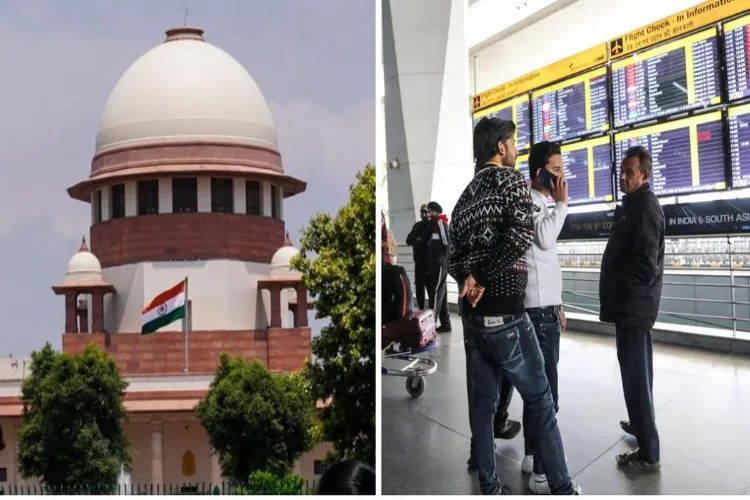
The Supreme Court on Monday refused to entertain two separate pleas seeking urgent hearing in the recent delays and cancellations of hundreds of IndiGo flights, leading to a chaotic situation among air passengers across multiple airports in the country.
The first plea was mentioned before a bench led by the Chief Justice of India (CJI), Justice Surya Kant.
Advocate Narendra Mishra sought that the top court hear the matter on an urgent basis, claiming around 2500 flights have been delayed at 95 airports across the country, causing many passengers to suffer.
After hearing him briefly, the CJI stated that the central government is cognisant of the issue and there is no urgency as of yet for the top court to intervene in this regard.
"We understand that lakhs of people are stranded. Maybe some people have urgent work and are not able to...But then, the Government of India has taken cognisance of the issue. Timely steps appear to have been taken. We don't see any urgency right now", CJI Surya Kant said.
On the same day, another plea was mentioned on a similar issue before a bench led by Justice Vikram Nath. The plea was filed by one S Laxminarayanan, who sought the top court's urgent regulatory intervention in the civil aviation sector to ensure fare transparency, continuity of essential air-services and accountability for arbitrary price hikes and cancellations.
However, the top court refused to entertain the said request in accordance with the top court's recent guidelines that disallowed the mentioning process.
Laxminarayanan's plea had been filed as an Intervention Application (IA) in her main petition, which was a public interest litigation (PIL) seeking the top court's intervention against arbitrary price surges in air fares.
"A grave and unforeseen situation has emerged in the aviation sector, particularly concerning IndiGo Airlines, India's largest carrier. Beginning late November 2025, large-scale operational collapse due to crew shortages resulted in massive cancellations and delays affecting passengers throughout the country. The said disruption has triggered an extraordinary escalation in airfare prices. Newspaper reports from leading national dailies reveal that airfares on several routes have risen five to ten times the ordinary levels, forcing stranded passengers to pay exorbitant sums or wait indefinitely without support. These developments directly reflect the very concerns highlighted in the PIL", the plea read.
Further, the plea stated that the crisis exposed systemic regulatory failures, including deficient enforcement of statutory and DGCA-mandated operational and staffing norms under the Civil Aviation Requirements.
Despite clear obligations relating to minimum crew strength, ground staffing and compliance with Flight Duty Time Limitations, the large-scale operational collapse of IndiGo prima facie demonstrates prolonged non-compliance that went unchecked by the regulator, it adds.
It further stated that the belated and reactive role of the DGCA reflects abdication of its statutory duty under the Aircraft Act and Rules, permitting commercial pressures to override safety supervision, crew welfare and passenger protection.
"The absence of pre-emptive verification of airline preparedness and an effective enforcement architecture has resulted in the denial of mobility, arbitrary financial burdens, and violations of Articles 14 and 21 of the Constitution," it contended.
Moreover, the petitioner contended that airlines continued commercial operations despite knowing they were unable to meet mandatory norms, thereby consciously breaching their obligations and subjecting passengers to avoidable hardship and exploitation.
The manner in which operations collapsed immediately upon enforcement of revised norms, coupled with sudden fare escalation, raises a prima facie apprehension that operational disruption may have been used as leverage to dilute regulatory standards.
ALSO READ: Dr. Siddiq Ahmad Meo has chronicled Mewati Culture for posterity
These circumstances underscore the need for immediate judicial intervention to direct statutory authorities to prevent exploitative fare escalation, ensure continuity of essential air services, protect stranded passengers, and uphold the rule of law in the governance of civil aviation, treating air travel as a necessary public utility requiring reasonable regulation in the public interest, the plea seeks.


.png)





.webp "Sachchidananda Parabrahman Dr Jayant Balaji Athavale")



_(1).webp)