New Delhi
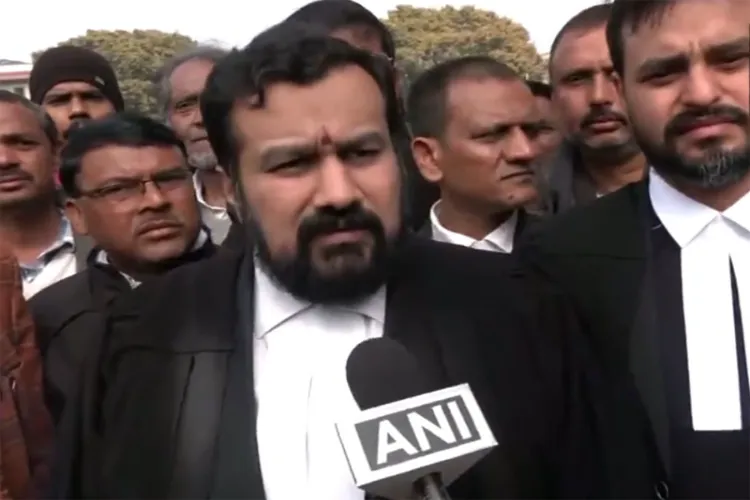
Counsel for the petitioner challenging the newly introduced University Grants Commission (UGC) regulations, Vishnu Shankar Jain, on Thursday said that the Supreme Court has stayed the recently enacted UGC Regulations and kept them in abeyance.
He informed that the apex court has directed that the UGC Regulations of 2012 will remain in force until further orders. The matter has been listed for hearing on March 19.
"Today, the Supreme Court heard our writ petition challenging the UGC Regulations which have been enacted recently. The Supreme Court has stayed the UGC Regulations and has kept them in abeyance. The Supreme Court has directed that UGC Regulations 2012 will be in operation till further orders. The matter has been posted for hearing on March 19," Vishnu Shankar Jain told ANI.
Meanwhile, petitioner and advocate Vineet Jindal said that the Supreme Court's decision aligned with the arguments raised before it regarding Clause 3C. He stated that while the clause addressed caste-based discrimination, it included only certain castes and excluded the general category, giving the impression that the general caste was being specifically targeted.
Jindal further said that the new rules and regulations appeared to create divisions among students, which runs counter to the constitutional principle of equality. He added that the Chief Justice of India acknowledged shortcomings in the regulations and noted that they need to be reconsidered and reviewed.
"The Supreme Court has stayed the new UGC regulations and has reinstated the 2012 regulations. The reason given is what we have consistently argued before the Supreme Court regarding Clause 3C, in which caste-based discrimination was discussed, but only certain castes were included while the general caste was left out. In a way, it appeared that the general caste alone was being targeted, and concerns were raised regarding caste. Somewhere, the rules and regulations were creating a situation of dividing students, which goes against the principle of equality that our Constitution talks about. The Chief Justice of India clearly acknowledged that there are shortcomings in these rules and regulations, and that they need to be reconsidered and examined," Jindal told reporters.
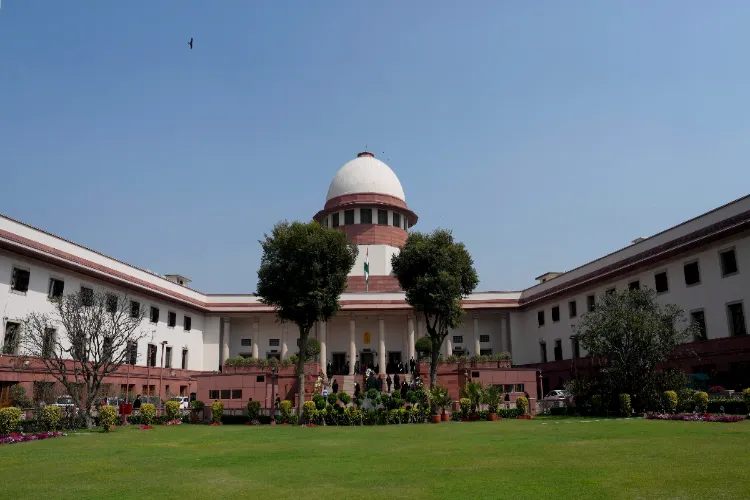
Amid an uproar around the country, the Supreme Court on Thursday stayed the University Grants Commission (Promotion of Equity in Higher Education Institutions) Regulations, 2026.
The new UGC regulations, notified on January 23, were challenged by various petitioners as being arbitrary, exclusionary, discriminatory and in violation of the Constitution as well as the University Grants Commission Act, 1956.
The Top Court said that, for now, the 2012 UGC regulations will continue to apply. The Court opined that there is complete vagueness in Regulation 3 (C) (which defines caste-based discrimination), and it can be misused. "The language needs to be re-modified," the Court said.
The new regulations, introduced to curb caste-based discrimination in colleges and universities, require institutions to establish special committees and helplines to address complaints, especially from students belonging to the Scheduled Caste (SC), Scheduled Tribes (ST), and Other Backward Classes (OBCs) categories.
Under the new UGC equity guidelines, all colleges and universities must create an Equal Opportunity Centre (EOC) on their campuses. Institutions are also instructed to establish dedicated committees, helplines, and oversight teams to manage complaints and ensure effective support for SC, ST, and OBC students.
Earlier on Wednesday, students, mostly belonging to the general category, staged a protest at Delhi University's North Campus against the newly notified University Grants Commission (UGC) equity rules, demanding their immediate withdrawal.
The protesting students claimed that the rules promote discrimination on campuses instead of equality. They pointed out that there was no binding provision for the representation of general category students.
ALSO READ: I received my wages for hard work of decades: Ghafruddin on Padma Shri
However, on Tuesday, Union Education Minister Dharmendra Pradhan sought to allay concerns about the new UGC regulations, assuring that the law would not be misused and that there would be no discrimination in its implementation.
Speaking to the reporters, Pradhan said, "I assure everyone there will be no discrimination and no one can misuse the law."









.webp "Union Home Minister Amit Shah")
.webp "Union Minister of Parliamentary Affairs Kiren Rijiju")

_(1).webp)