Jammu
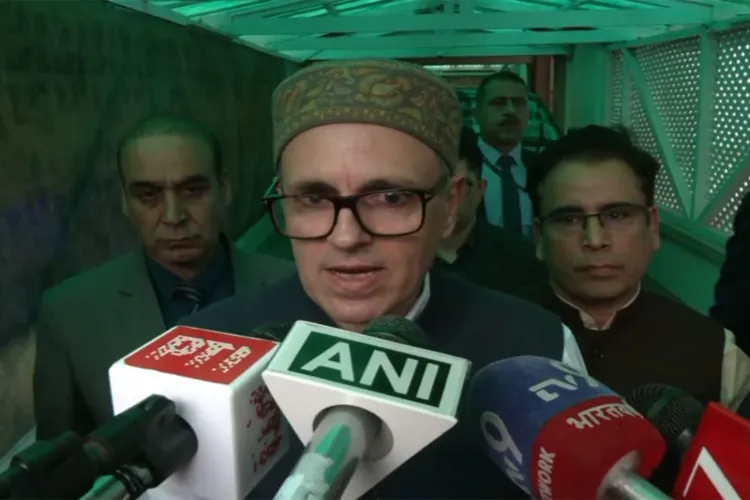
Jammu and Kashmir Chief Minister Omar Abdullah on Tuesday said the India–US Interim Trade Agreement would not benefit the Union Territory and could adversely impact the interests of local farmers, particularly those dependent on horticulture and allied sectors.
Speaking to reporters, Abdullah expressed concern that duty-free imports of agricultural and dairy products could hurt producers in Jammu and Kashmir.
“This will definitely cause harm. If nuts, dry fruits, fresh fruits and dairy are imported duty-free, there will be losses. What do we have apart from these products? We do not have marine or seafood exports. Our strength lies in dried fruits, walnuts, almonds, saffron, apples and kiwis. If these products enter the country duty-free from the US, losses are inevitable. We gain nothing from this deal; it will only result in losses,” he said.
The comments come after India and the United States last week announced that they had reached a framework for an Interim Agreement aimed at promoting reciprocal and mutually beneficial trade.
According to a joint statement, the interim pact reaffirms the commitment of both countries to the broader US–India Bilateral Trade Agreement (BTA) negotiations launched by US President Donald J Trump and Prime Minister Narendra Modi on February 13, 2025. The BTA is expected to include additional market access commitments and support more resilient supply chains.
The statement described the Interim Agreement as a significant milestone in the India–US partnership, reflecting a shared commitment to balanced and reciprocal trade based on mutual interests and tangible outcomes.
Under the key provisions of the Interim Agreement, India will reduce or eliminate tariffs on all US industrial goods and a broad range of US food and agricultural products, including dried distillers’ grains, red sorghum for animal feed, tree nuts, fresh and processed fruits, soybean oil, wine and spirits, among others.
The United States, in turn, will impose a reciprocal tariff rate of 18 per cent on certain Indian-origin goods under Executive Order 14257 of April 2, 2025. These include textiles and apparel, leather and footwear, plastics and rubber products, organic chemicals, home décor items, artisanal products and select machinery.
On the successful conclusion of the Interim Agreement, the US will remove reciprocal tariffs on several Indian goods listed under the Potential Tariff Adjustments for Aligned Partners annex to Executive Order 14346 of September 5, 2025, including generic pharmaceuticals, gems and diamonds, and aircraft parts.
Meanwhile, Union Commerce and Industry Minister Piyush Goyal said the Centre has not opened the domestic market to unrestricted US apple imports under the interim pact and has instead introduced a quota system to protect Indian growers.
“We are not surplus in apples. India’s demand is about 25–26 lakh tonnes, while production is around 20–21 lakh tonnes. We import nearly 5.5 lakh tonnes of apples annually, a large portion from the US. We have not opened up apples; we have given a quota that is lower than current imports,” Goyal told ANI.
He added that safeguards remain in place to prevent cheap imports from undercutting domestic prices.
READ MORE: Why did popular vlogger Arbaaz Khan cry over Sanjay Patel's death?
“Apples currently have a minimum import price of Rs 50, with a 50 per cent duty, making Rs 75 the floor price. Even within the US quota, the minimum import price is Rs 80, with a Rs 20 duty, resulting in a landed price of Rs 100. This ensures protection for Indian apple farmers,” the minister said.










.webp "Union Home Minister Amit Shah")
.webp "Union Minister of Parliamentary Affairs Kiren Rijiju")



_(1).webp)