




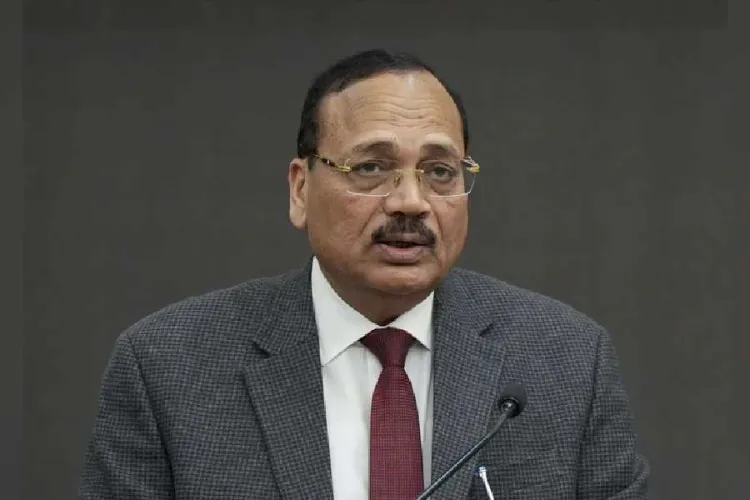
.webp "Chief Economic Advisor V Anantha Nageswaran")
New Delhi
V. Anantha Nageswaran on Tuesday described the ongoing West Asia conflict as a “live balance of payments stress test” for India, warning that the crisis has direct implications for inflation, the current account deficit, and currency stability. At the same time, he said India’s ongoing fiscal consolidation, infrastructure expansion, and reform-driven growth place the country in a stronger position than many others to navigate the turbulence.
Speaking at a session organised by the Confederation of Indian Industry in New Delhi, Nageswaran said India’s economic exposure to the Gulf region makes the crisis particularly significant. He noted that around 87 per cent of India’s crude oil requirement is imported, with nearly 46 per cent of those supplies moving through or near the Strait of Hormuz.
He also pointed out that about 60 per cent of India’s LPG requirements are met through imports, with more than 90 per cent of those supplies coming via the Gulf region. In addition, nearly 38 per cent of India’s annual remittance inflows originate from Gulf countries, underlining the region’s broader economic importance for India.
Nageswaran said the crisis should not be viewed merely as a foreign policy challenge, but as a real-time economic stress test with direct consequences for the country’s balance of payments, inflation trajectory, and exchange rate stability. According to him, managing the current account, ensuring sustainable financing, and preventing excessive depreciation of the rupee would be among the key macroeconomic priorities in FY27.
The conflict has disrupted shipping through the Strait of Hormuz following military escalation involving the United States, Israel, and Iran over the past two months, resulting in a sharp rise in global crude prices. The surge in energy prices is expected to increase India’s import bill significantly, putting pressure on foreign exchange reserves and widening the current account deficit.
According to estimates cited during the discussion, India’s current account deficit—measuring the gap between imports and export earnings—is expected to widen to around 1.3 per cent of GDP from approximately 0.8 per cent in FY26. Meanwhile, the Indian rupee touched a record low of 95.63 against the US dollar on Tuesday.
Nageswaran said India’s macroeconomic fundamentals, along with recent reforms and public infrastructure investments, provide a strong foundation. However, he stressed that the evolving strategic environment requires more than conventional macroeconomic management and demands a broader reassessment of India’s global economic positioning.
He warned that emerging economies assuming a return to the pre-2020 global economic order may be making a strategic miscalculation, noting that the world is now shaped by ongoing geopolitical conflicts, fragmented trade networks, and shifting technology alliances.
According to the Chief Economic Advisor, India’s scale, democratic institutions, and wide-ranging global partnerships place it in a favourable position to help shape the next phase of the international economic order. However, he said this opportunity comes with a limited window for India to reposition its trade partnerships, strengthen supply chains, deepen technology collaborations, and build strategic coalitions.
Nageswaran outlined four major structural shifts that emerging economies must prepare for: geo-economic fragmentation driven by trade wars and sanctions, technological bifurcation in sectors such as semiconductors and digital infrastructure, the growing cost associated with energy transition, and the permanent repricing of geopolitical risks across global markets.
READ MORE: Syed Tanveer Nasrin: Ambassador of culture, women rights and harmony
He said these trends are likely to define economic policymaking for years to come and will require countries like India to adapt strategically while protecting macroeconomic stability.











.webp)
