Ashhar Alam
Actor Hina Khan, who is currently recovering after her battle with breast cancer, has added her voice to growing concerns over Mumbai’s declining air quality.
Sharing her distress on Instagram Stories, Hina wrote that the pollution has begun to interfere with her everyday life, forcing her to cut down on outdoor activities. Constant coughing and difficulty breathing, especially in the mornings, have become hard to ignore, she noted.
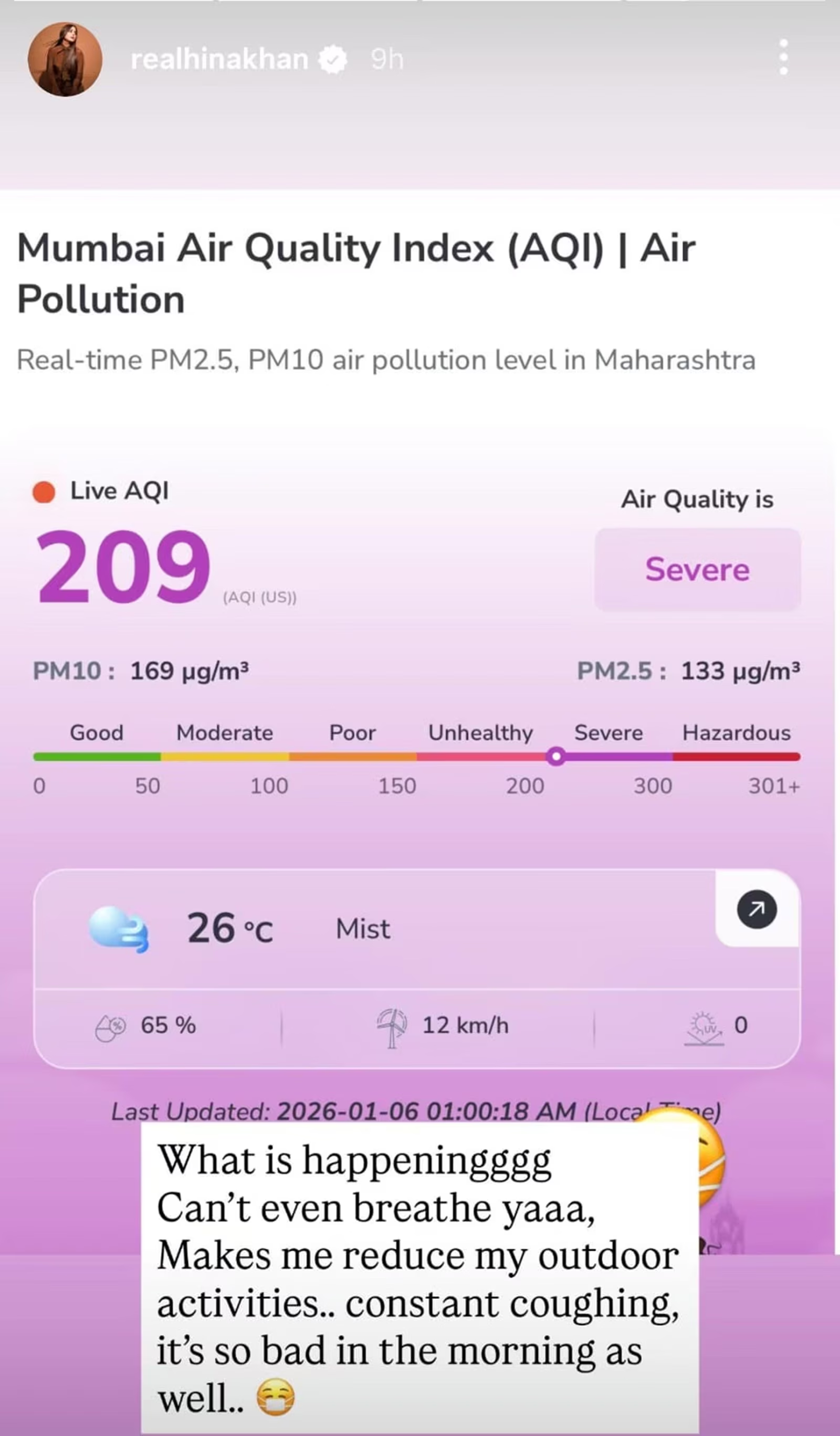
Hina Khan’s post about its quality in Mumbai (Photo: Hina Khan/Instagram Stories)
Hina isn’t alone. Several celebrities, including Saiyami Kher, Dia Mirza and comedian Vir Das, have recently spoken about how polluted air in India’s metros is affecting their health and routines.
With air pollution no longer limited to a particular season, we spoke to health experts to understand why these symptoms occur and what people, especially cancer survivors, can do to stay safe.
Why polluted air is taking a toll on daily health
According to Dr Sulaiman Ladhani, consultant pulmonologist at Wockhardt Hospitals, Mumbai Central, persistent coughing and breathlessness should not be brushed aside. “These are warning signals from the body, not something people should learn to live with,” he stressed.
Doctors across Indian cities are seeing a rise in patients complaining of chest tightness, constant coughing and shortness of breath — even among those without a history of lung disease. The reason, experts say, lies in worsening urban air quality. Vehicle emissions, construction dust, industrial fumes, garbage burning and festival smoke release fine particles such as PM2.5 and PM10, which penetrate deep into the lungs. Continuous exposure irritates the airways, leading to inflammation, coughing and breathing discomfort.
Dr Samir Garde, Director, Department of Pulmonology and Lung Transplant at Gleneagles Hospital, Parel, explained that polluted air inflames the air passages, increases mucus production and gradually reduces lung capacity. “Over time, even healthy individuals may experience dry cough, throat irritation, wheezing or breathlessness,” he said.
Why mornings feel especially harsh
If mornings feel tougher on the lungs, there’s a scientific reason. Dr Ladhani explained that during cooler hours, particularly in winter, pollution gets trapped close to the ground due to low wind movement. “Between 5 am and 9 am, pollution levels can be significantly higher. People stepping out for walks, prayers or chores end up inhaling more concentrated polluted air,” he said. This is why symptoms like coughing, burning eyes and breathlessness often peak early in the day.
Extra caution for cancer survivors
For cancer survivors, the risks are higher. Those who have undergone chemotherapy or chest radiation often have more sensitive lungs. “Exposure to polluted air can worsen breathing problems and delay recovery,” Dr Ladhani noted, adding that limiting exposure is crucial for long-term respiratory health.
Simple lifestyle steps to protect your lungs
Experts recommend small but effective daily habits to reduce pollution’s impact:
Avoid outdoor activities during high-AQI hours, especially early mornings
Wear a well-fitted N95 mask in heavy traffic or smog
Keep windows closed during peak pollution hours
Use air purifiers indoors, particularly in bedrooms
Stay hydrated to help keep airways moist
Steam inhalation may offer temporary relief after exposure
Shift walks to midday or exercise indoors on high-pollution days
Dr Garde advises seeking medical help if coughing or breathlessness continues. “Timely lung function tests and treatment can prevent long-term damage,” he said.
READ MORE: IUML's Fatima Muzaffar Ahmed is the epitome of Muslim woman leadership
As air quality worsens across cities, taking proactive steps to protect lung health is no longer optional, it’s a daily necessity.
Disclaimer:This article is based on publicly available information and expert inputs. Readers are advised to consult a qualified healthcare professional before making any health-related changes.

















_(1).webp)