 Aditi Bhaduri
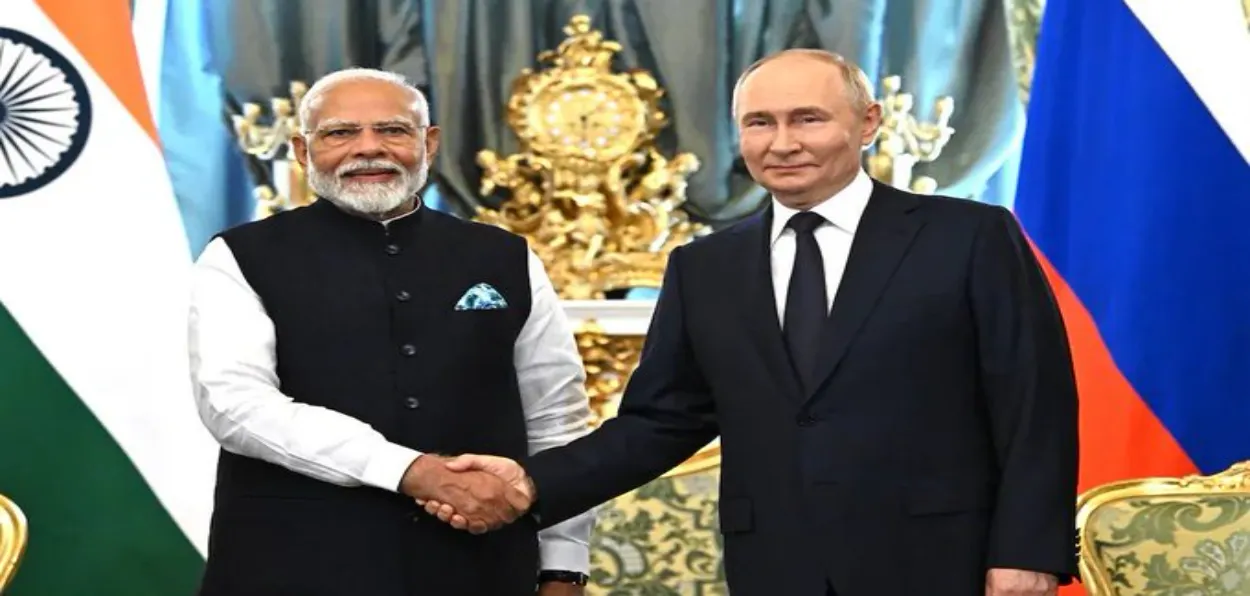
On December 4, India will welcome an old friend as Russian President Vladimir Putin pays a two-day visit to New Delhi for the 23rd annual bilateral summit. The visit is significant for India and Russia, as well as the global order. The visit comes at a particularly pivotal moment in international affairs.
The administration of President Donald Trump has upended the established global economic order, and the Ukraine war drags on. While the end may be on the horizon, the road ahead is a bumpy one. The Euro-Atlantic order is crumbling and India finds itself unwittingly a part if it all with unprecedented US tariffs imposed on its exports to the US -- apparently for its large purchases of heavily discounted Russian oil -- something the EU imports too but without any consequences.
News Analysis
India and Russia share a "special and privileged strategic partnership". The visit comes four years after President Putin's last visit in December 2021, almost on the eve of Russia’s "special military operation” in Ukraine. Last year, Prime Minister Narendra Modi's first foreign visit after his third re-election was to Moscow, cementing Russia’s role in India's foreign policy as a major partner and a close friend. This will be Putin's tenth visit to India.
For India, the visit is even more consequential. It comes after Operation Sindoor, when the country found itself to be pretty much on its own. Russia was then one country that issued the strongest condemnation of the Pahalgam terror attacks, with the foreign ministry even issuing a statement saying that it understood India's right to defend itself. During the operation, the Russian-supplied S-400 air defence system played a critical role. At the same time, the pressure on India from the West to decrease its energy purchases from Russia is something that will test bilateral ties.
For Russia, the visit is equally important. Shunned by the West, isolated both economically and diplomatically since the outbreak of the Russian war, the visit will prove that Russia still has powerful friends, and amongst the world's liberal democracies.
The visit is expected to focus mainly on defence agreements and energy security. India is one of the largest purchasers of Russian arms - almost 37 percent of its procurements are from Russia. While no big-ticket deals are expected to be announced during the visit, India is seeking to order more S-500 Triumf missile systems, which are the updated version of the S-400 system, two batteries of which are still to be supplied. Also on the agenda will be the SU-57, the Russian stealth fighter jet, one of the options India is considering for procurement for its air force.
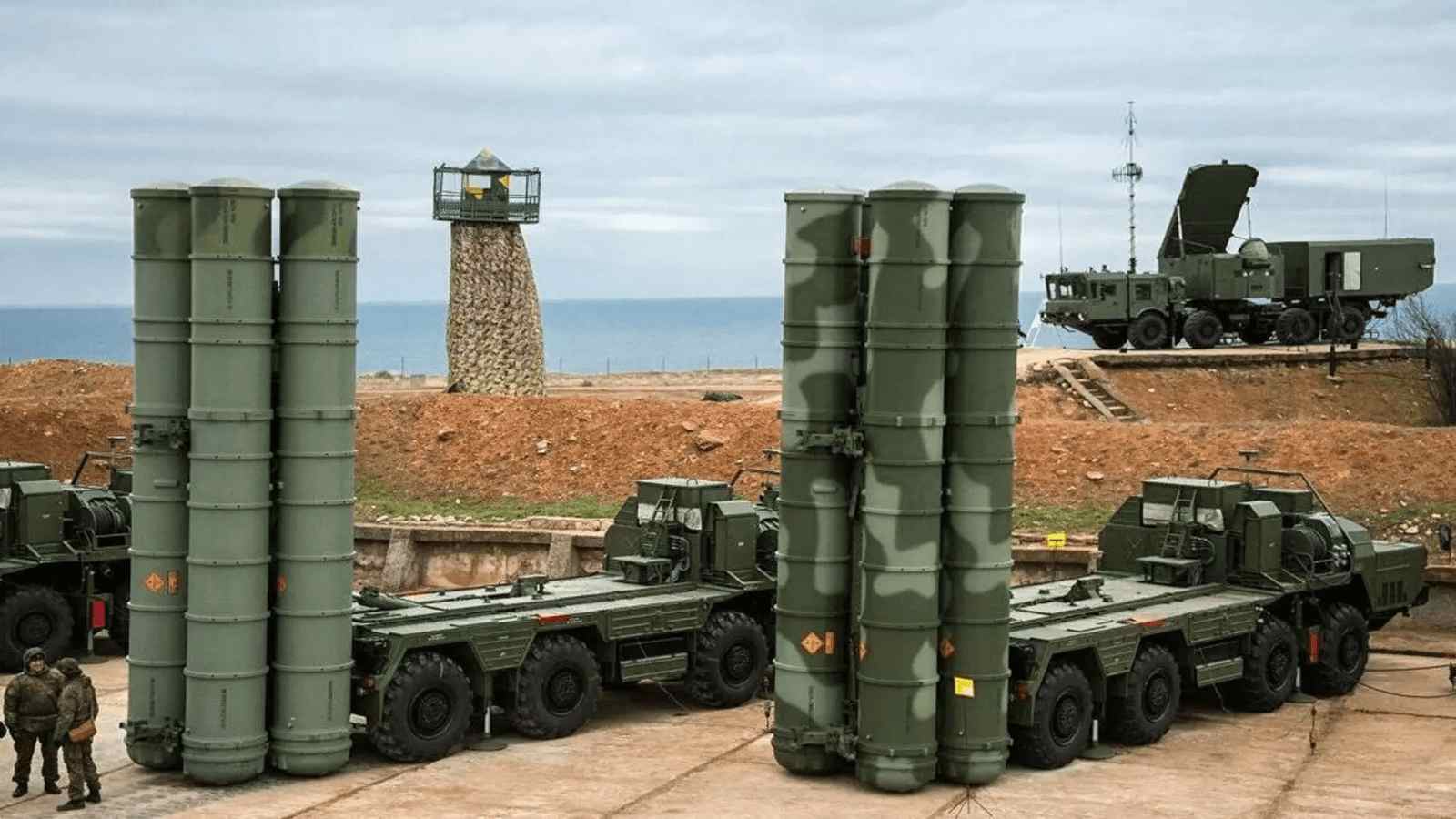 S-400 mobile Surface-to-Air Missile (SAM) System
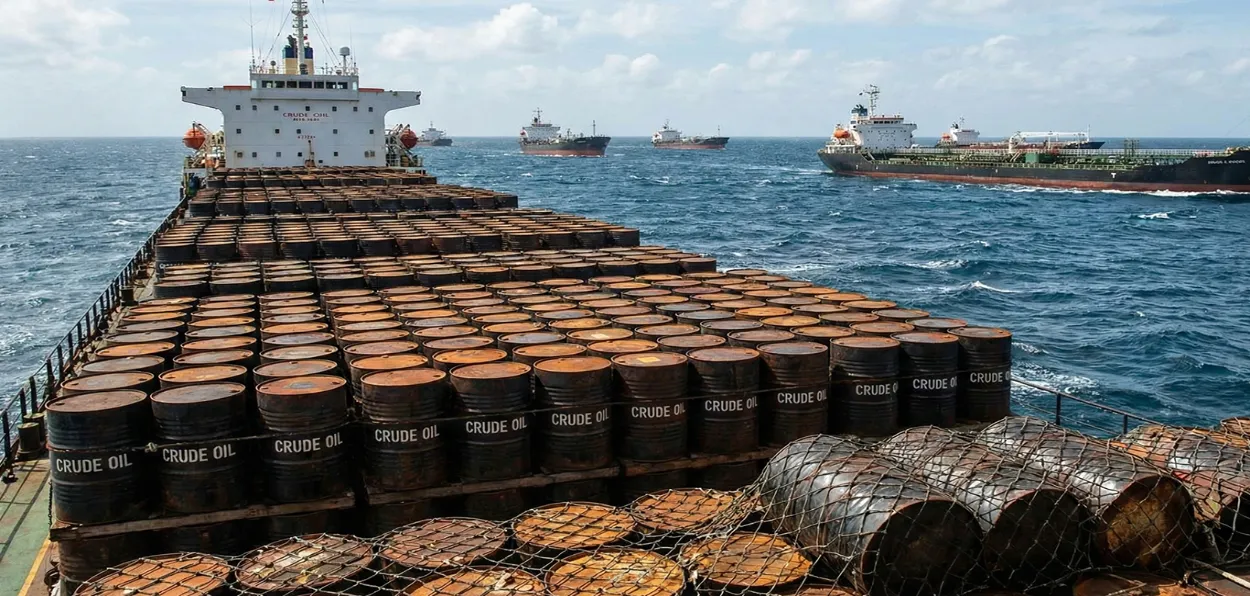
India has also emerged as one of the largest purchasers of heavily discounted Russian oil. It has ignored the Western sanctions on Russia, viewing them as unilateral. India’s purchases have also helped maintain stable global oil prices. At the same time, such purchases are vital for Russia's economy. These subjects will be priority areas. Economically, both sides now want to scale up bilateral trade to $100 billion. However, currently the balance is skewed in favour of Russia, and talks will also focus on opening up the Russian market to Indian products, especially pharmaceuticals, metallurgy, and agricultural products. Along with this, the issue of payments and payment methods to insulate India-Russia trade from any kind of Western sanctions is also expected to feature in discussions. Allied to this transport and trade corridors, in particular, the Arctic route and the Chennai-Vladivostok route, as well as the International North South Transport Corridor, will be touched upon.
India's External Affairs Minister S Jaishankar explains the importance of India-Russia friendship in this video posted by Sputnik on X:
India-Russia relations encompass a wide range of sectors - from defence to space, from energy to nuclear power, industry, art, and culture. Both countries cooperate extensively on the multilateral fora, where their policies and views generally converge. The Soviet Union, first and now its inheritor state, the Russian Federation, has been India's consistent friend in the UN Security Council, a steadfast supporter of India on Kashmir, shielding it from all anti-India resolutions.
In fact the month of December, which will see President Putin's visit, holds special significance for Indo-Russian ties. Fifty-four years ago, on 6th December, India became the first country to recognise the newborn nation of Bangladesh. The birth of Bangladesh came at a high cost for the people of what was then East Pakistan, and also to India.
🇮🇳🇷🇺 India always had positive experience with Russia: Jaishankar
— Sputnik India (@Sputnik_India) September 25, 2024
🇺🇸🇵🇰 Recalling the 1971 India-Pakistan war Jaishankar said, "we actually had a 40-year period where the West was primarily arming Pakistan, and we turned to the Soviet Union as a military partner." pic.twitter.com/Fxk8DoyZNS
In this war of liberation, India's decisiveness and the chivalry of its soldiers were complemented by the Soviet Union's support. The 1971 Indo-Soviet Treaty of Peace, Friendship and Cooperation, concluded between the two under the astute leadership of then Prime Minister Indira Gandhi, proved decisive in the eastern war theatre between India and Pakistan.
A crucial clause that if either country was attacked, the other would consult to remove such a threat and take appropriate effective measures to ensure peace and the security of their countries, became a deterrent for Pakistan, and a range of other actors supporting it - China, Jordan, Turkey, and of course the US. The Treaty helped the course of events that, in the words of former Russian Ambassador to India Nikolay Kudashev, "....had divided the history of South Asia into before and after......".
While Soviet military support allowed India to take on Pakistan, the Soviet veto in the Security Council, after the war had begun, gave enough time to Indian troops to move to Dhaka and get Pakistani troops to surrender. Consequently, the Soviet Union, and now Russia, has followed the Shimla Agreement of 1972, taking a position against raising the Kashmir issue in the UN Security Council, seeing territorial disputes between India and Pakistan as strictly a bilateral matter.
Anchored in such history, the Modi-Putin Summit is set to iron out glitches, provide pathways to cooperation that can bypass third-party interference, and give a new direction to bilateral relations. Ties are about to be elevated further with two other major agreements. One: on the possible recruitment of a thousand Indian professionals in the Russian labour market. This will significantly expand people-to-people ties and bind both countries into yet another kind of partnership.
The other and more consequential one is the Reciprocal Exchange of Logistics Agreement (RELOS). Intended to streamline bilateral armed forces drills, rescue and humanitarian efforts, the agreement will allow Russia and India to deploy troops and equipment on each other’s territory. This is significant because currently the subcontinent is undergoing a churning, in many ways reminiscent of 1971.
ALSO READ: Syed Nawaz Miftahi illuminates the world of the blind
President Putin's visit, therefore, will not just be an expression of India's strategic autonomy, but it is also expected to shape the contours of the future trajectory of bilateral relations.
Aditi Bhaduri is an independent journalist and researcher specialising in Eurasian geopolitics
_(1)_(1).webp "Jagannath Rath Yatra")