Naushad Akhtar/Rohtas (Bihar)
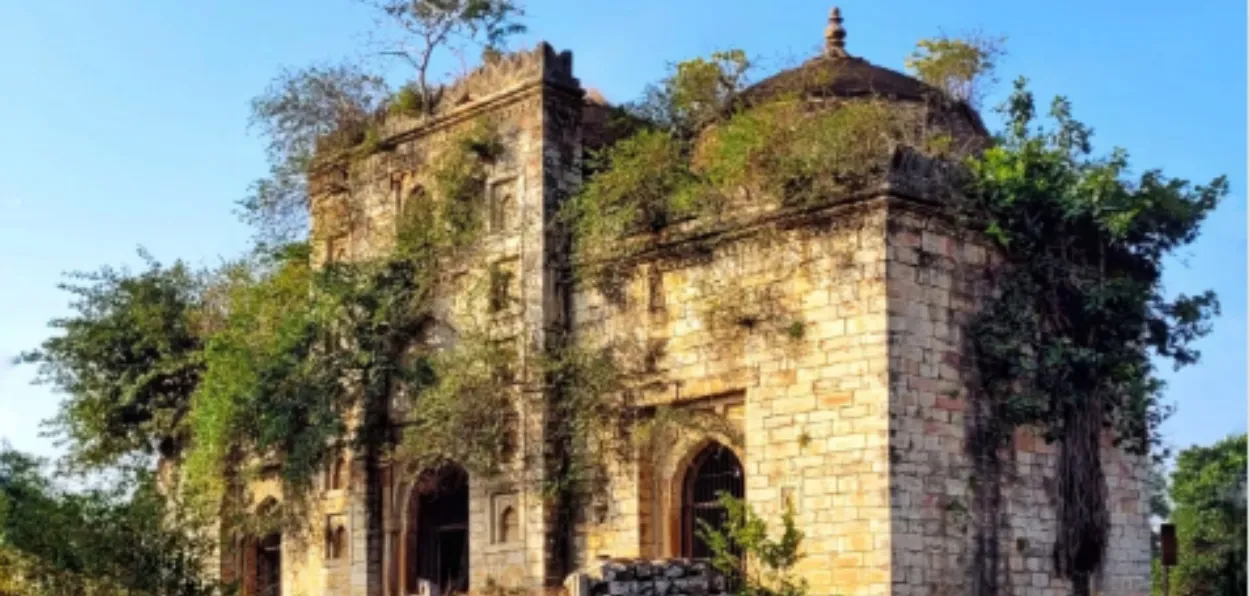
The hills of Rohtas in Bihar are resonating with the spirit of Hindu-Muslim unity as the two communities have joined hands to restore the 500-year-old Mughal-era Jama Masjid, which they consider their heritage.
Krishna Singh Yadav, president of the Chaurasan Shiv Mandir Committee in Rohtas, is leading the restoration campaign. Although Muslims have also contributed to this initiative, the role and contribution of the Hindu community are more pronounced.
This mosque is located near the Rohtasgarh Fort, which was built by Hans Khan in 1578 AD, during the reign of Mughal Emperor Akbar.
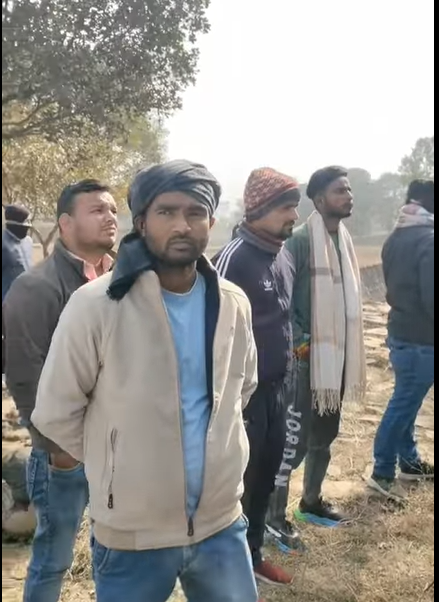 Locals at the site of the mosque in Rohtas
The campaign began at the Shiva Temple in Chaurasan, a village in Rohtas, where the villagers restored the ancient Temple.
During temple restoration, Krishna Singh Yadav proposed that the community also take up the restoration of the particular mosque.
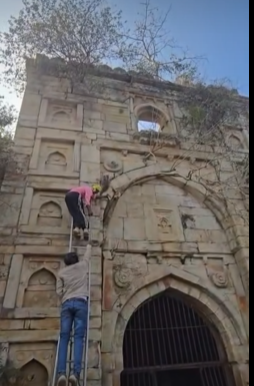
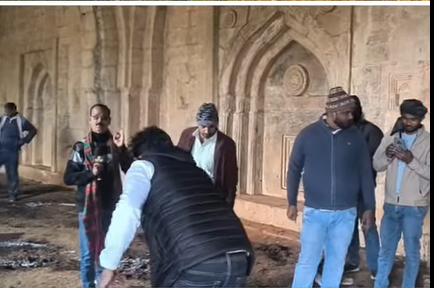 Local Hindus undertaking cleaning of the dilapidated mosque
Soon, arrangements were made to clean the mosque and keep the premises out of bounds for unauthorised persons. The mosque, which was dilapidated and in a ruinous state, was being used by people for casual activities.
The Hindus actively participated in the restoration of this historic mosque.
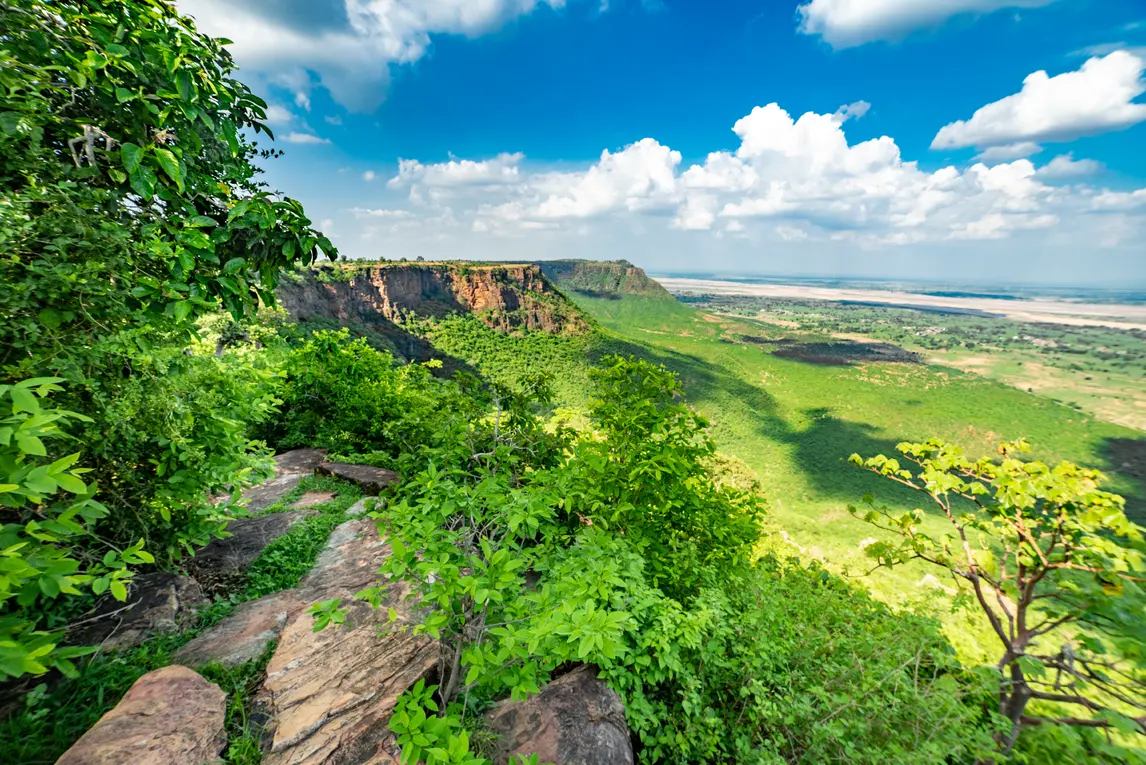 Panoramic view of the area from Roshangarh Fort
Krishna Singh Yadav believes that the restoration of this mosque sends a signal of communal harmony. "This is our shared heritage, regardless of our religion. We must fulfil our responsibility to preserve our cultural heritage."
Muslims are also actively engaged in restoration work, but due to their sheer numbers, the Hindus are leading the project.
 Resident cleaning the passage to the mosque
This 500-year-old mosque was built during the reign of Mughal Emperor Akbar. It was commissioned by Hans Khan, one of Akbar's confidants. Located within the Ghazi Darwaza complex of the Rohtasgarh Fort, it fell into ruins over time.
Most of the people who are cleaning the mosque are Hindus.
The history of Rohtas isn't limited to the mosque; the region is also rich in historical and cultural perspectives. Rohtasgarh Fort and the surrounding Kaimur Hills have witnessed ancient civilisations. Ancient paintings and inscriptions have been found in these hills, demonstrating their historical significance.
Restoration of the moque in progress
The Kaimur Hills have been a hub of human activity since ancient times, with prehistoric rock shelters dating back to 10,000 BC. Furthermore, various religious and cultural remains are found here, enriching the region's historical heritage. These hills also held strategic importance, as Emperor Sher Shah Suri's route passed through them, and the region was part of his rule.
This incident presents a unique example of Hindu-Muslim unity and communal harmony in Rohtas, Bihar. It also demonstrates that when people rise above religion and take responsibility to preserve their cultural heritage, it exemplifies unity and brotherhood in society.
Krishna Singh Yadav and his colleagues' efforts point to a living example of communal harmony and pride in one's heritage.
Krishna Singh Yadav told reporters that the locals have decided to expand the campaign and restore other heritage sites in the hills.
ALSO READ: Yunus regime is supporting radicals in Bangladesh: Rokeya Prachi
"In the next leg of our campaign, we will work on the conservation of other ancient religious and historical sites of the Rohtas hills. We appeal to the local people to actively contribute to saving their religious and cultural heritage."











.webp)
_(1).webp)