New Delhi
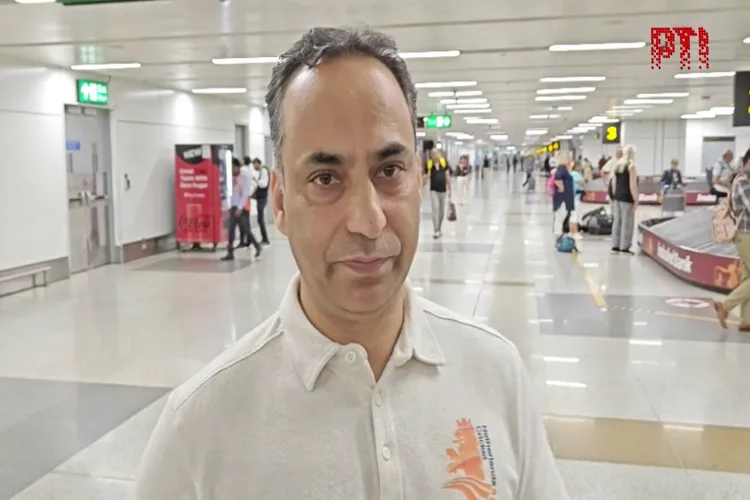
The existing revenue distribution framework of the International Cricket Council (ICC), which heavily favours Test-playing nations, is proving counter-productive for associate members such as the Netherlands, Netherlands cricket board member Rashid Shah has said.
In an interaction with PTI, Shah pointed out that the current commercial model leaves smaller cricketing nations financially constrained and limits their opportunities to compete regularly against top teams, thereby slowing the game’s development in associate countries.
Under the ICC’s 2024–2027 revenue cycle, India is set to receive around 40 per cent of the global body’s earnings — estimated at roughly USD 231 million annually — largely due to its dominance in media rights generation. Of the ICC’s projected USD 600 million annual revenue during this period, close to USD 533 million will be distributed among the 12 full members, while associate nations will share approximately USD 67 million.
While acknowledging the imbalance, Shah was quick to commend the Board of Control for Cricket in India (BCCI) for its significant role in expanding cricket’s global footprint.
“We are an associate cricketing nation and we don’t get to play the bigger teams often. The financial model is not sustainable for us. ICC’s commercial structure is counterproductive because we receive only a small fraction of the funds,” Shah said.
He added that associate nations are forced to develop independent financial strategies to sustain cricket development. However, he described the Netherlands’ participation in the World Cup held in India as a major boost.
“Playing against India in Ahmedabad in front of nearly 70,000 spectators, with a global television viewership of around 160 million, was a massive achievement for us,” he said.
Despite structural and financial challenges, Shah noted that cricket has made steady progress in the Netherlands over the past five years, though the overall playing base remains modest at around 8,000 participants. A technology entrepreneur by profession, Shah said the Royal Dutch Cricket Association (KNCB) has charted a clear roadmap for the sport’s growth through 2030.
Having lived in the Netherlands for over 26 years after playing extensive cricket in Jammu and Kashmir during the 1990s, Shah said Dutch cricket has reached new heights, with the national team qualifying for almost every World Cup over the past decade. He also highlighted a historic milestone for Dutch women’s cricket, with the team qualifying for the 2026 Women’s World Cup in England for the first time.
“We have a clear mission and vision. Work is being done both at the top level, by creating role models, and at the grassroots to build a strong pipeline and expand the talent pool,” he said.
Cricket in J&K has progressed remarkably
Although his professional life is rooted in the Netherlands, Shah said his emotional connection with Srinagar remains strong. He expressed pride in Jammu and Kashmir cricket team reaching the Ranji Trophy final for the first time this season.
“When I played in Kashmir nearly 27 years ago, the lack of structure, facilities and accountability — combined with the turmoil at the time — meant opportunities were extremely limited,” he recalled.
Comparing that era with the present, Shah praised the work of the Jammu and Kashmir Cricket Association, noting that cricket has now spread to every district of the region.
READ MORE: Assam's Taekwondo wonderkid Omar Faruk fought disability
“The system they have built and the talent they have brought forward is remarkable. Reaching the Ranji Trophy final is a phenomenal achievement in itself,” he added.
.webp "Rocks bearing inscription in ancient Arabic excavated in Saudi Arabia's Madina region")







.webp)
_(1).webp)
.webp)