Frankfurt
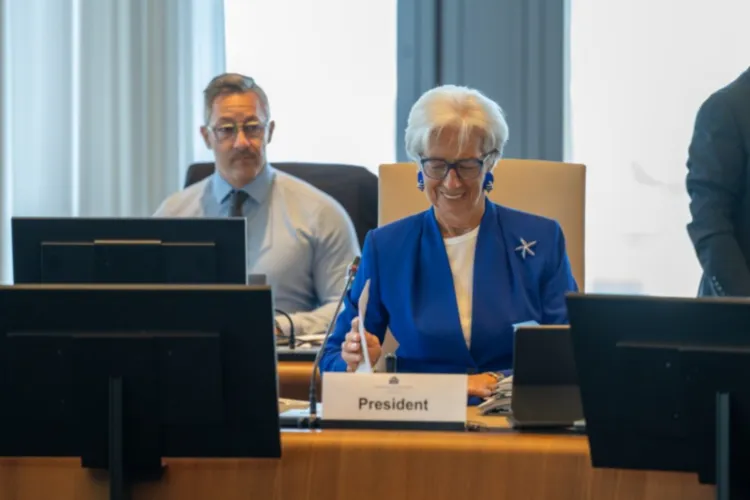
The European Central Bank (ECB) has increased its benchmark interest rates for the first time in almost three years as policymakers seek to contain inflationary pressures linked to ongoing tensions in the Middle East and rising energy costs.
The ECB announced a 25-basis-point increase across its three main policy rates. Following the decision, the deposit facility rate stands at 2.25 per cent, the main refinancing rate at 2.40 per cent, and the marginal lending facility rate at 2.65 per cent.
Alongside the rate hike, the central bank revised its inflation outlook upward for 2026 and 2027, citing higher energy prices that could have a broader impact on food, manufactured goods and services.
According to the ECB's latest projections, headline inflation is expected to average 3 per cent in 2026, decline to 2.3 per cent in 2027 and reach 2 per cent in 2028. Core inflation, which excludes energy and food prices, is projected at 2.5 per cent in both 2026 and 2027 before easing to 2.2 per cent in 2028.
The move comes at a time when the eurozone continues to face economic challenges, with inflation remaining above the ECB's medium-term target of 2 per cent. Consumer prices across the 21-member currency bloc have remained elevated, increasing pressure on households and businesses.
At the same time, the ECB has lowered its growth forecasts for the coming years. The eurozone economy is now expected to expand by 0.8 per cent in 2026, 1.2 per cent in 2027 and 1.5 per cent in 2028.
The central bank said the weaker growth outlook reflects the broader economic impact of the conflict on commodity markets, household purchasing power and business confidence.
While policymakers acknowledged that the outlook remains highly uncertain, they warned of continuing upside risks to inflation and downside risks to economic activity. The ECB noted that the longer-term consequences will largely depend on the duration and severity of energy market disruptions and their spillover effects on the wider economy.
Energy markets have been particularly affected by the prolonged closure of the Strait of Hormuz, a key global shipping route for oil and gas supplies. The disruption has contributed to higher energy prices and renewed concerns about inflation worldwide.
READ MORE: Lal Mohammad Badshah's unwavering devotion towards the clean Ganga
The ECB's decision comes shortly after US inflation data showed consumer prices rising by 4.2 per cent, adding to expectations that central banks globally may continue to prioritise inflation control despite concerns about slowing economic growth.











.webp "US President Donald Trump")




.webp)