Ashhar Alam | New Delhi
A landmark national security trial against Hong Kong’s Tiananmen vigil organisers opened on Thursday, marking another high-profile case under the China-imposed law that has sharply curtailed pro-democracy activism in the semi-autonomous city.
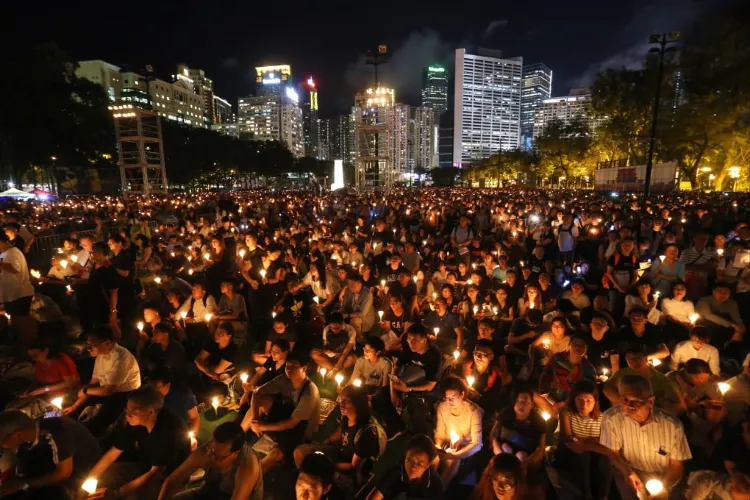
The case involves veteran activists Chow Hang-tung, Lee Cheuk-yan and Albert Ho, former leaders of the Hong Kong Alliance in Support of Patriotic Democratic Movements of China, which for decades organised the city’s annual vigil to commemorate victims of the 1989 Tiananmen Square crackdown. Critics say the trial highlights the steady erosion of civil liberties promised to Hong Kong when it returned to Chinese rule in 1997, a charge the city’s government denies, insisting enforcement is evidence-based and lawful.
Chow and Lee pleaded not guilty to incitement to subversion under the national security law, while Ho entered a guilty plea that could reduce his sentence. The three face a maximum of 10 years in prison if convicted. They are accused of inciting others to organise and act with the aim of undermining state power by promoting calls to end one-party rule in China.
Supporters queued overnight outside the court to attend the hearing. As the defendants entered the courtroom, Lee waved to supporters, Chow bowed and thanked those who had waited in harsh weather, while Ho remained composed. Family members and fellow activists were present in the public gallery.
The trial, to be heard by three government-vetted judges, is expected to last 75 days, with prosecutors planning to rely on videos, speeches and media interviews linked to the alliance’s activities after the security law came into force in June 2020. Earlier attempts by Chow, who is representing herself, to dismiss the case were rejected, with judges ruling that prosecutors had sufficiently defined the alleged “unlawful means” as efforts to end Communist Party rule and violate China’s constitution.
Legal experts and rights groups say the case strikes at the core of freedom of expression. Amnesty International described it as an attempt to punish remembrance of Tiananmen, while scholars argue it risks criminalising political ideas rather than concrete actions.
ALSO READ: Bihar: Muslims donate land for World's largest Ramayan Temple
The alliance, once a pillar of Hong Kong’s civil society, disbanded in 2021 after authorities accused it of acting as a foreign agent a claim it denied. Annual Tiananmen vigils, which drew tens of thousands for years, were banned in 2020, and attempts at commemoration since have led to detentions.
Beijing maintains the national security law was essential to restore stability after the 2019 protests. Since its enactment, dozens of activists including media tycoon Jimmy Lai have been convicted, and many civil society groups have shut down, reshaping Hong Kong’s political landscape.



.webp "Representational Image")







.webp)