Dubai
A fragile ceasefire in the ongoing Iran war is showing signs of collapse amid fresh disagreements over developments in Lebanon and continued tensions around the strategically vital Strait of Hormuz.
The truce, announced earlier this week between the United States and Iran, was meant to pause hostilities and pave the way for diplomatic negotiations. However, conflicting interpretations of the agreement and escalating violence have cast serious doubt on its durability.
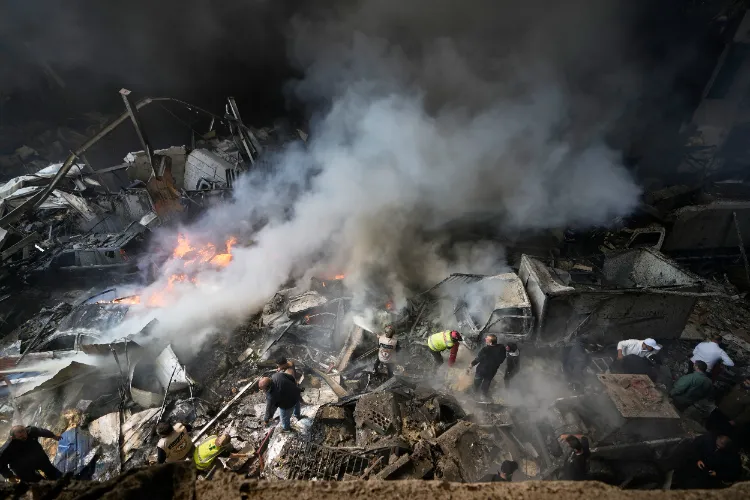
Israeli airstrikes on Beirut have emerged as a major flashpoint threatening the ceasefire. The strikes, among the deadliest since the conflict began on February 28, targeted areas linked to Hezbollah, an Iran-backed group.
Iran maintains that halting hostilities in Lebanon was part of the ceasefire understanding, but both Israel and the US have denied this, exposing a critical gap in expectations. The escalation has heightened mistrust and raised fears that the truce could unravel entirely.
Another key source of tension is the Strait of Hormuz, through which a significant portion of the world’s oil supply passes. Iran’s actions in the region, including reports suggesting the deployment of sea mines and restrictions on shipping routes, have added to global anxiety.
The uncertainty has already disrupted maritime traffic, with only limited vessels passing through the strait. This has had a direct impact on global energy markets, pushing crude oil prices higher and raising concerns over supply stability.
Despite both sides declaring initial success, fundamental issues remain unsettled. These include:
Iran insists on retaining its right to enrich uranium, while the US continues to demand strict curbs to prevent any possibility of nuclear weapon development.
Amid the uncertainty, fresh talks are expected to take place in Islamabad, where delegations from both sides will attempt to convert the temporary ceasefire into a more lasting agreement. The US delegation is expected to be led by Vice President JD Vance.
However, deep mistrust persists, especially after allegations that earlier negotiations were underway when fresh attacks were launched. This has made the path to a durable resolution increasingly complex.
The stakes extend far beyond the immediate region. Continued instability threatens:
With oil prices already surging and tensions escalating, the coming days—particularly the outcome of the Islamabad talks—will be crucial in determining whether the ceasefire holds or the conflict intensifies further.

.jpg "Gujarat’s women entrepreneurs bring their craftsmanship to life during Navratri")









.jpg "Union Ministers Rajanth Singh and Pralhad Joshi at the launch")
.jpg "Debris inside the King Khalid Airport after Yemens Houthis said they attacked the airport in Riyadh")