New Delhi
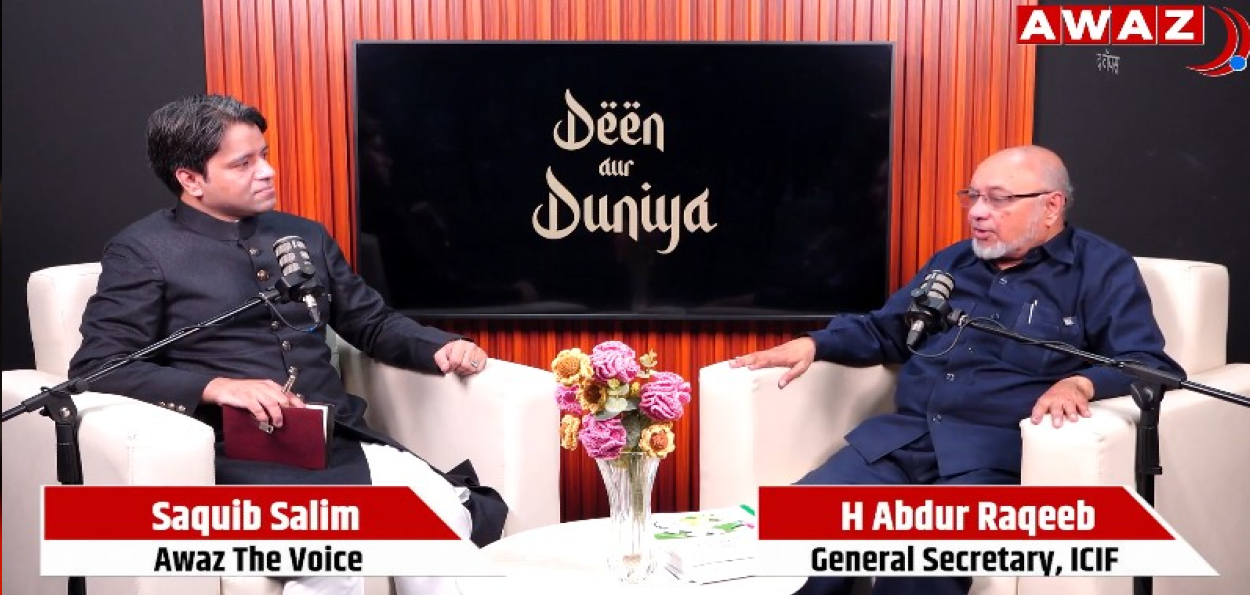
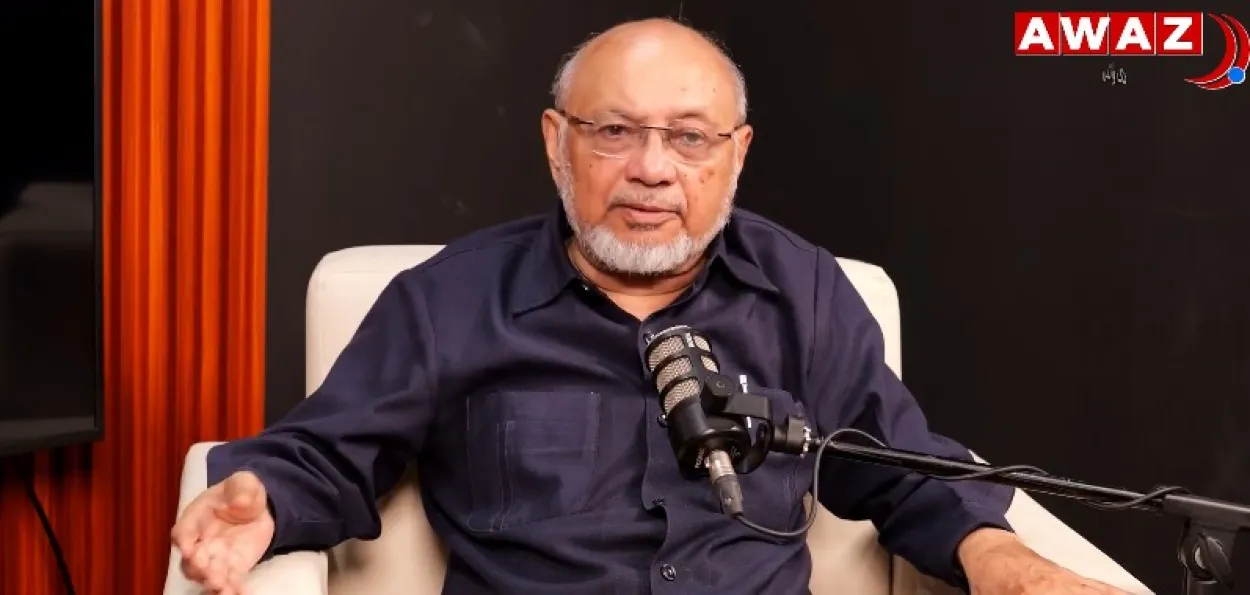
"Unless there is creation of wealth, how will you distribute wealth? Trade is a blessing, and seeking lawful sustenance is worship itself.” This is what a renowned Islamic finance expert Abdur Raqeeb said in the podcast Deen Aur Duniya on Awaz-the Voice with host Saqib Salim.
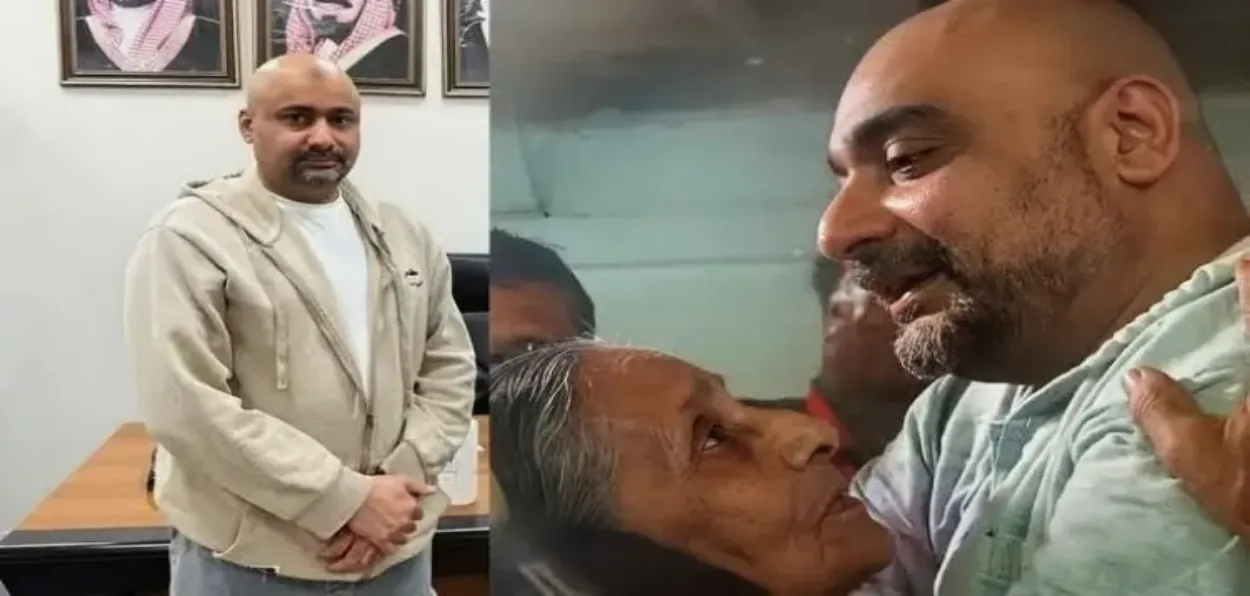
Abdul Raqueeb, who is H Abdur Raqeeb, who is the General Secretary of Indian Center for Islamic Finance (ICIF) spoke in detail about Islamic economics, modern financial systems and the economic direction of Muslim societies.
Abdur Raqib emphasised the fundamental point that the real development of a society was possible not only through the distribution of resources, but first through the production of resources and the creation of wealth. He said a major intellectual gap in the Muslim world is that economic activities, business and investment have not been given the centrality that is seen in the early economic tradition of Islam.
Abdur Raqib said that the development of any nation is not completed by worship or religious commitment alone, but economic activity, production and wealth creation are fundamental for it. Muslim societies, he said, face a weakness of treating worship as the only and the most important element of their lives, while trade, investment and business activities have either been considered secondary or ignored.
This imbalance is a major reason for economic weakness, because until wealth is created, its distribution is not possible.
Host Saqib Salim asked how trade is viewed in Islam and why Muslims lag in this field. Abdur Raqeeb explained in detail that trade in Islam is not only considered permissible but also an honourable and important profession. He said the Prophet Muhammad himself was a successful trader, and Hazrat Khadija's commercial role is a strong example in Islamic history.
According to him, Arab society was already based on trade, and Islam added the principles of ethics, honesty and trustworthiness to it and made it a complete system. He also said that risk is an essential component in trade, and this risk gives rise to economic development and innovation.
Abdur Raqeeb, while giving trade a central position in Islam, said that the Prophet Muhammad himself was a successful trader and Hazrat Khadija's business was considered one of the largest and strongest trading systems of the Quraysh.
According to him, Islamic history began with an economic environment in which trade was not only permissible but also considered a sign of honour and dignity. He quoted a hadith and said that “nine out of ten parts of livelihood are in trade”, by which he wanted to make it clear that the main path to economic development and self-sufficiency is business and trade. According to him, until the process of wealth creation is strong, a fair distribution of wealth cannot be possible.
Abdur Raqeeb Sahib expressed regret that in today’s Muslim society, distancing from economic activities has become a common trend, as a result of which they have lagged in the economic field. According to him, this weakness hinders ovrall development. He gave the example of Kerala, where Hindus and Muslims trade together, and due to economic interdependence, communal tensions are relatively rare.
He believes that economic cooperation also strengthens social harmony. Furthermore, citing the example of the market of Medina, he said that the Prophet (peace and blessings of Allah be upon him) not only established a mosque but also a free and transparent market, where honesty, trustworthiness and transparency were made the basic principles. This model provides the basis for an ideal Islamic economic system.
An important part of the discussion was on the concept of Islamic banking. Saqib Salim asked how to get financial facilities for loans, education, business or housing in today's era when interest is forbidden in Islam.
Abdur Raqeeb replied that the Islamic banking or Sharia-compliant financial system exists in some form or another in about seventy-five countries of the world. This system is not based on interest but on profit and loss sharing. Various methods are used in it, such as Musharakah, Mudaraba and Murabaha.
He explained that, contrary to the common perception, this system is not only religious but also a practical economic alternative that is successfully operating in many parts of the world.
Abdur Raqeeb said in the context of India that there is no complete Islamic banking here, but there are some alternative systems. He said that cooperative societies and some non-banking financial institutions are working on such models where interest is either very low or not at all.
According to him, although this system is at a limited level, it proves that an alternative financial model is possible.
Kerala was presented as an important example in the discussion. According to Abdul Raqeeb, there are strong economic relations between the Hindu and Muslim communities in Kerala, due to which social harmony is also better.
He said that economic activities there are based on common interest, and in case of any tension, both parties suffer, hence the tendency of cooperation is high. He also pointed out that the huge savings of the Muslim community remain inactive in the banking system, because instead of investing, they are kept in safe assets like gold or land.
The discussion also highlighted that Islamic financial models have been debated at the legal and policy levels in India. According to Abdur Raqeeb, at one stage, this system was even challenged in court, but the court acknowledged that if a financial model is a means of economic development and social improvement, it cannot be completely rejected.
This debate proved to be important in advancing the concept of financial diversification in India.
Discussing the concept of Zakat as part of Islamic financial structure, Abdur Raqeeb said that Zakat is not just an act of worship in Islam, but a complete economic system that ensures the circulation of wealth. He regretted that today Zakat is mostly given individually, due to which its collective and economic impact is reduced.
If Zakat is transformed into a systematic institutional system, poverty can be significantly reduced, and a strong foundation can be provided to small businesses and start-ups. He also said that in the early Islamic period, Zakat was collected and distributed under a regular state system.
Abdur Raqeeb said that Zakat is one of the important members of the five basic pillars of Islam, but, regrettably, today its collective and institutional spirit has almost weakened. According to him, the problem is not the amount of Zakat but its system and method of use.
He explained that today, a large number of people are unable to keep accurate records of Zakat, which also creates ambiguity in payment. Along with this, Zakat is not collected and spent under any organised institutional structure, but is mostly distributed at the individual level.
According to Abdur Raqeeb, a large portion of Zakat is usually limited to temporary assistance, personal needs or close relatives, which provides temporary relief but does not bring about any lasting economic change. Referring to the era of the Prophet, he said that during that period, Zakat was collected and distributed under a fully organised state and institutional system, for which regular, qualified persons were appointed to handle the matters of accounting, collection and distribution.
He said that if today, an organised committee consisting of five people is established in every mosque in the same way and Zakat funds are used for education, skill training and investment in small business projects instead of just temporary assistance, then a significant and lasting change can be brought about in the eradication of poverty.
Abdur Raqeeb described the economic system of Medina as a completely free market model. He said that the Prophet Muhammad (peace be upon him) established a market in Medina that was free from any monopoly or exploitative system. Transparency, honesty and Free competition were the basic principles. He added that there was also a regular monitoring system in place so that no one could cheat or take unfair advantage.
Describing his personal experiences, Raqeeb said that there are always both gains and losses in business. He explained that people often see only profits, while the reality is that every business has the possibility of losses. He said that real success is the one that can be achieved in the long run with balance, patience and wisdom.
ALSO READ: Hebron, a town where Jews and Muslims claim Prophet Ibrahim's legacy
At the end of the discussion, a comprehensive point emerged on the relationship between religion and the world. Abdur Raqeeb said that Islam goes hand in hand with success in both this world and the hereafter. He emphasised that hard work, honesty, halal livelihood and living with ethical principles are the true Islamic way of life. According to him, religion and the world are not opposites to each other but are part of an integrated system.
The program concluded with the conclusion that Islamic economy, zakat, trade and ethical financial system are not separate topics but part of a complete economic vision. If these principles are implemented at a collective level, not only is economic development possible, but social justice can also be established on a solid foundation.