St. Petersburg
Russian President Vladimir Putin has expressed optimism about the future of India-Russia economic ties, stating that bilateral trade could grow to USD 100 billion in the coming years as cooperation deepens across energy, investment and strategic sectors.
Speaking on the sidelines of the St. Petersburg International Economic Forum, Putin noted that trade between the two countries has already reached approximately USD 58-60 billion and possesses significant potential for further expansion.
“We believe bilateral trade can rise substantially and touch the USD 100 billion mark in the coming years. The foundations for achieving this target are already in place,” he said.
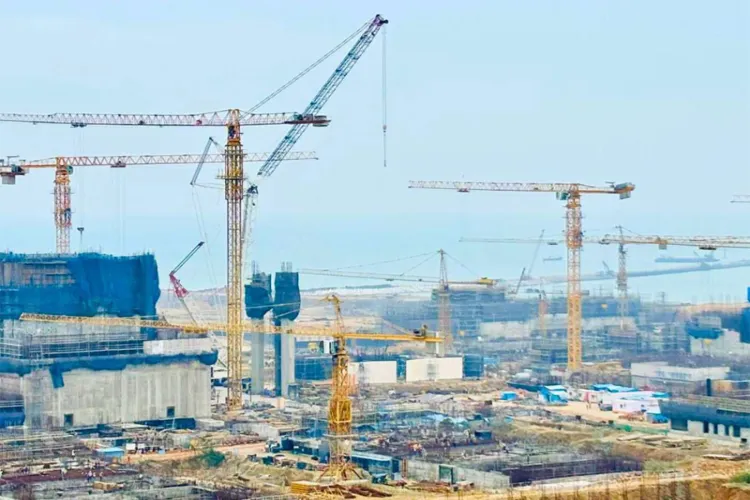
The Russian leader highlighted the longstanding partnership in the energy sector, particularly in civilian nuclear cooperation. He pointed to the ongoing development of the Kudankulam Nuclear Power Plant in Tamil Nadu as a symbol of the strong strategic relationship between the two countries.
According to Putin, cooperation in the energy domain will not be limited to nuclear power. He indicated that both nations are also exploring opportunities in the hydrocarbons sector and are expected to launch new collaborative initiatives in oil and gas.
“Beyond nuclear energy, we will continue to strengthen cooperation in hydrocarbons and other energy-related fields,” he remarked.
Putin also underlined the importance of investment ties, describing current Russian projects in India as among the country's largest foreign investment ventures. He said both nations are committed to increasing two-way investments and broadening economic engagement.
The comments come amid continued progress at the Kudankulam Nuclear Power Project. Earlier this year, India’s Atomic Energy Regulatory Board granted approval for the installation of major equipment at Units 5 and 6 of the facility, marking another milestone in the expansion of India's nuclear power capacity.
The Nuclear Power Corporation of India Limited (NPCIL) described the approval as a significant step forward in the country's pursuit of safe, clean and reliable energy generation.
Civil nuclear cooperation remains one of the strongest pillars of India-Russia relations. In March, External Affairs Minister S. Jaishankar reaffirmed Russia’s role as India’s leading partner in the nuclear sector, noting that the Kudankulam project exemplifies the depth of bilateral cooperation.
Jaishankar had also stated that India’s goal of expanding nuclear power generation capacity to 100 gigawatts by 2047 would create further opportunities for collaboration with Russia in the peaceful use of nuclear energy.
The Kudankulam project was also a key topic during Putin’s visit to India in December last year. At the time, he described the facility as a flagship joint venture and emphasised its importance in meeting India’s growing energy requirements.
Currently, two of the six planned reactor units at Kudankulam are operational, while the remaining four units are under various stages of construction. Once fully completed, the project is expected to make a substantial contribution to India’s energy security and clean power generation goals.
READ MORE: Aabroo's rise triggered Muslim women's aspiration to join civil services
With expanding trade, growing investment flows and deepening cooperation in energy and infrastructure, both countries appear keen to elevate their strategic partnership to new economic heights in the coming years.









.webp "Representational image")