.webp "Representational Image")
Davos (Switzerland)
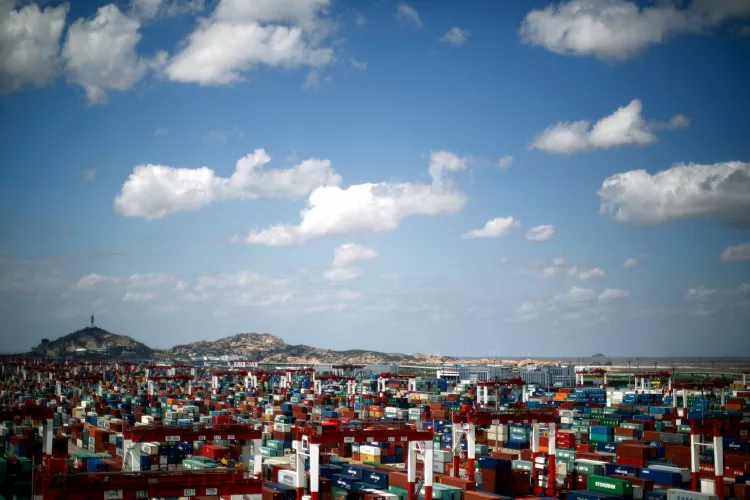
Global value chains have officially entered an era of structural volatility, forcing a fundamental rethink of how products are made and moved around the world. A new report released by the World Economic Forum (WEF) at its Annual Meeting reveals that disruption is no longer a temporary hurdle but a permanent feature of the global economy, driven by geopolitical fragmentation, technological acceleration, and the energy transition.
The report, titled Global Value Chains Outlook 2026: Orchestrating Corporate and National Agility, finds that nearly three in four business leaders have shifted their investment strategies to prioritise resilience. Notably, 74% of executives now view resilience not merely as a defensive measure, but as a primary driver of growth. This shift comes as the scale of global disruption intensifies; in 2025 alone, tariff escalations reshuffled over $400 billion in trade flows, while shipping costs surged by 40%.
"Volatility is no longer a temporary disruption; it is a structural condition leaders must plan for," said Kiva Allgood, Managing Director, World Economic Forum. "Competitive advantage now comes from foresight, optionality and ecosystem coordination. Companies and countries that build these capabilities together will be best positioned to attract investment, secure supply, and sustain growth in an increasingly fragmented global economy."
To help leaders navigate this "new normal," the Forum launched the Manufacturing and Supply Chain Readiness Navigator. This digital tool allows governments to diagnose competitiveness gaps and helps companies assess infrastructure and ecosystem maturity when deciding where to invest. The report highlights successful national models already in use, such as China's 5G-led industrial connectivity, Ireland's enterprise-led upskilling programs, and Qatar's real-time food security dashboards.
ALSO READ: India to construct a mega project for endangered one-horn Rhinoceros in Kanziranga
Experts suggest that the era of prioritising pure efficiency is coming to a close. Per Kristian Hong, Partner at Kearney, who collaborated on the report, emphasised that the priority for supply leaders has shifted from forecasting specific shocks to building inherently flexible systems.
"Supply chain disruption in 2026 will be constant and structural. Geopolitical fragmentation, shifting trade rules and labour shortages are all redefining how value is created and moved," Hong said. "For supply leaders, the priority is no longer forecasting disruption, but redesigning operating models to function under permanent uncertainty. That means moving away from efficiency-driven supply chains and towards adaptive networks that can be reconfigured with optionality as conditions change."



.png)








.webp)
.webp)