




Lahore
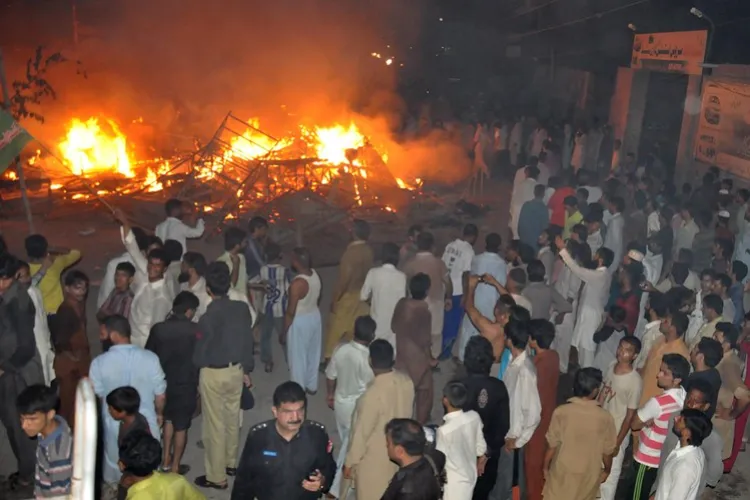
Three young members of Pakistan's Ahmadi minority community were critically injured after an unidentified gunman opened fire outside a prominent Ahmadi place of worship in Punjab province, police said on Saturday.
The attack occurred late Friday evening at Bait-ul-Aqsa, an Ahmadi place of worship located in Rabwah, also known as Chenab Nagar, about 175 kilometres from Lahore. Rabwah serves as the headquarters of the Ahmadiyya community in Pakistan.
According to police officials, the assailant arrived at the site on a motorcycle and indiscriminately fired at people who were heading to offer prayers. The three injured victims were rushed to a nearby hospital, where they are undergoing treatment. Their condition was reported to be critical.
Police have registered a case against the unidentified attacker and launched an investigation into the incident.
The attack has once again highlighted the security concerns faced by Pakistan's Ahmadi community. Although Ahmadis regard themselves as Muslims, Pakistan's Parliament declared them non-Muslims through a constitutional amendment in 1974. A decade later, additional legal restrictions prohibited them from identifying themselves as Muslims or practising certain aspects of Islam publicly.
Under these laws, Ahmadis are barred from using Islamic symbols and practices associated with the faith, including constructing mosques with features such as domes and minarets or displaying Quranic verses publicly.
Ahmadiyya community spokesperson Amir Mahmood strongly condemned the latest attack, describing it as the second such incident in Rabwah within a matter of months.
He recalled that in October 2025, six Ahmadis were injured in another shooting outside the Bait-ul-Mahdi place of worship in the same town.
Mahmood said security agencies had recently issued alerts warning of potential terrorist threats in Rabwah around the Eid-ul-Adha period. He alleged that a sustained campaign of hate speech and misinformation against the Ahmadi community had contributed to an atmosphere of fear and insecurity.
According to him, Ahmadis continue to face social and economic boycotts, while inflammatory rhetoric and religious decrees targeting the community have created an environment where violence is encouraged.
"Ahmadis do not feel safe anywhere in Pakistan, including Rabwah," he said, urging authorities to take immediate steps to curb hate campaigns, prosecute those responsible for inciting violence and ensure the protection of Ahmadi citizens and their properties.
Human rights organisations have repeatedly raised concerns over the treatment of religious minorities in Pakistan. According to Minority Rights Group, communities including Christians, Hindus, Ahmadis, Sikhs and smaller indigenous groups often experience discrimination, economic marginalisation and security threats.
READ MORE: Nagma Mallick builds India's case before the world through quiet diplomacy
Despite accounting for around four per cent of Pakistan's population collectively, these minority groups frequently live under constant fear and are often treated as second-class citizens, the organisation has noted.

_(1)_(1).webp "Jagannath Rath Yatra")







_(1)_(1).webp)
_(1).webp)