.webp "Former Ambassador to Iran Dinkar P Srivastava")
New Delhi
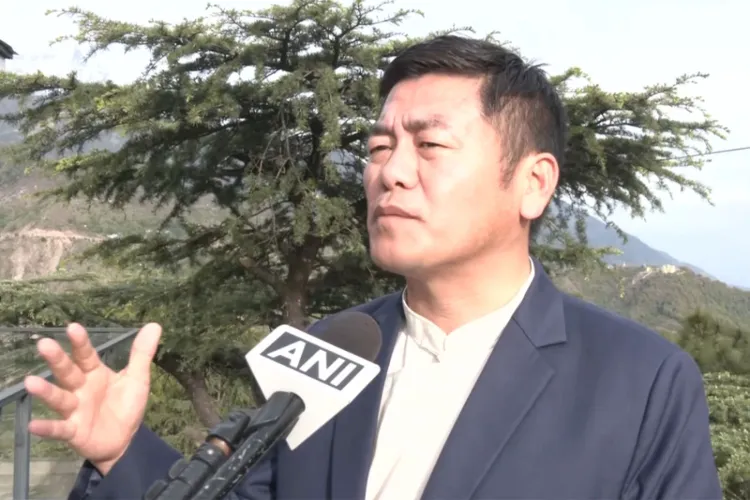
Reacting to US President Donald Trump's recent address to the nation on the ongoing conflict with Iran, former Ambassador to Iran Dinkar P Srivastava on Thursday cautioned that the evolving US strategy risks deepening instability in West Asia while offering little scope for a diplomatic breakthrough.
In an interview with ANI, Srivastava observed that Washington appears to be avoiding a full-scale ground offensive while preparing for intensified aerial bombardment, with a self-imposed operational window of two to three weeks.
He noted that this signals a limited but high-impact military approach, rather than a prolonged war involving US troops on the ground.
However, he pointed out a critical gap in the strategy- the responsibility of securing and reopening the Persian Gulf through the Strait of Hormuz has effectively been shifted to US allies, many of whom remain reluctant to engage militarily in what they perceive as "not their war".
"President Trump's address shows that a ground offensive will be avoided, but bombing will be intensified. He has also put a two- to three-week limit on the US operation. The task of opening up the Persian Gulf has been left to US allies who are reluctant to fight a war they do not see as 'their war'", said the former envoy.
Srivastava warned that continued bombing of Iran by the US and Israel could severely undermine any prospects of reopening critical maritime routes through negotiation with Tehran.
He emphasised that both Iran and Gulf countries stand to suffer significant damage, raising the risk of a broader regional fallout. The former envoy highlighted the global economic consequences, particularly for energy-importing countries like India.
"Continued bombing of Iran by Israel and the US will undermine any chances of opening of the Persian Gulf through negotiation with Iran. It will inevitably bring Iranian retaliation. Iran as well as Gulf countries, will suffer more damage. The oil and LNG prices will rise and shortages become more acute. India and indeed the global economy, already affected, will have to bear more pain," said the former envoy.
Notably, Trump delivered his first major national address since the commencement of hostilities in late February, praising the American military for a "decisive" blow against the Iranian regime. The US President claimed that the core objective of the campaign was nearing completion.
Speaking from the White House, Trump provided an update on the month-long "Operation Epic Fury," which he said was launched against the "world's number one state sponsor of terror." He asserted that over "these past four weeks, our armed forces have delivered swift, decisive, overwhelming victories on the battlefield".
Regarding the progress of the military campaign, the US President said, "Tonight, I am pleased to say that these core strategic objectives are nearing completion."
The US President, however, said that the US would continue to hit Iran if it did not make a deal.
READ MORE: Why Backstroke Queen of India Fariha Zaman fled Assam
"We will continue till our objectives are achieved. We are going to hit them hard over the next two to three weeks; we will take them to stone age. Regime change has occurred; all their old leaders are gone the new group is less radical. We have our eyes on key targets; if there is no deal, we will hit their electric plants, we have so far not hit their oil but we could do that and they can't do anything, we are unstoppable," Trump said.
Trump's speech signals that the US campaign is coming to a definite end, but more strikes are likely over the next few weeks.










.webp "Diwali (Representational Image)")
.webp "Retired US Colonel and geopolitical risk advisor Douglas Macgregor")