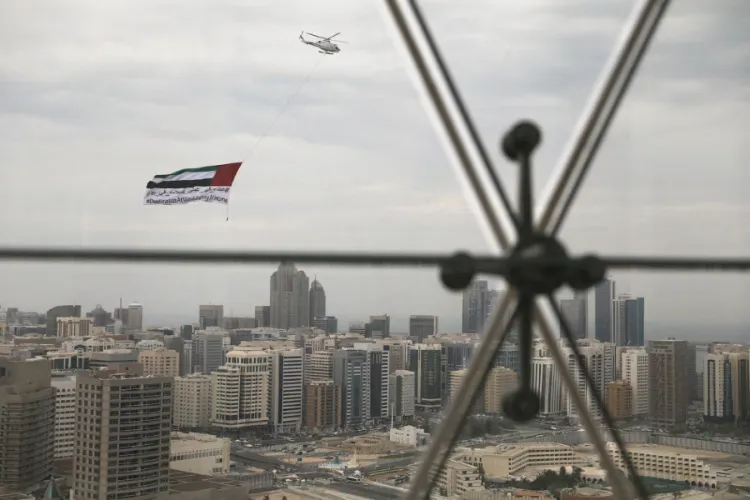
Abu Dhabi (UAE)
The United Arab Emirates has alerted the public to active defence measures following reports of disturbances, clarifying that current aerial activity is linked to the interception of hostile projectiles.
In an X post, the UAE's Ministry of Defence confirmed the nature of the disruptions, stating that "the sounds heard across the country are the result of ongoing engaging operations of missiles and UAVs".
Authorities have called for civil cooperation as the military response continues. "The public is urged to remain calm and follow the safety and security instructions issued by relevant authorities," the Ministry added.
The emergency situation escalated on Friday morning when the UAE's national emergency authority issued a public missile alert, instructing residents nationwide to seek immediate shelter as air defence batteries engaged incoming aerial threats. In a corresponding post on X, the National Emergency Crisis and Disaster Management Authority (NCEMA) stated, "Air defense systems are currently responding to a missile threat. Please remain in a safe location and follow official channels for warnings and updates."
Complementing the shelter orders, the advisory cautioned the public to "not approach, touch, or photograph any fragments or objects that have fallen as a result of successful air interceptions," requesting that any sightings of debris be reported via the 999 emergency line. The urgency of these warnings was underscored as residents across Dubai and Sharjah reported hearing significant blasts, which officials attributed to the successful destruction of targets in the air rather than impacts on the ground.
This latest development follows a series of alleged Iranian strikes that have maintained a state of high military readiness in the Gulf nation for more than two months. The Friday morning alert coincides with a highly volatile phase of the broader US-Iran standoff in the Strait of Hormuz, where American destroyers engaged in a firefight with Iranian forces overnight, while diplomatic communications via Pakistani intermediaries remain at an impasse.
Such alerts have become a recurring reality for residents since late February, when the Emirates was first subjected to a sustained campaign of missile and drone strikes. These hostilities were initiated on February 28 following coordinated US-Israeli strikes on Iranian military and nuclear targets. Although a ceasefire was established on April 8, it has remained largely nominal as regional friction persists.
The scale of the threat is reflected in data showing that since the onset of these attacks, UAE air defence systems have reportedly intercepted 549 ballistic missiles, 29 cruise missiles, and 2,260 drones. The conflict reached a peak on Monday, when the Ministry of Defence confirmed that air defence units intercepted 12 ballistic missiles, three cruise missiles, and four drones launched from Iran.
That particular barrage resulted in injuries to three Indian nationals following a drone strike at the Fujairah Oil Industry Zone. In response, the UAE's Ministry of Foreign Affairs described the Monday attacks as "an unacceptable transgression" that breached international law and the UN Charter, asserting that the country maintains its "full and legitimate right to respond."
READ MORE: Youngest MLA Zubair Anam Majumder is cynosure of all in Assam
Amid this continued instability, the UAE Ministry of Education has already transitioned all educational institutions to remote learning. Authorities are expected to reassess the security situation today to determine if this measure will be extended further.


















.webp)