London
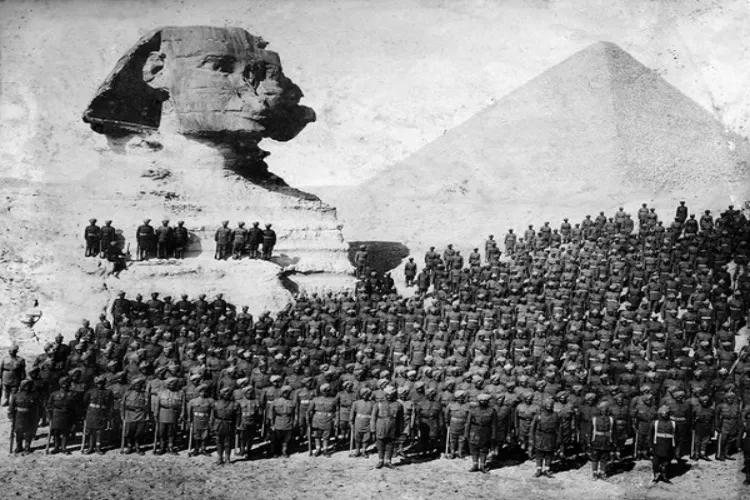
The United Kingdom has digitally commemorated around 33,000 Indian soldiers who died during the First World War but whose names were missing from a memorial in Iraq, marking a significant step towards correcting a long-standing historical omission.
The initiative, led by the Commonwealth War Graves Commission, introduces new digital name panels for the Basra Memorial. The memorial honours soldiers who died in the Mesopotamia campaign—modern-day Iraq—which was one of the British Empire’s largest military operations outside Europe during the early 20th century.
Launched earlier this month, the digital memorial brings together the names of Indian soldiers for the first time alongside more than 46,000 Commonwealth personnel commemorated at the site.
Historian Shrabani Basu, a member of the CWGC’s Global Advisory Panel, said the move corrects a historical injustice. She noted that tens of thousands of Indian soldiers died in the Mesopotamia campaign, yet their names were never inscribed on the Basra Memorial.
“It is wonderful to finally see the 33,000 Indian names displayed as they always should have been, complete with ranks and regiments. A historical wrong is being righted, and their sacrifice will not be forgotten,” she said.
Due to current security concerns in Iraq, a physical update to the memorial has not been feasible. The CWGC said the digital panels serve as an interim solution until the site can be safely assessed and fully updated.
Dr George Hay described the initiative as a major milestone in recognising the Indian Army’s contribution to the Mesopotamia campaign.
“For the first time, the names of these men are being displayed as they should have been nearly a century ago, restoring the honour they deserve,” he said, adding that the project helps address historical inequalities in commemoration and enables wider global engagement with these stories.
Many Indian soldiers who died in the First World War were historically commemorated collectively or numerically, rather than individually by name—an approach now widely regarded as unequal.
The CWGC said the Basra Memorial represents one of several such cases it is working to address as part of a broader effort to ensure equal recognition for all Commonwealth war dead.
READ MORE: Assam-born Fazlur Rahman finds cancer's link with environment
While emphasising that digital memorials cannot replace physical sites, the commission said such tools help connect people worldwide with the stories of over 1.7 million Commonwealth personnel who died in the two World Wars, particularly when travel to certain locations remains restricted.










.webp)