Tokyo (Japan)
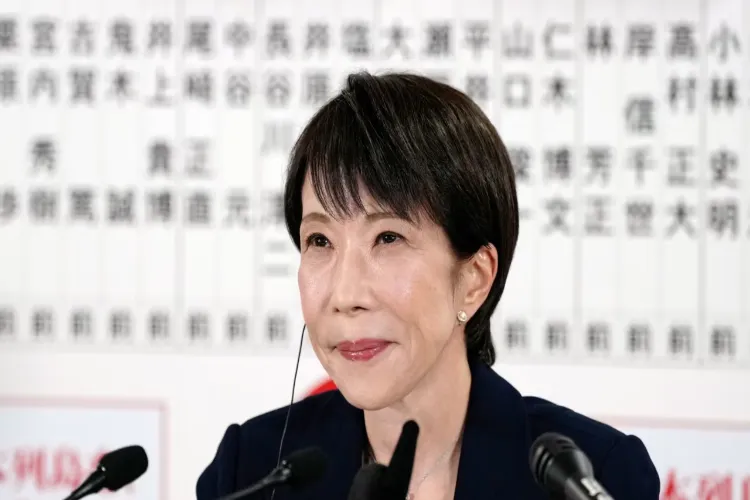
In the wake of Japan's snap general election that delivered a decisive victory for Prime Minister Sanae Takaichi's Liberal Democratic Party (LDP), the United States has signalled plans to strengthen both economic and security cooperation with its key Asian ally. The announcement comes amid heightened geopolitical uncertainty and a renewed focus on reinforcing alliances in the Indo-Pacific region, reported The Japan Times.
According to reports, Washington intends to build on the momentum from Japan's recent polls by enhancing collaborative work on strategic and economic fronts. A US official noted that following the LDP's landslide win, discussions on expanding cooperative frameworks are expected to gain traction, particularly ahead of a planned summit between US President Donald Trump and Prime Minister Takaichi in Washington on March 19.
The diplomatic push reflects broader strategic priorities shared by Tokyo and Washington. The LDP's strong electoral mandate, which gave Takaichi's coalition a commanding supermajority in the House of Representatives, has bolstered her leverage domestically and internationally. This outcome positions Japan to pursue deeper engagement on issues ranging from defence coordination to trade and investment, reported The Japan Times.
US officials have underscored the importance of the alliance. Treasury Secretary Scott Bessent, speaking ahead of the election, described Takaichi as "a great ally" with strong ties to the United States and noted that Japan's stability and strength contribute directly to American security interests in the region. "When Japan is strong, the US is strong in Asia," he said in an interview, highlighting the bipartisan recognition of Tokyo as a cornerstone of US strategy in the Pacific.
Economic cooperation is also expected to feature prominently in the upcoming discussions. Both countries have substantial bilateral trade and investment flows, and Tokyo's technology and manufacturing sectors offer avenues for mutually beneficial partnerships. With global supply chains under increasing stress from geopolitical rivalries and competition over critical technologies, closer coordination on economic security, including semiconductor production, supply chain resilience, and investment screening, is likely to be high on the agenda, reported The Japan Times.
READ MORE: Why did popular vlogger Arbaaz Khan cry over Sanjay Patel's death?
Beyond economics, security cooperation remains central. Japan and the United States have long been allied under the Treaty of Mutual Cooperation and Security, and both sides have periodically reassessed their commitments to respond to evolving threats, including from China and North Korea. With Takaichi's strengthened political position, there is broad expectation that Tokyo will continue expanding its role in joint deterrence efforts while deepening military and intelligence collaboration with Washington,
As the two leaders prepare to meet in March, officials on both sides are framing the dialogue as a chance to chart a forward-looking agenda that enhances economic resilience and fortifies shared security interests underscoring that the Tokyo-Washington partnership remains pivotal at a time of intensifying global.
















_(1).webp)