Washington DC
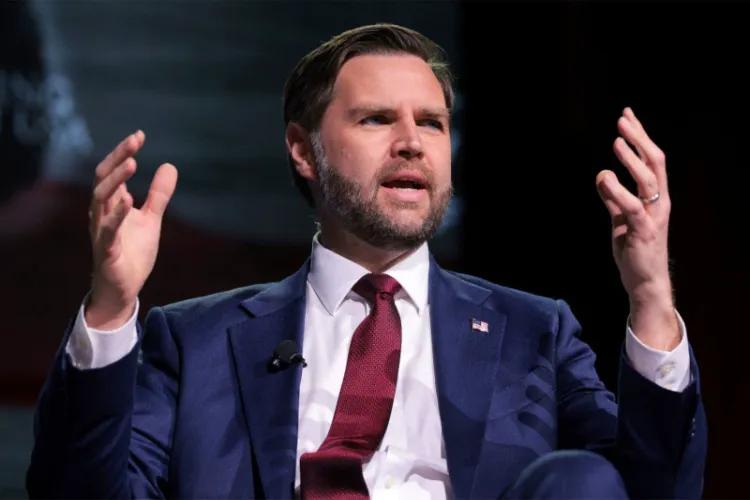
US Vice President JD Vance has said that the recently announced agreement between Washington and Tehran has already been digitally signed, while emphasising that any sanctions relief for Iran will be strictly tied to its compliance with the commitments outlined in the deal.
Speaking during an interview with ABC's Good Morning America, Vance clarified that no financial benefits or access to funds had been granted to Iran following the digital signing of the agreement.
"We signed the agreement electronically yesterday, but no money has been released, and that situation remains unchanged," Vance said when asked whether Tehran would immediately receive sanctions relief or access to frozen assets.
The Vice President stressed that the implementation of the agreement would follow a performance-based approach. According to him, any easing of sanctions would depend on Iran taking verifiable steps to meet its obligations under the accord.
He explained that sanctions relief would be considered if Iran moved to eliminate its stockpile of enriched nuclear material and accepted a robust verification mechanism capable of ensuring that its nuclear programme remains exclusively peaceful.
Vance described the agreement as a pathway for Iran to improve its relationship with the international community and participate more fully in the global economy, provided it fulfils the conditions set out in the deal.
He said the arrangement could ultimately benefit not only the United States and its regional partners but also the Iranian people if implemented successfully.
Responding to questions about Israel's position on the agreement, particularly its assertion that it is not bound by the deal and its intention to maintain a military presence in Lebanon, Vance acknowledged that regional realities could complicate the peace process.
He noted that ceasefires in the Middle East often face challenges and do not always translate into an immediate end to hostilities. Nevertheless, he expressed confidence that the agreement represented a positive step toward greater stability in the region.
According to Vance, the deal has the potential to serve the interests of Israel, Gulf nations, the United States and, potentially, Iran itself.
His comments came a day after US President Donald Trump announced that negotiations with Iran had concluded successfully and that a formal signing ceremony would take place on Friday. Trump stated that the agreement would pave the way for the reopening of the Strait of Hormuz, allowing maritime traffic and energy supplies to resume normal operations.
In a post on Truth Social, Trump described the accord as a landmark diplomatic achievement that would contribute to peace and security across the region. He said the reopening of the strategic waterway would facilitate mine-clearing operations and restore the flow of oil through one of the world's most important shipping routes.
The announcement, however, drew a swift response from Israel. Israeli National Security Minister Itamar Ben-Gvir reiterated that Israel remains an independent and sovereign state and is not obligated to follow agreements negotiated by the United States.
READ MORE: Zeenat Pannah's enduring work to preserve India's textile heritage
Meanwhile, Iran has consistently maintained that any final arrangement with Washington must address the situation in Lebanon. Iranian officials have argued that developments in Lebanon are closely linked to broader regional security issues and should be included within the framework of any comprehensive agreement.
.webp "Rocks bearing inscription in ancient Arabic excavated in Saudi Arabia's Madina region")










.webp "Representational Image")