 Aditi Bhaduri
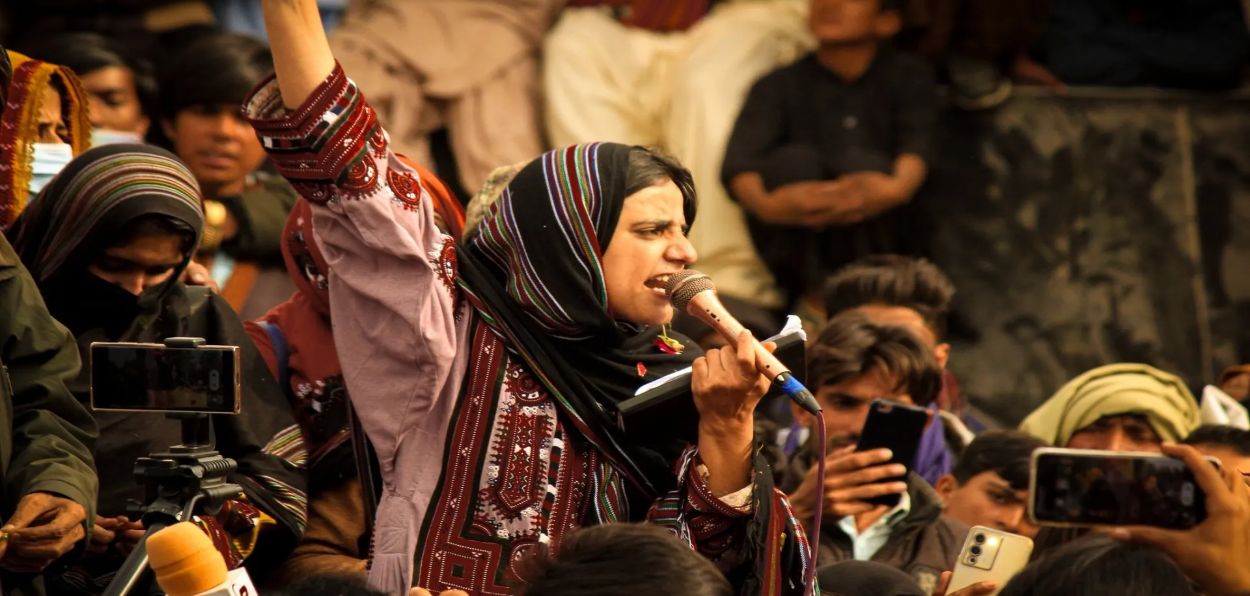
Recently, Pakistan faced one of the worst insurgent attacks claimed by the banned Balochistan Liberation Army. The attacks, launched simultaneously by small groups targeting civilian, military assets, and infrastructure, led to the death of at least 18 civilians and 15 security personnel.
The attacks have drawn widespread condemnation from global leaders. In retaliation, the Pakistani Army and security forces have killed almost 144 insurgents - the highest in decades.
As is its wont, Pakistan has pointed the finger at India (without providing any proof) and also blamed the Tehreek-e-Taliban Pakistan (TTP) for aiding these attacks. India's Ministry of External Affairs has rubbished these allegations and asked Pakistan to “Instead of parroting frivolous claims each time there is a violent incident, it would do better to focus on addressing the long-standing demands of its people in the region”.
The "long-standing demands of its people in the region " is key to understanding what exactly is happening in Balochistan, and why such attacks by Baloch separatists are increasingly becoming frequent and more ferocious.
Balochistan is one of Pakistan's richest provinces, yet it remains one of its most impoverished.
Videos of Pakistani forces beating a retreat following attacks by the Baloch militants are going viral on social media:
🚨Baloch fighters attack across multiple areas, followed by visuals of Pakistani troops abandoning posts.
— Shanaaz Baloch (@ShanaazBaloch) December 18, 2025
This visual is the scene's trigger grim déjà vu — the unresolved ghosts of 1971 appear to be resurfacing inside Pakistan once again.@RealWahidaAFG @hyrbyair_marri pic.twitter.com/OVfZgttzdy
It is rich with natural gas, and mineral deposits including coal, chromites, barytes, sulphur, marble, iron ore, quartzite, uranium, limestone and 95 per cent of the world's asbestos. Jain points out that 40 of the 50 minerals being mined in Pakistan currently are from Balochistan. Nevertheless, the province continued to languish in neglect and development, even as Baloch people alleged "internal colonisation by Pakistan's demographically, politically and economically dominant province of Punjab".
Thus, while gas from Balochistan's Sui gas fields reached Punjab in 1964, Quetta cantonment received gas only in 1982.
According to the UNDP, 71 per cent of the population in Balochistan lives below the poverty line, second only to Khyber Pakhtunkhwa in the country's poverty index.
The very merger of Balochistan with Pakistan has been tenuous. The majority of the Baloch people have never acquiesced to it. Pakistan's Punjab-centric politics and development have dealt Balochistan neglect, just as it had done with its erstwhile province of East Pakistan. It served a dual purpose to keep the province and its people dependent on Islamabad. Pakistan feared a developed resource-rich Balochistan would be able to secede easily. The consequences have been devastating.
The Baloch have rebelled periodically, with the latest ongoing round of insurgency breaking out in 2004, spearheaded by the Balochistan Liberation Army, the armed wing of the Baloch Liberation Front, fighting for Balochistan's secession from Pakistan. Their attacks on Pakistani personnel and assets have also intensified over the last couple of years, marking a jump from 116 in 2023 to 504 in 2024. Each attack is more devastating than the previous one.
Unsurprisingly, they have, together with civilians, opposed Chinese and other foreign investments into the province to develop the strategic Gwadar port, part of the China-Pakistan Economic Corridor -- the flagship project of China's ambitious Belt and Road Initiative (BRI), as no local stakeholder is involved, nor has it generated the expected employment and income opportunities. For the Baloch people, it simply translates into pillage of local resources.
Balochistan: Rich in natural resources and poor in living conditions.
— F (@IFazilaBaloch) September 23, 2024
Over US$1 trillion worth of natural resources have been discovered in Balochistan including gold, copper, black pearl, oil, valuable stones, coal & natural gas.
But Baloch are struggling for drinking water. pic.twitter.com/1xyL8eQnGD
The Pakistani state and army have used high-handed measures to quell it, which include, among other things, death squads. Abductions and enforced disappearances have become part of the lives of the Baloch people. The Voice of Baloch Missing Persons states that between 2002 and September 2018, at least 6,428 persons were forcibly abducted by security agencies. Prominent Baloch tribal leaders have been assassinated, forcing yet others to seek asylum abroad.
According to the Baloch National Movement's Human Rights Department, between January and June 2025, 785 cases of enforced disappearances have been documented, involving students, political activists, and ordinary civilians taken without warrants or due process. Many remain missing, while families are denied information, justice, or legal remedies. During the same period, 121 cases of extrajudicial killings were recorded, often following enforced disappearances. Victims were frequently found dead bearing signs of torture. There has been no accountability; no one has been charged for these illegal actions.
Furthermore, the expansion of security laws has normalised arbitrary detention, while peaceful protests, human rights documentation, and dissent are met with arrests, intimidation, and internet shutdowns. Human rights defenders and civil society groups are increasingly targeted to silence reporting from the ground.
READ MORE: Muslims must prioritise education for girls: Ex-Maha minister Anees Majeed Ahmed
For Pakistan, its moment of reckoning has arrived. The use of the stick alone will not yield peace; neither will it point the finger at India. This modus operandi had cost Pakistan its eastern wing in 1971. It has to pay attention to the genuine grievances of its Baloch citizens. Refusal to do so will only result in an even greater devastating attack on its forces and its civilians.


.webp "Union Home Minister Amit Shah")









_(1).webp)